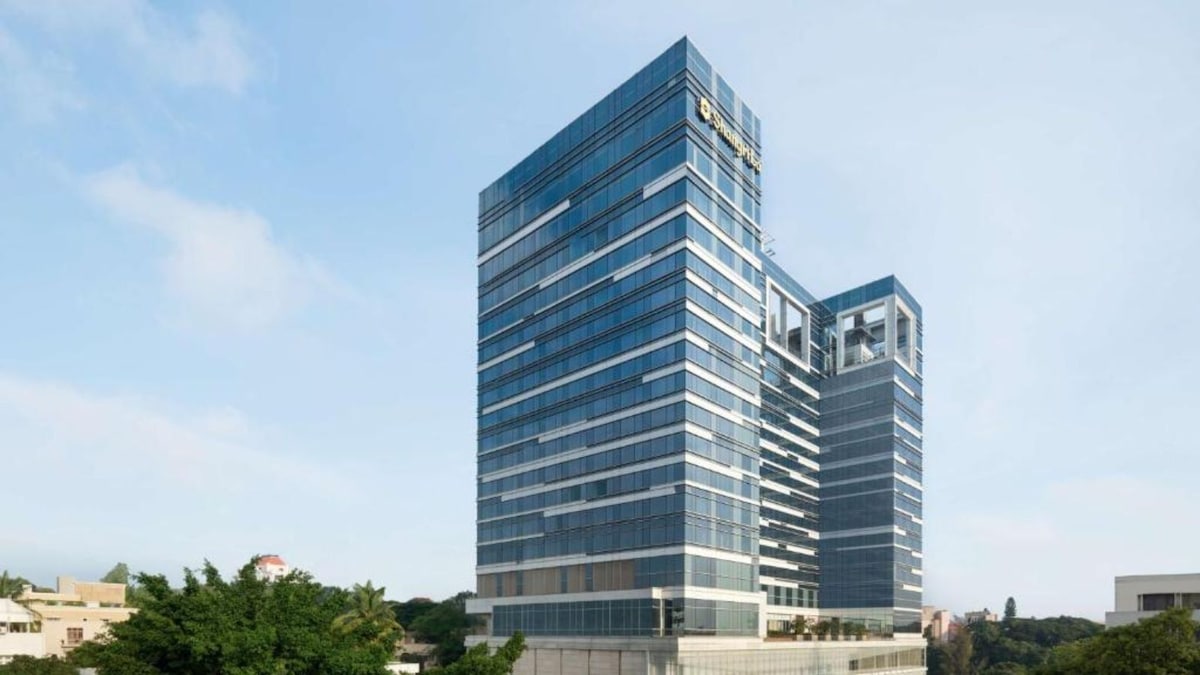
Alekhya Flags Down Shangri-La: 397-Key Bengaluru Rebrand Demands Full Identity Overhaul
De-flagging a major luxury hotel property requires operators to manufacture coherent visual systems across signage, collateral, and guest experience within a compressed window.
Alekhya Property Developments has initiated a complete de-flagging and rebrand of its 397-key Bengaluru property, transitioning from Shangri-La management to an independent luxury identity under the ARTEZIA banner. This move signals a deliberate shift from third-party flag management to direct brand ownership, placing operational and identity control entirely within Alekhya's purview. The timeline is tight. The scope is comprehensive: visual identity systems, exterior and interior signage, guest collateral, wayfinding, digital interfaces, and the sensory throughline that guests encounter from arrival to departure. This is not cosmetic refreshing. This is infrastructure work.
What the move signals for physical presence
De-flagging a 397-key property means stripping one brand's visual apparatus and installing another at scale. That includes removing Shangri-La's proprietary signage, reimprinting corridors and guest rooms with ARTEZIA identity markers, remanufacturing key cards, stationery, wayfinding systems, and the visual language that imprints the property's position in the luxury market. The speed of execution determines guest perception during transition. Guests arriving mid-rebrand will read either coherence or confusion. Properties that execute identity rollouts in phases—public spaces first, guest rooms second, back-of-house third—keep operational continuity. Properties that attempt simultaneous changeover risk fragmented brand perception and staff confusion during service delivery. ARTEZIA's success depends on whether Alekhya has budgeted for phased rollout and trained staff to narrate the transition as intentional repositioning, not operational disruption.
Where the identity layer breaks in multi-channel operations
Large hotel rebrands fail not in the lobby but in the details. A property this size imprints identity across 50+ distinct touchpoints: room key systems, elevator signage, restaurant menus and tableware, staff uniforms and name badges, parking validation, concierge collateral, event signage, amenity packaging, digital displays, website imagery, OTA listing photography, email templates, and SMS communications to reservations. Each layer must be coordinated. A rebrand that updates the lobby but keeps old Shangri-La imagery on booking websites signals either incompetence or in-progress work—both damage trust. Heritage hospitality operators know this: one channel's delay cascades. If photography for OTA sites is delayed 60 days while physical signage launches in 30 days, guests arrive expecting one visual identity and encounter another. ARTEZIA's rebrand window requires simultaneous coordination across brand, operations, revenue management, and marketing. This is where most rebrands stall.
What experienced operators do in this window
Operators who have executed 200+ key rebrands follow a specific sequence. First: audit every surface and system that carries brand marking or visual information—not just obvious ones like signage, but napkins, housekeeping uniforms, business card holders, welcome amenities. Second: establish a single source-of-truth identity standard document that governs color, typography, imagery, tone, and application rules for every medium. Third: phase rollout by guest impact—public spaces and arrival sequences first, then guest rooms, then service areas, then back-of-house. Fourth: keep outgoing brand presence up to standard until new identity fully launches; half-removed Shangri-La signage with partially installed ARTEZIA imagery reads as decline. Fifth: staff training precedes guest-facing launch by 10-14 days minimum. Sixth: photograph all new spaces at launch and update all digital channels within 48 hours. The properties that outrank peers post-rebrand are those that treated identity rollout as a operational project with dependencies, timelines, and quality checkpoints—not a single event.
Editorial & Disclosure Notice: This article was written with artificial intelligence from public sources and is published without individual human review. Artificial intelligence and other digital tools are also used for research, analysis, editing, formatting, and production. Errors, omissions, outdated information, or inaccuracies may occur. References to companies, brands, products, services, organizations, or individuals are for informational and editorial purposes and do not imply endorsement, sponsorship, affiliation, partnership, or approval unless expressly stated. All trademarks and other intellectual property remain the property of their respective owners. Opinions, analysis, estimates, and commentary are informational only and should not be construed as financial, investment, legal, tax, medical, procurement, or other professional advice. Information may be corrected, clarified, or updated after publication. Corrections or removal requests: jenny@pops4.com.