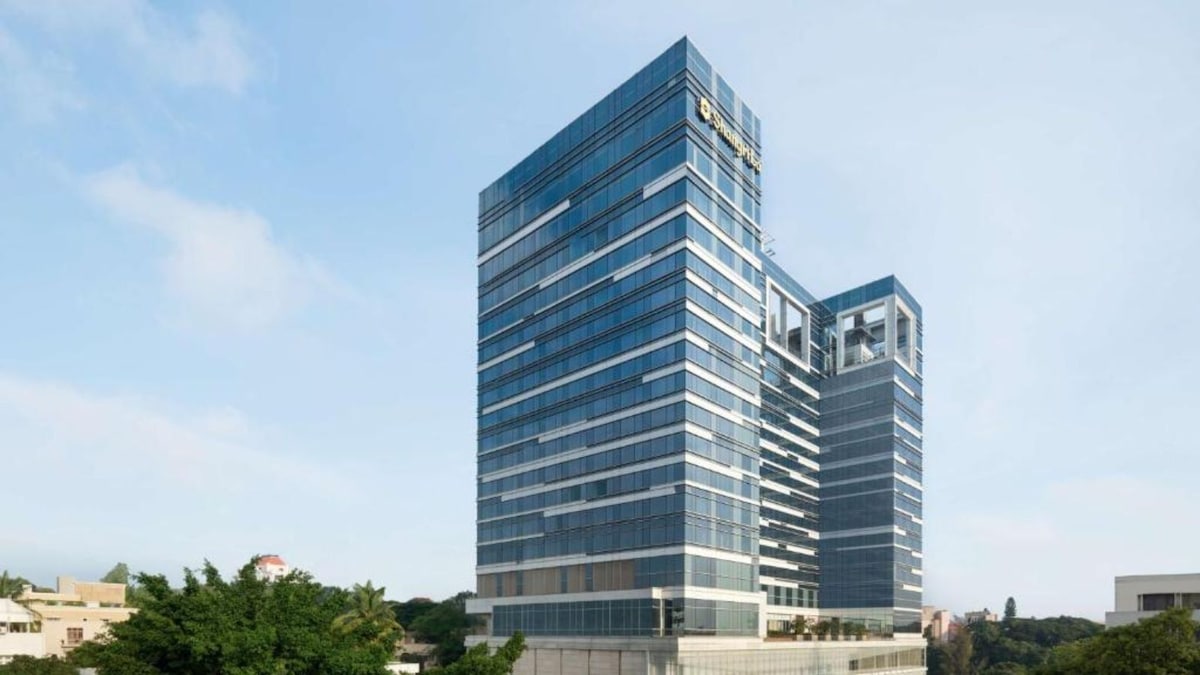
Shangri-La Exit: Bengaluru's 397-Key Property Builds Independent Brand
Alekhya Property Developments rebrands its flagship asset as ARTEZIA, requiring complete identity infrastructure from collateral through guest experience materials.
Alekhya Property Developments has de-flagged its Bengaluru property from the Shangri-La system, moving the 397-key asset to independent ownership under the ARTEZIA brand. This is not a typical rebrand. It is a structural separation—a hospitality operator pivoting from third-party flag management to direct brand stewardship. The property now manufactures its own identity layer across every material surface, from arrival collateral to dining stationery to guest-room documentation.
For Bengaluru's luxury hospitality market, this move signals consolidation among independent operators who can sustain brand infrastructure without international chain overhead. ARTEZIA enters a competitive tier where identity discipline becomes a direct business metric. The property's success depends not on Shangri-La's global reservation engine or housekeeping protocols, but on how clearly it imprints its own visual and operational language across the guest journey.
What the flag separation signals
De-flagging a 397-key property requires more than new signage. The asset must produce its own brand architecture: service standards documentation, housekeeping specifications, f&b collateral, loyalty framework materials, and crisis response protocols that previously came from international standards. ARTEZIA inherits operational autonomy and operational risk in the same transaction. The brand now keeps every touchpoint. This is where identity infrastructure either holds or fails. Properties that exit major flags typically underestimate the volume of collateral, training documentation, and guest-facing materials required to establish visual and operational consistency across departments.
For the Bengaluru market specifically, this move positions ARTEZIA among a growing cohort of independent luxury operators—a tier that has displaced several international chains in India's top metros. Independence allows faster decision-making on pricing, programming, and brand positioning. It also requires that every guest interaction reinforce why the property is worth the premium of no international brand promise behind it.
Where the identity layer breaks
Most properties exiting major flags fail in one specific zone: the materials that guests never see but staff use constantly. Guest-room manuals, security protocols, kitchen specification guides, laundry documentation, and housekeeping checklists. These are not marketing materials. They are operational branded objects that must imprint Alekhya's standards and ARTEZIA's visual language without confusion. A housekeeper working from inconsistent documentation manufactures poor execution. A security team using outdated protocols imprints liability. The collateral between staff and operations either establishes brand discipline or permits fragmentation.
ARTEZIA must also address the secondary collateral layer: business-center materials, in-room technology guides, spa service documentation, and concierge reference materials. These are guest-facing, but they are not marketing. They are service infrastructure. A guest who finds a poorly imprinted spa menu, or a room guide that references old property systems, notes the gap immediately. This is where the identity architecture either stands or betrays the brand positioning.
What operators do in the transition window
The window between de-flagging and operational stability is 8–12 weeks. This is when ARTEZIA must audit every material currently in the property, identify what requires new imprinting, and produce replacement collateral at volume and speed. Smart operators map this in reverse: they begin with the collateral that touches the most guests most frequently, then work inward to operational materials. Menu boards and arrival collateral first. Guest-room documentation second. Staff protocols and back-of-house materials third.
The secondary decision is governance. ARTEZIA must establish who approves new materials, who imprints brand standards on vendor collateral, and who maintains a master library of approved templates. Without this structure, departments begin producing collateral independently, and the brand fragments within six months. Properties that handle this transition well keep a single design authority and require all new materials to move through approval before production.
This is the work—unglamorous, material, documented, imprinted. This is the way this gets handled.
Editorial & Disclosure Notice: This article was written with artificial intelligence from public sources and is published without individual human review. Artificial intelligence and other digital tools are also used for research, analysis, editing, formatting, and production. Errors, omissions, outdated information, or inaccuracies may occur. References to companies, brands, products, services, organizations, or individuals are for informational and editorial purposes and do not imply endorsement, sponsorship, affiliation, partnership, or approval unless expressly stated. All trademarks and other intellectual property remain the property of their respective owners. Opinions, analysis, estimates, and commentary are informational only and should not be construed as financial, investment, legal, tax, medical, procurement, or other professional advice. Information may be corrected, clarified, or updated after publication. Corrections or removal requests: jenny@pops4.com.