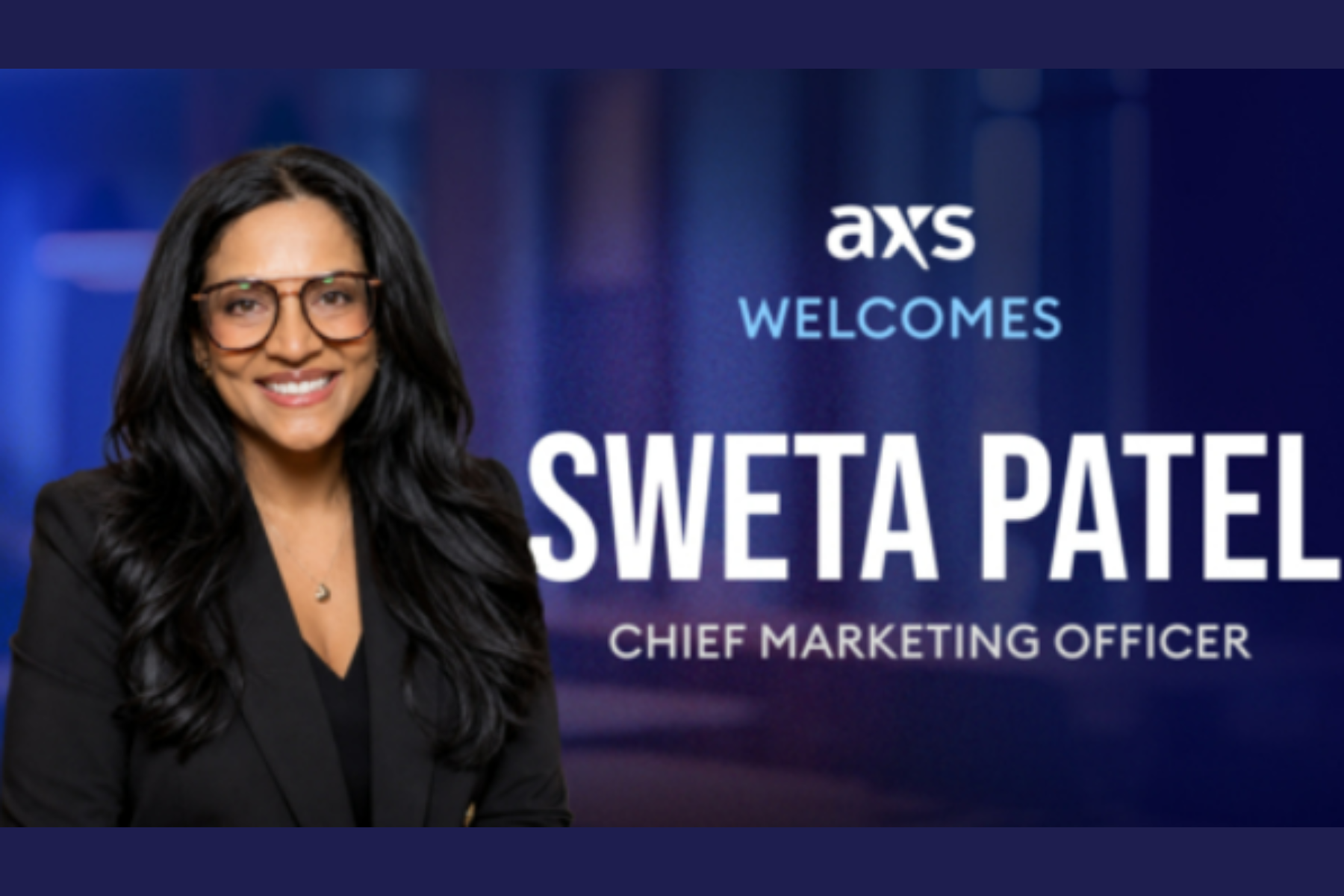
AXS Names CMO: Live Events Enter Identity Infrastructure Phase
Sweta Patel's appointment signals that ticket platforms now compete on physical brand presence and sponsorship packaging—a structural shift toward what gets manufactured and imprinted at the point of sale.
AXS, the ticketing and live-event technology platform, has appointed Sweta Patel as Chief Marketing Officer to lead global brand strategy and data-driven fan engagement. The mandate is clear: build sponsorship infrastructure that moves beyond digital touchpoints into the physical objects and experiences that move through venues, corporate boxes, and premium tiers. This hire marks the moment when a software-first company acknowledges that fan retention now depends on what attendees hold, wear, and keep from the experience.
What the structural move signals
For fifteen years, AXS manufactured competitive advantage through API integration, ticketing logistics, and venue data aggregation. That remains table stakes. But the appointment of a CMO with explicit focus on "premium packaging and branded merchandise critical for live event sponsorships" indicates a hard recognition: single-family offices, sports franchises, and heritage brands now evaluate ticketing platforms partly on their ability to produce house-imprinted branded objects that reinforce sponsor presence. A corporate partner paying $2.5M for naming rights or suite inventory expects packaging, collateral, and gift objects that bear their mark. AXS cannot hand that work to a third party—it must own the identity layer or lose the contract to a competitor who does.
This is infrastructure, not decoration. Patel's hire says the platform will build in-house capability to design, produce, and impregnate physical objects with sponsor data, venue branding, and attendee personalization. That capability doesn't exist at scale in most ticketing platforms. Building it requires operational integration across design, manufacturing, logistics, and compliance. The CMO role is the public acknowledgment that this capability is now central to the product.
Where fan engagement meets manufactured presence
Data-driven fan engagement currently lives in email, push notification, app personalization, and CRM workflows. Those channels are commodified. What displaces them is the ability to manufacture differentiated objects—premium lanyards imprinted with attendance data, branded credential holders, sponsor-integrated VIP gifts, event-commemorative pieces—that travel with the attendee and carry sponsor signal into their home and workplace. These are not decorative. They are loyalty imprints. A principal or CMO purchasing premium sponsorship expects that the ticketing platform can produce objects that reflect what was spent.
Patel's brief to expand fan engagement through branded identity infrastructure means AXS will build design-to-print workflows that allow live-event operators to commission custom objects in real time, tied to ticket-holder segments, sponsor requirements, and venue specifications. This is where the identity house function lives. It is where AXS must either build capability or cede the premium tier to operators who can.
What operators do in this window
The appointment creates a procurement window. For the next twelve to eighteen months, AXS will be staffing, tooling, and testing manufacturing partnerships—likely across multiple regions and object categories. Heritage CMOs, VP Premium Sales, and event planners should begin conversations now with AXS about object specifications, sponsor integration, and production timelines before the platform locks in manufacturing partners and standard object tiers. The negotiation power sits with operators who move fast.
Second: principals and chiefs of staff overseeing sponsorship strategy should audit what their current ticketing platform can produce. If the answer is nothing, or only generic items, that is a leverage point in renewal or competitive bid conversations. Third: demand that object design, quality, and compliance requirements are written into contracts. A platform can promise capability; the contract ensures delivery.
This is how the identity layer gets handled—by recognizing that when a CMO is hired to own branded presence, the infrastructure must move from software to objects. The way this gets handled is through early negotiation, specification clarity, and production standards kept at the center of the commercial relationship.
Editorial & Disclosure Notice: This article was written with artificial intelligence from public sources and is published without individual human review. Artificial intelligence and other digital tools are also used for research, analysis, editing, formatting, and production. Errors, omissions, outdated information, or inaccuracies may occur. References to companies, brands, products, services, organizations, or individuals are for informational and editorial purposes and do not imply endorsement, sponsorship, affiliation, partnership, or approval unless expressly stated. All trademarks and other intellectual property remain the property of their respective owners. Opinions, analysis, estimates, and commentary are informational only and should not be construed as financial, investment, legal, tax, medical, procurement, or other professional advice. Information may be corrected, clarified, or updated after publication. Corrections or removal requests: jenny@pops4.com.