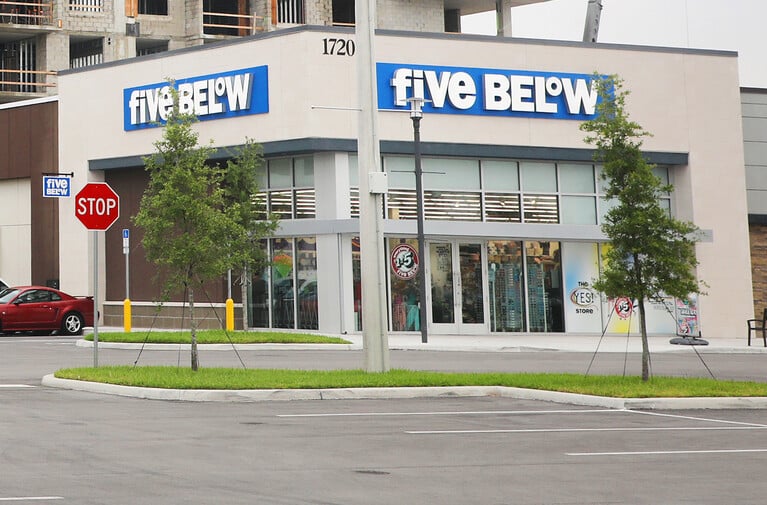
Five Below Names Allbirds CLO: What the Elevation Signals
The appointment of a premium-brand legal veteran to Five Below's C-suite marks a structural shift toward heritage positioning—and the merchandising infrastructure required to support it.
Five Below has named Sarah Stiles, former Chief Legal Officer at Allbirds, to serve as its Chief Legal Officer. The move, announced in late January 2025, signals a deliberate recalibration of the retailer's brand architecture. Allbirds, a direct-to-consumer sustainability leader valued at $1.7 billion at its 2021 IPO, operates at the intersection of premium positioning and mass-market accessibility. Stiles' migration from that environment to Five Below—a $6 billion omnichannel retailer trading on NASDAQ—indicates the company is preparing for a legal and compliance framework suited to heritage-brand elevation, not growth-at-scale opportunism.
What the move signals for brand positioning
Allbirds manufactures wool runners and sustainable footwear at a $150–$230 price point. The brand keeps strict control over retail partnerships, pricing architecture, and end-customer touchpoints. Its legal infrastructure—licensing, supply-chain certification, IP defense—operates at the premium end of casual retail. Five Below's existing merchandising ecosystem, built on volume velocity and price-point accessibility, requires different legal scaffolding when brand elevation enters the playbook. Stiles' appointment suggests Five Below is preparing to operate two or more distinct brand tiers simultaneously, with differentiated legal and contractual frameworks for each. This is not a casual hire. It is a structural commitment to branded identity infrastructure that demands sophistication in licensing, heritage positioning, and premium-customer compliance.
Where the identity layer breaks without upgraded systems
Five Below currently manufactures and distributes branded objects across five operating banners, each with distinct visual languages, pricing, and customer psychographics. Packaging, point-of-sale imprinting, warehouse labeling, and online asset management are designed for high-velocity, undifferentiated retail. When a company moves to premium-tier brand work, the physical identity layer—what the customer touches, opens, and keeps—must signal that shift immediately. Without upgraded packaging standards, sourced materials, imprint quality, and environmental certification, a premium brand line becomes indistinguishable from discount inventory on the same shelf. Stiles' legal purview now includes IP protection, trademark enforcement, licensing agreements, and compliance frameworks that make premium-tier merchandising viable. The company must manufacture branded objects at two standards simultaneously. That requires legal clarity on sourcing, imprinting vendors, material specifications, and quality-assurance protocols that Allbirds' legal team already operates inside.
The opportunity window: what operators do now
Operators in this position—procurement leads, brand officers, chief merchandising officers—have a documented six- to eighteen-month window before Five Below's premium tier reaches full operational velocity. In that window, the company must establish: new vendor relationships for premium packaging and branded objects; updated imprinting and embossment standards that register as heritage-quality to their target customer; revised environmental and material certifications that justify price-point elevation; and legal frameworks that prevent brand contamination between the discount and premium lines. Experienced operators begin now by auditing current vendor relationships, imprinting capabilities, and packaging assets against premium-tier requirements. They map the physical identity infrastructure—what gets manufactured, sourced, and imprinted—separately from the discount business. They engage specialized branded-object houses that keep discipline in material selection, production timing, and quality imprinting at the premium tier. The legal and operational groundwork for this transition must be complete before the brand elevation reaches customers. The way this gets handled determines whether Five Below's premium tier registers as authentic heritage or as discount merchandise dressed in better packaging.
Editorial & Disclosure Notice: This article was written with artificial intelligence from public sources and is published without individual human review. Artificial intelligence and other digital tools are also used for research, analysis, editing, formatting, and production. Errors, omissions, outdated information, or inaccuracies may occur. References to companies, brands, products, services, organizations, or individuals are for informational and editorial purposes and do not imply endorsement, sponsorship, affiliation, partnership, or approval unless expressly stated. All trademarks and other intellectual property remain the property of their respective owners. Opinions, analysis, estimates, and commentary are informational only and should not be construed as financial, investment, legal, tax, medical, procurement, or other professional advice. Information may be corrected, clarified, or updated after publication. Corrections or removal requests: jenny@pops4.com.