Founderpath Inherits SaaStock's Scale, Now Manufactures Its Identity
The acquisition of Europe's flagship SaaS conference signals a critical infrastructure gap: rebranding operations at conference scale demands physical identity systems most acquirers leave unbuilt.
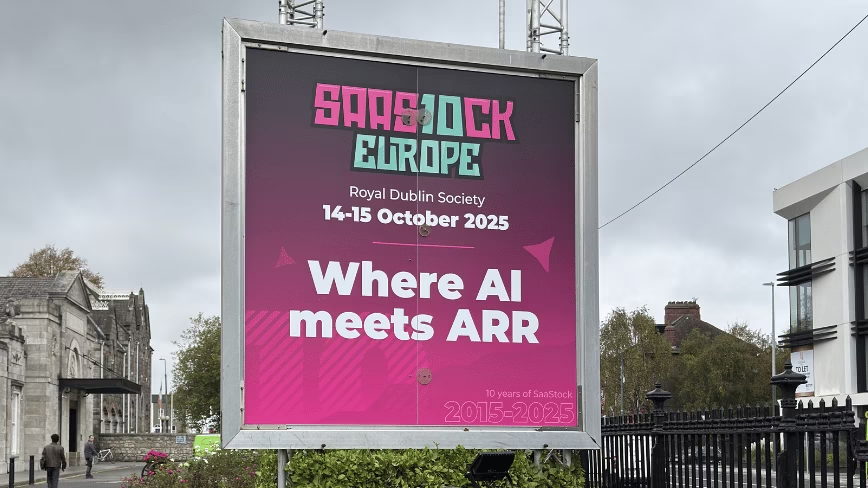
Founderpath acquired SaaStock's US and European conference operations and immediately rebranded Europe's largest SaaS gathering as the AI Growth Summit. The move consolidates conference authority under a single operator. What matters to principals and procurement is this: conference rebranding at scale requires manufacturing decisions that most acquirers delay or mishandle. The identity layer—attendee materials, sponsor collateral, venue signage, registration infrastructure, packaging—either gets built with discipline or becomes the weak point that undercuts the acquisition's market signal.
What the acquisition signals for physical presence
Founderpath did not simply buy a mailing list and event calendar. It acquired the architectural right to manufacture authority in the SaaS and AI operator space. A conference rebrand is not a logo change. It is a commitment to keep the experience coherent across every surface an attendee touches: the pre-event kit, the badge system, the sponsor booth infrastructure, the takeaway collateral, the meal service markers. Each of these objects imprints the brand's position. Each either reinforces or undermines the claim that this is now the summit where serious operators gather.
The old SaaStock identity carried 15 years of accumulated market weight. Founderpath must now manufacture a new identity that displaces that weight without losing the audience's trust. This happens through infrastructure, not messaging. Attendees note what they hold in their hands. They photograph what surrounds them. They keep materials that feel produced with intention. A rushed rebrand—one that reuses old collateral with a new logo stuck on—signals to the buyer that the acquisition was financial, not strategic.
Where the identity layer breaks for most acquirers
Most acquiring firms underestimate the production timeline and the coordination required across sponsor partnerships, venue relationships, and logistics. A 2,000-person conference in the US and separate operations in Europe require separate production runs, different regulatory compliance for materials, and vendor relationships that were built around the previous brand. These do not transfer cleanly.
Founderpath has a narrow window—likely 90 to 180 days—to source and produce branded attendee kits, collateral systems, signage infrastructure, and sponsor packages that all speak with one voice. This is not delegated work. It requires a principal-level operator with experience manufacturing identity at scale to oversee vendor selection, production timelines, and quality control. The cost is significant. The time compression is real. The cost of error compounds across two regions and multiple event dates.
What operators do in the rebranding window
Experienced operators begin by auditing what Founderpath inherits: existing sponsor relationships, venue contracts, vendor networks, production timelines, and inventory. Then they manufacture a production system that works within those constraints rather than fighting them. They do not redesign everything. They imprint the new identity on the existing infrastructure in stages—first the attendee experience, then sponsor collateral, then venue elements, holding secondary items for the second year when timeline pressure eases.
They also keep vendor relationships warm. The printing partner who produced 50,000 badges for SaaStock under the old brand matters to the timeline and quality of the new run. The logistics partner who managed kit assembly for 1,500 sponsors needs early alignment on new specifications. This is how the way this gets handled separates principals who understand the infrastructure layer from those who treat a rebrand as a communications project.
Founderpath has signaled confidence in the conference's future by acquiring it. Now the discipline is in the manufacturing. That is what an operator watches.
Editorial & Disclosure Notice: This article was written with artificial intelligence from public sources and is published without individual human review. Artificial intelligence and other digital tools are also used for research, analysis, editing, formatting, and production. Errors, omissions, outdated information, or inaccuracies may occur. References to companies, brands, products, services, organizations, or individuals are for informational and editorial purposes and do not imply endorsement, sponsorship, affiliation, partnership, or approval unless expressly stated. All trademarks and other intellectual property remain the property of their respective owners. Opinions, analysis, estimates, and commentary are informational only and should not be construed as financial, investment, legal, tax, medical, procurement, or other professional advice. Information may be corrected, clarified, or updated after publication. Corrections or removal requests: jenny@pops4.com.