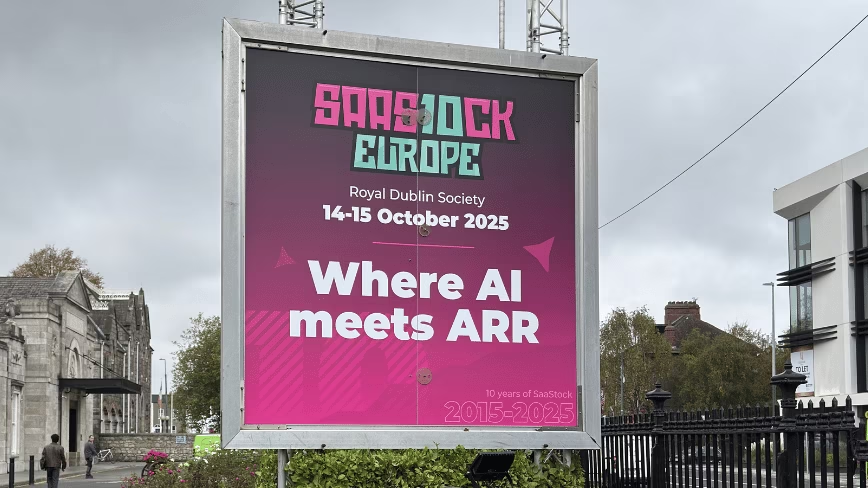
Founderpath Inherits SaaStock, Manufactures Identity Test
The acquisition of Europe's largest SaaS conference signals a hard pivot: Founderpath must now produce a physical and branded infrastructure at scale for a new flagship event.
Founderpath acquired SaaStock's US and European conference operations this quarter and rebranded the property as the AI Growth Summit. On paper, the move consolidates market position. In practice, it manufactures an urgent infrastructure problem. The company has inherited an established attendee base, sponsor relationships, and venue commitments—but no inherited identity system capable of delivering the premium experience that $250K+ tier sponsorships now require. This is not a technology integration. This is a branded-identity build on an accelerated timeline.
What the acquisition signals about scale
SaaStock moved 3,000+ operators annually across two continents. Founderpath now owns that volume and the sponsor expectations attached to it. Heritage-tier sponsors—the ones who fund these events—do not sponsor conferences. They sponsor experiences that reflect their own institutional weight. That requires more than a website refresh. It requires manufactured touchpoints: event collateral, sponsor recognition objects, attendee onboarding systems, packaging that moves through customs, and imprinted materials that keep the brand legible across 12+ months of sponsorship activation. Founderpath's previous event operations were regional. This one is continental. The identity layer must scale accordingly, or sponsorship retention collapses into the next cycle.
Where the identity infrastructure breaks without design
A rebranded conference with inherited sponsorship commitments faces a specific structural risk: visual and tactile incoherence. The SaaStock identity—evolved over years—does not transfer to AI Growth Summit without deliberate translation. Sponsors have already printed collateral, allocated booth budgets, and briefed their teams on the property's positioning. Founderpath must now produce a new branded identity system that feels like an earned evolution, not a discard. This includes sponsored activation kits, attendee materials, stage design, packaging for sponsor gifts, and the imprinted objects that attendees and sponsors keep after the event ends. Without a coordinated identity infrastructure, the rebrand reads as a corporate acquisition, not a market leadership move. Operators know the difference. Sponsors price it accordingly.
What experienced principals do in this window
The next six months are the critical manufacturing period. Heritage-house sponsors—and Founderpath's own internal stakeholder communications—require a branded identity system that was ready before the announcement, not after it. The operators who move fastest are already mapping sponsor tier benefits through the lens of manufactured objects and imprinted materials. They are specifying what a Platinum sponsor receives in the first quarter, what attendee onboarding materials imprint, what a sponsor gift box contains, how the stage and signage system keeps the brand coherent across two continents and multiple venues. They are also locking in production timelines: six months from design approval to first production run is not sufficient for complex imprinted goods moving across borders. The window to commission and brief a full identity infrastructure closes in 60 days. After that, pricing and lead times become negotiated retroactively, which means they become expensive.
The way this gets handled is not through vendor lists or RFP templates. It is through disciplined identity architecture: a single integrated brief that specifies what the brand looks like when touched, held, opened, and photographed. Every imprinted object—from sponsor packages to attendee badges to printed programs—must reinforce the same structural logic. That consistency is what displaces the SaaStock identity entirely, and what sponsors recognize as institutional seriousness.
Editorial & Disclosure Notice: This article was written with artificial intelligence from public sources and is published without individual human review. Artificial intelligence and other digital tools are also used for research, analysis, editing, formatting, and production. Errors, omissions, outdated information, or inaccuracies may occur. References to companies, brands, products, services, organizations, or individuals are for informational and editorial purposes and do not imply endorsement, sponsorship, affiliation, partnership, or approval unless expressly stated. All trademarks and other intellectual property remain the property of their respective owners. Opinions, analysis, estimates, and commentary are informational only and should not be construed as financial, investment, legal, tax, medical, procurement, or other professional advice. Information may be corrected, clarified, or updated after publication. Corrections or removal requests: jenny@pops4.com.