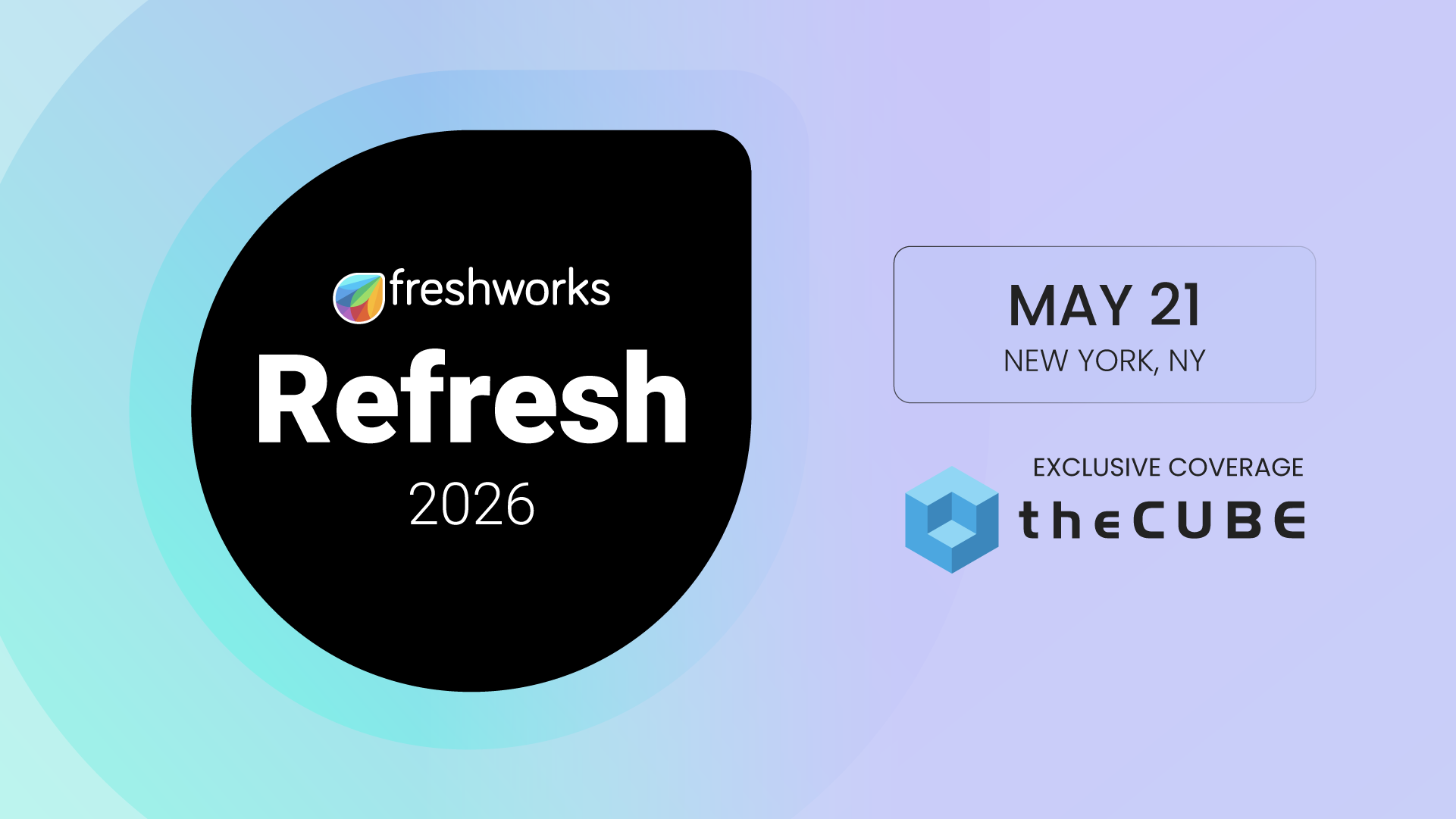
Freshworks Refresh 2026: When Product Change Demands Identity Scale
Analyst-backed campaign signals infrastructure upgrade—and the collateral ecosystem that makes simultaneous identity work stick.
Freshworks has announced Refresh 2026, a coordinated product and brand evolution campaign backed by third-party analyst coverage. The initiative requires a full ecosystem of event collateral, branded objects, and physical presence infrastructure deployed across analyst briefings, customer councils, and regional executive gatherings through 2026. This is not a communications refresh. This is a business signal: when software companies rebuild their public identity, the infrastructure layer—what gets imprinted, manufactured, distributed, and kept at the table—becomes operational.
What the timing tells buyers
Freshworks is competing in workspace software at a scale where visibility among analysts, enterprise procurement teams, and C-suite buyers determines market perception. A single-year or event-driven campaign fails. Refresh 2026 is a 12-month narrative arc requiring consistent, house-imprinted objects and environments that repeat the brand story across multiple channels and geographies. The analyst briefing sets direction; the physical collateral sustains it. Companies at this tier manufacture trust through consistency of object and environment, not through volume of messaging. Every briefing book, every table setting, every retained gift object must imprint the same structural story about product change.
Where the identity layer gets tested
A product refresh without corresponding identity infrastructure creates a gap. Sales teams walk into accounts with old collateral. Event attendees receive generic branded objects. Customer councils sit in spaces that don't signal change. Freshworks must manufacture a full chain: analyst briefing collateral (notebooks, reference guides, environmental graphics), customer event infrastructure (signage, table objects, executive gifts that register as investments, not commodities), and field sales objects that stand at the account level and communicate product evolution to buyers who haven't yet heard the analyst coverage. The window for this work is narrow. Analyst reports publish in Q1 and Q2 2026. Sales cycles compress. Every object in the customer's hands must reinforce that Freshworks has moved.
How operators deploy in this window
Experienced premium operators—CMOs at heritage software houses, VPs of Premium Sales, high-tier event planners—know that product refresh campaigns require infrastructure commitments made now. The timeline is: secure analyst event collateral manufacturing by January; lock customer council environmental design and executive gift sourcing by February; brief sales teams on field collateral and talking points by March. The objects themselves become part of the sales narrative. A CEO receives a house-imprinted reference guide at an analyst event and carries it to the board meeting. A procurement lead gets a substantive desk object at a regional customer council and keeps it visible through the evaluation cycle. These are not incidental. They are the scaffolding that makes the product story credible at scale. The operators who move fastest in this window secure the vendors, lock manufacturing windows, and imprint the narrative before competitors claim the same analyst relationships and customer access points.
Freshworks Refresh 2026 is a case study in why branded identity infrastructure is not downstream of product strategy—it is integral to how enterprise software houses make product change visible to the buyers who matter. The way this gets handled determines whether the campaign reaches its analyst targets, whether sales teams carry a coherent story, and whether customers experience refresh as strategic or as messaging noise.
Editorial & Disclosure Notice: This article was written with artificial intelligence from public sources and is published without individual human review. Artificial intelligence and other digital tools are also used for research, analysis, editing, formatting, and production. Errors, omissions, outdated information, or inaccuracies may occur. References to companies, brands, products, services, organizations, or individuals are for informational and editorial purposes and do not imply endorsement, sponsorship, affiliation, partnership, or approval unless expressly stated. All trademarks and other intellectual property remain the property of their respective owners. Opinions, analysis, estimates, and commentary are informational only and should not be construed as financial, investment, legal, tax, medical, procurement, or other professional advice. Information may be corrected, clarified, or updated after publication. Corrections or removal requests: jenny@pops4.com.