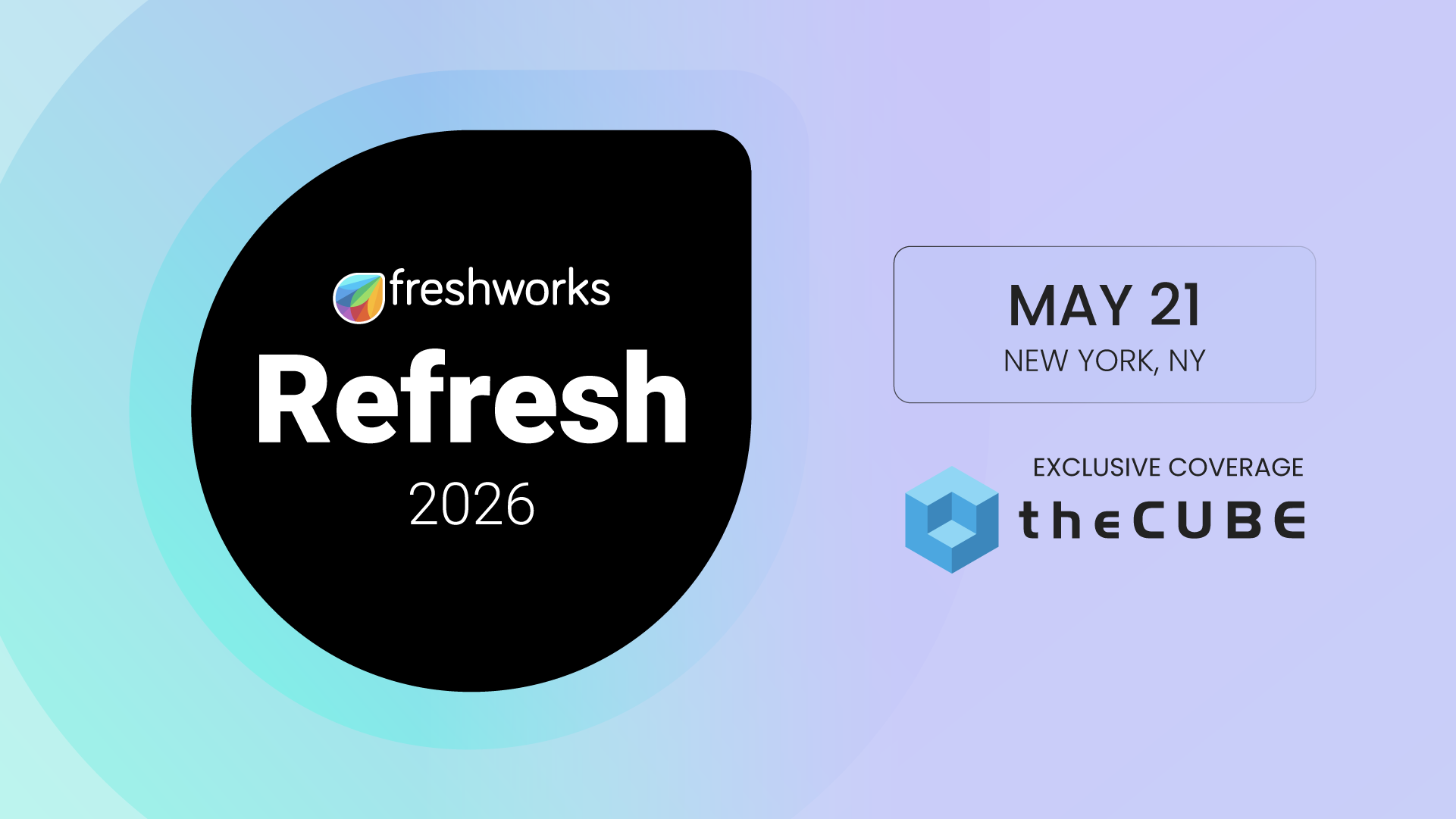
Freshworks Refresh 2026: Enterprise software rewires its physical identity
A major product cycle signals the need for precision-engineered branded infrastructure at scale.
Freshworks announced Refresh 2026, a conference marking simultaneous product and brand evolution across its customer engagement platform. The event draws analyst coverage—a structural signal that the company is moving upstream in enterprise complexity. For a software house in this position, a product refresh is not a marketing event. It is a identity checkpoint. What gets manufactured, imprinted, and distributed in the next eighteen months will define how the company holds presence in rooms where decisions move capital.
What the refresh signals about scale
Freshworks serves mid-market and enterprise operations. A refresh cycle at this tier does not happen in isolation. The company must reposition its service narrative to stakeholders—buyers, implementers, board members—who will encounter the brand across physical touchpoints: conference presence, executive briefing materials, post-sale onboarding collateral, analyst relations packages. Each object manufactured during this window becomes a voice carrier. A poorly considered badge holder, notebook, or executive brief case transmits hesitation. A precisely specified object—one that holds weight, respects the user's time, imprints the new positioning—becomes a decision artifact.
The analyst coverage is the tell. When independent research houses document a product refresh, they are watching whether the company understands its own competitive position. That understanding must be kept consistent across everything the enterprise receives.
Where the identity layer requires engineering
Freshworks is displacing competitors in customer service and engagement software. The refresh codifies that displacement. But displacement requires a physical identity infrastructure that reinforces the move. This means: branded objects that do not advertise but instead demonstrate—materials that arrive ahead of the pitch, conference experiences that imprint specificity rather than volume, executive collateral that shows operational precision.
The company must decide what stays, what is manufactured new, what is retired. That discipline separates heritage operators from commodity vendors. A notebook produced for Refresh 2026 should be indistinguishable from something a Japanese stationery house would make for a bank. A conference kit should keep the buyer's hand throughout the experience without noise. The identity layer works when no one remarks on it—only on what it enables.
What operators do in this window
For CMOs, event planners, and premium sales leadership, the eighteen months between announcement and full deployment is execution territory. The branded identity infrastructure requires: material specification that matches the new positioning, manufacturing lead times that do not slip (six to nine months for precision objects), distribution logistics that ensure every stakeholder touches the same quality signal, and measurement systems that track whether the objects are kept, referenced, and passed forward—not discarded.
The companies that outrank competitors in this phase treat collateral as operational assets, not afterthoughts. They route budget early. They specify materials with the same rigor as product specs. They audit every object before it leaves the facility. They keep inventory of what worked in the previous cycle and retire it completely rather than deplete stock.
This is how the way this gets handled at the identity level determines whether Refresh 2026 becomes a market moment or a platform announcement.
FAQ
[See FAQ section below]
COUNSEL RAIL
[See counsel section below]
Editorial & Disclosure Notice: This article was written with artificial intelligence from public sources and is published without individual human review. Artificial intelligence and other digital tools are also used for research, analysis, editing, formatting, and production. Errors, omissions, outdated information, or inaccuracies may occur. References to companies, brands, products, services, organizations, or individuals are for informational and editorial purposes and do not imply endorsement, sponsorship, affiliation, partnership, or approval unless expressly stated. All trademarks and other intellectual property remain the property of their respective owners. Opinions, analysis, estimates, and commentary are informational only and should not be construed as financial, investment, legal, tax, medical, procurement, or other professional advice. Information may be corrected, clarified, or updated after publication. Corrections or removal requests: jenny@pops4.com.