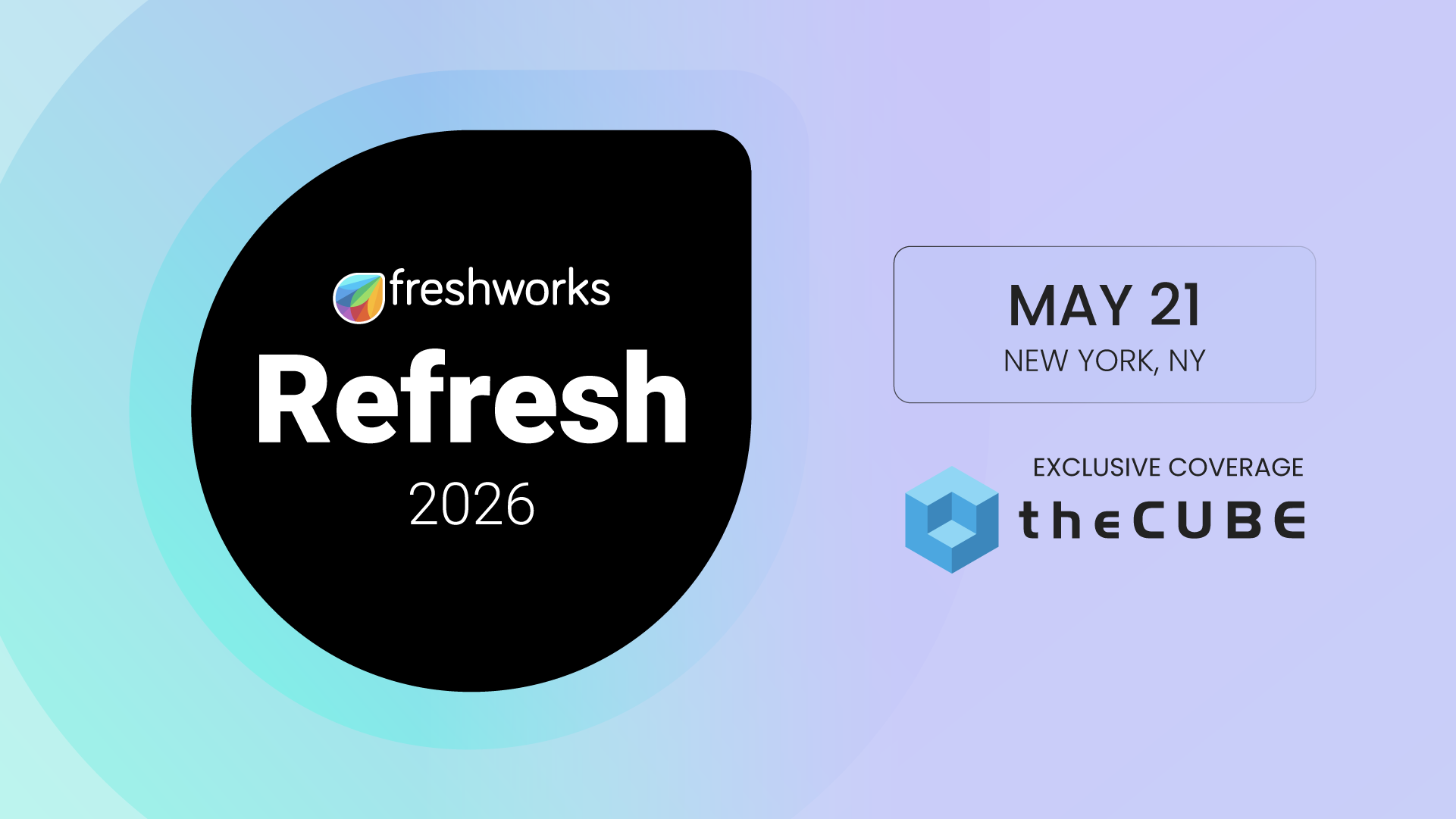
Freshworks Refresh 2026: What the reposition signals
A SaaS infrastructure company announces major brand repositioning, triggering a cascade of identity-layer decisions for their stakeholders and partners.
Freshworks, a public SaaS vendor serving customer engagement and IT operations, has initiated Refresh 2026—a comprehensive brand repositioning campaign designed to sharpen market perception and establish new positioning architecture ahead of competitor displacement. The initiative signals that Freshworks views its current identity infrastructure as insufficient for its next-tier buyer and use-case expansion. This matters because rebranding at scale, especially in B2B SaaS, requires every touchpoint—analyst briefing, sales collateral, event presence, partner communications, corporate gifting, facility design, and executive environment—to imprint the same visual and verbal code. Freshworks is not simply refreshing a logo. They are reconstructing how they are kept in the minds of mid-market and enterprise operators.
Why the timing signals market pressure
Analyst coverage of Refresh 2026 suggests Freshworks has identified a perception gap between what they deliver and what their current brand architecture communicates. In SaaS, positioning lives in the buyer's mental model before it lives anywhere else. When a company of Freshworks' scale (publicly traded, $600M+ ARR) launches a reposition, it typically means their existing identity is no longer displacing competitor claims effectively, or their target buyer has shifted. The campaign signals they are moving either upmarket, horizontally into new use cases, or both. For their partner ecosystem and corporate stakeholders, this means the identity codes they have relied on—color, tone, object language, event aesthetics—are about to change. The window between announcement and execution is where identity infrastructure gets built or breaks.
Where the infrastructure opportunity lives
Freshworks will need to imprint Refresh 2026 across a disciplined cascade of branded identity infrastructure. This includes: analyst presentation design and material production; sales enablement collateral and object sets (leave-behinds, proposal bindings, office installations); event presence architecture (booth design, attendee gifting, reception environments); partner and stakeholder communications suites; corporate facilities and leadership spaces; and high-touch client engagement objects. Each tier requires a different material language, but all must register the same strategic signal. Heritage-house CMOs and event operators at the $250K+ tier know this constraint well: when a SaaS vendor repositions, their partners and vendors have 90-180 days to align their own production, or they amplify the old brand code and undercut the new one. Freshworks' partners who handle their event presence, stakeholder gifting, and corporate environments must commission new production runs, which take lead time to spec, manufacture, and imprint.
What operators do in the execution window
Experienced Single Family Office advisors and premium-tier operators move now. First: audit what branded objects and identity infrastructure Freshworks currently keeps in circulation—your event gifting, your facility installations, your proposal bindings, your stakeholder materials. Second: establish a communication cadence with Freshworks' brand and partnership teams to obtain the new identity guidelines, color specifications, and approved material language before public launch. Third: begin scoping new production for the tier of branded identity infrastructure you manufacture or source—whether that is executive gifting, event collateral, corporate installations, or partner recognition objects. The companies that move first through this window manufacture new-code materials while competitors are still in specification phase. This creates a perception advantage: your branded objects register the new Freshworks positioning before the market's generic understanding of it has settled. That is how identity infrastructure gets handled at scale.
Editorial & Disclosure Notice: This article was written with artificial intelligence from public sources and is published without individual human review. Artificial intelligence and other digital tools are also used for research, analysis, editing, formatting, and production. Errors, omissions, outdated information, or inaccuracies may occur. References to companies, brands, products, services, organizations, or individuals are for informational and editorial purposes and do not imply endorsement, sponsorship, affiliation, partnership, or approval unless expressly stated. All trademarks and other intellectual property remain the property of their respective owners. Opinions, analysis, estimates, and commentary are informational only and should not be construed as financial, investment, legal, tax, medical, procurement, or other professional advice. Information may be corrected, clarified, or updated after publication. Corrections or removal requests: jenny@pops4.com.