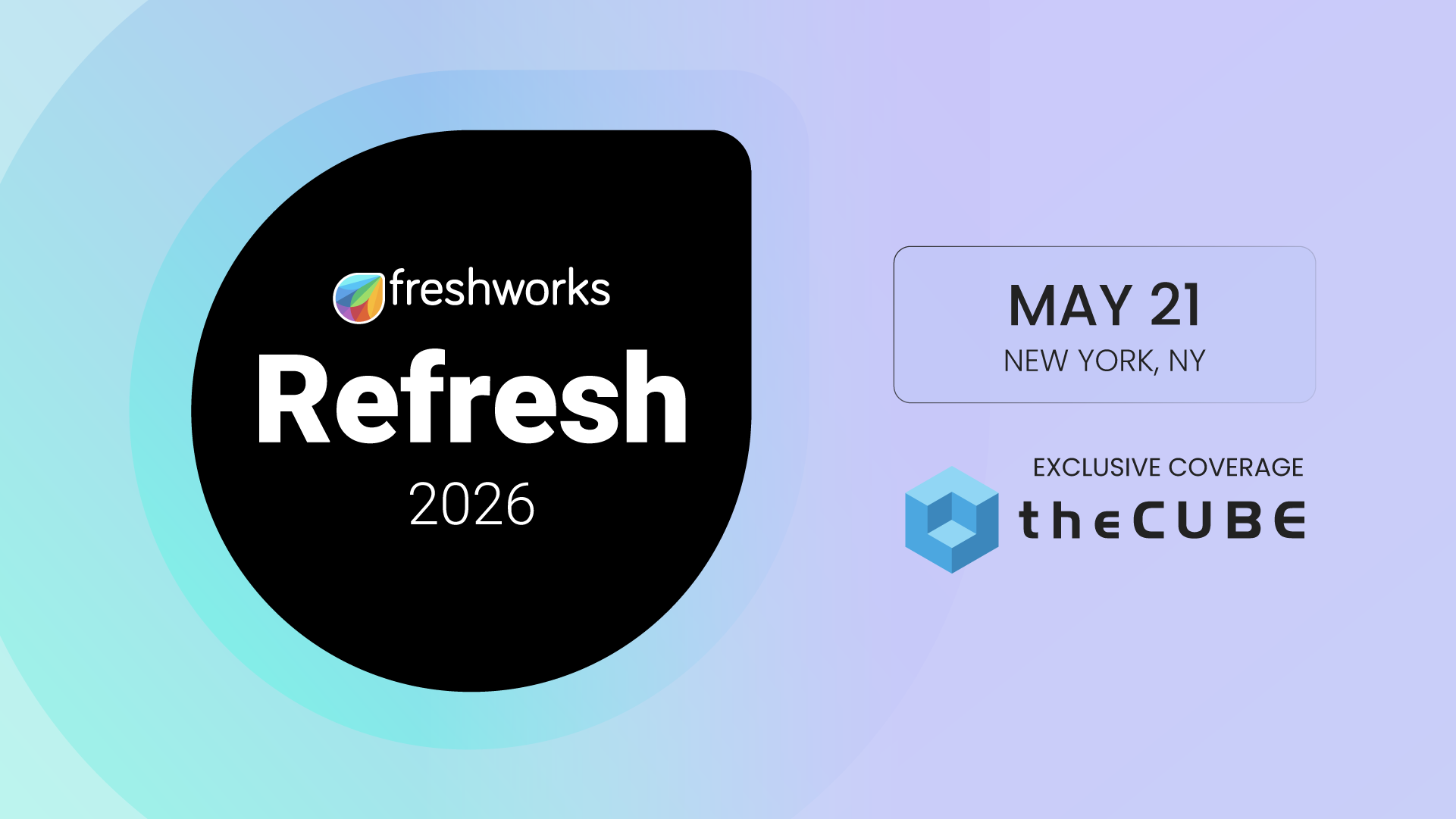
Freshworks Signals Brand Rebuild at Refresh 2026
Product refresh cycle and conference strategy indicate structural identity evolution for mid-market CRM vendor.
Freshworks has anchored Refresh 2026 as its flagship conference, pairing product announcements with analyst-led narrative work. This move—combining new feature releases with controlled third-party coverage—marks a deliberate repositioning inside the crowded mid-market software space. The company manufactures CRM and customer engagement tools. The event functions as both product unveiling and brand architecture reset.
What the conference calendar signals
Refresh 2026 operates as a stage for dual work: technical product announcements reach practitioners; analyst-led sessions establish market positioning before competitors occupy narrative ground. This is not launch spectacle. It is disciplined sequencing. Freshworks has learned that buyer confidence in mid-market software depends on three factors: analyst validation, peer adoption data, and visible product momentum. By hosting the event, the company controls timing, audience composition, and message layering. The conference becomes a manufacturing floor for brand credibility, not a broadcast channel.
The analyst component carries weight. When Gartner, Forrester, or G2 researchers present findings at a vendor's own event, it imprints legitimacy that self-directed claims cannot reach. Heritage-house procurement teams note this structure. They parse which vendors understand how to build trust through third-party validation versus those that treat conferences as vendor showcases.
Where the identity infrastructure gap opens
Product refresh cycles expose structural gaps in branded identity infrastructure. Freshworks enters a window where its visual identity system, messaging hierarchy, event collateral, and physical presence assets must align with the new product narrative. This is technical work. A misaligned identity layer—where conference signage contradicts the product positioning, or where printed materials carry outdated brand language—reads as organizational drift to buyer audiences.
The infrastructure required here extends beyond digital assets. It includes: event environment design that reflects product sophistication; collateral systems that hold brand language at scale; physical branded objects imprinted with updated visual systems; stakeholder communication materials that prime internal teams before external announcement. When these systems are fractured or outdated, even strong product news lands flat. Buyers sense inconsistency.
What operators do in this window
Chiefs of Staff, CMOs, and event leaders at heritage houses recognize this moment as an operator's window. Between now and Refresh 2026, Freshworks must inventory, rebuild, or replace identity infrastructure across six touch points: conference environment, speaker materials, attendee collateral, post-event communications, sales enablement objects, and analyst briefing room assets. Each requires strategic refresh to signal coherence.
Operators who move early in this cycle—securing premium event roles, obtaining analyst briefing slots, or establishing media partnerships—position themselves ahead of competitors who wait for post-event coverage. The window closes after announcement. Premium access and narrative influence depend on pre-event alignment. Event planners at the $250K tier understand: you either manufacture presence inside the refresh cycle, or you broadcast reaction after it concludes.
For Single Family Office principals and their Chiefs of Staff monitoring vendor partnerships or portfolio company positioning, this event signals which software vendors maintain brand discipline through product cycles. Freshworks' structured approach to conference-led announcement—pairing product work with analyst coverage—indicates operational maturity. This is the way this gets handled.
Editorial & Disclosure Notice: This article was written with artificial intelligence from public sources and is published without individual human review. Artificial intelligence and other digital tools are also used for research, analysis, editing, formatting, and production. Errors, omissions, outdated information, or inaccuracies may occur. References to companies, brands, products, services, organizations, or individuals are for informational and editorial purposes and do not imply endorsement, sponsorship, affiliation, partnership, or approval unless expressly stated. All trademarks and other intellectual property remain the property of their respective owners. Opinions, analysis, estimates, and commentary are informational only and should not be construed as financial, investment, legal, tax, medical, procurement, or other professional advice. Information may be corrected, clarified, or updated after publication. Corrections or removal requests: jenny@pops4.com.