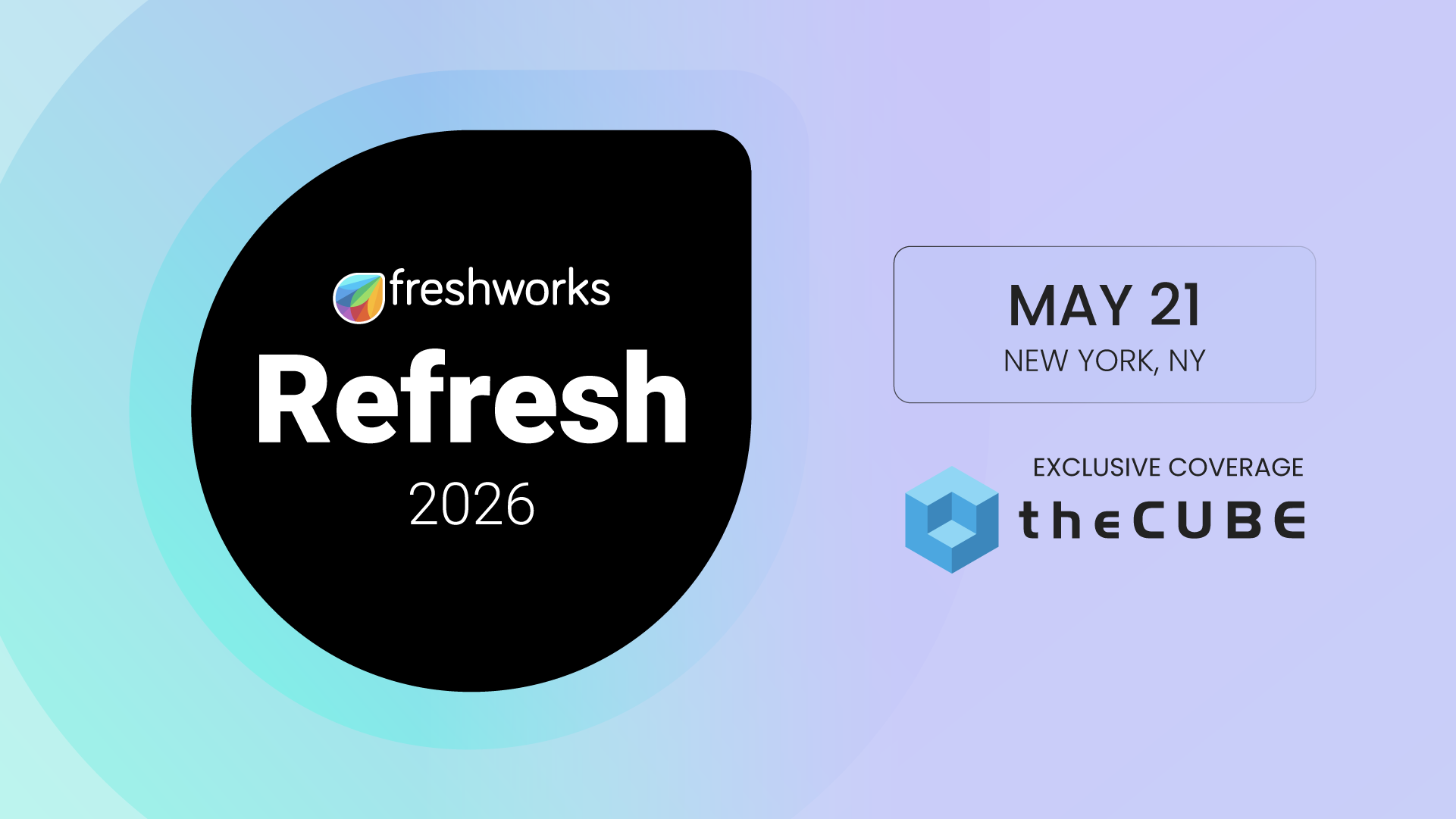
Freshworks Refresh 2026: Platform Pivot Demands Physical Identity Layer
Major repositioning and analyst-led campaign launch signals urgent need for heritage-quality collateral and packaging infrastructure.
Freshworks announced Refresh 2026 this week—a significant platform repositioning tied to analyst coverage and a multi-phase campaign rollout. The software house is moving upmarket, narrowing its service-delivery focus, and recalibrating its brand position against entrenched competitors. This is not incremental product work. This is repositioning work. And repositioning work, done at enterprise scale, requires physical identity infrastructure that most software houses do not maintain.
What the repositioning signals
Freshworks is consolidating its service stack and reshaping how it speaks to buyers. The Refresh 2026 initiative anchors in analyst relations—Gartner, Forrester coverage, and earned third-party credibility. This signals a move away from self-directed marketing and toward buyer-led discovery. Analyst briefings are controlled environments. Sales cycles lengthen. Deal sizes rise. Buyer committees expand. The company is manufacturing confidence through third-party endorsement, not volume. That shift alone—from volume narrative to authority narrative—requires a complete overhaul of how the brand shows up in physical space: in boardrooms, at events, during proof-of-concept phases, and in the hands of procurement teams who vet vendors across six-month evaluation windows.
The platform changes matter less than the positioning change. When a software house repositions, it must simultaneously imprint that repositioning into every object a buyer touches. Sales collateral. Packaging. Event presence. Materials sent to prospects during evaluation. The gap between digital narrative and physical presence destroys credibility at enterprise scale. Freshworks knows this. The question is whether they have the infrastructure to execute it.
Where the identity layer breaks
Most software houses operate as if positioning happens in the browser. It does not. Positioning happens in the stack of materials a buyer reviews at 11 p.m. on a Friday, alone in their office, deciding whether to recommend this vendor to the CFO. Freshworks is moving into that buyer's office. The materials in that office must reinforce the narrative: authority, precision, restraint, enterprise-grade thinking. Off-the-shelf branded objects do not do this work. Commodity packaging does not do this work. Stock materials imprinted with logos do not do this work.
Freshworks will need:
Heritage-quality collateral manufactured to specification for analyst events, executive briefings, and sales sequences.
Packaging architecture that signals enterprise positioning—unboxing experience, material weight, imprinting precision, and structural design that reflects the platform's positioning as a refined, upmarket service layer.
Event infrastructure: conference presence, executive roundtable materials, and audience-specific identity objects that hold up under scrutiny by procurement committees.
Sales enablement materials: not decks, but kept objects—leave-behinds, folders, credential packages, and evaluation guides manufactured to the standard that enterprise buyers expect from vendors competing at this tier.
The window for this work is now. Refresh 2026 launches in phases. Early phases are analyst-led, controlled, intimate. That is when the identity infrastructure must be locked. By the time the campaign goes public, every physical touchpoint must already reinforce the narrative.
What operators do in this window
Experienced operators—CMOs who have managed brand transitions, VP Sales teams who have taken platforms upmarket, and event planners orchestrating enterprise buyer journeys—move fast during positioning shifts. They do three things immediately: they audit current collateral and identify what must be retired; they specify new branded identity infrastructure before campaign launch; and they coordinate with sales enablement so that materials arrive in buyers' hands on schedule.
The window is tight. Analyst briefings begin soon. Sales cycles are already active. Procurement teams are already asking questions. Freshworks must move the branded identity infrastructure layer ahead of the narrative wave, not behind it. The companies that do this well manufacture trust. The companies that lag with generic branded objects manufacture doubt.
This is the way this gets handled: with discipline, specification, and a six-month lead time before the buyer ever knows the repositioning occurred.
Editorial & Disclosure Notice: This article was written with artificial intelligence from public sources and is published without individual human review. Artificial intelligence and other digital tools are also used for research, analysis, editing, formatting, and production. Errors, omissions, outdated information, or inaccuracies may occur. References to companies, brands, products, services, organizations, or individuals are for informational and editorial purposes and do not imply endorsement, sponsorship, affiliation, partnership, or approval unless expressly stated. All trademarks and other intellectual property remain the property of their respective owners. Opinions, analysis, estimates, and commentary are informational only and should not be construed as financial, investment, legal, tax, medical, procurement, or other professional advice. Information may be corrected, clarified, or updated after publication. Corrections or removal requests: jenny@pops4.com.