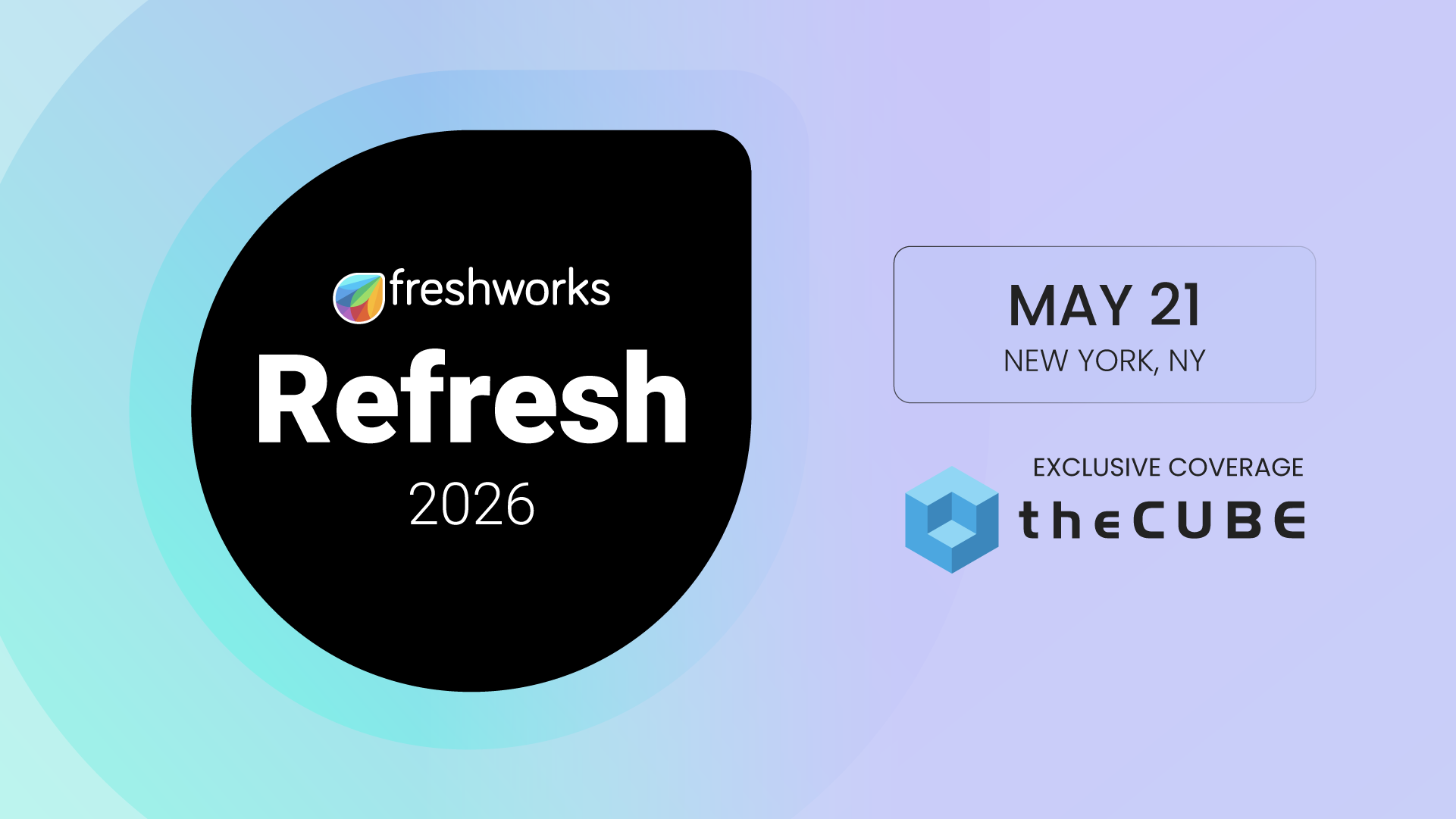
Freshworks Signals Major Identity Shift at May 2026 Refresh
Product overhaul and analyst-backed go-to-market campaign imply substantial changes to how the brand manufactures presence across sales channels and client touchpoints.
Freshworks announced a comprehensive product refresh and rebrand initiative launching May 21 at Freshworks Refresh 2026. The move includes analyst-led coverage at theCUBE and signals a coordinated go-to-market campaign designed to reposition the company's suite across CRM, customer support, and engagement verticals. This is not a minor UI adjustment or messaging refresh. The scale and timing—coupled with third-party validation infrastructure—suggest the company is imprinting a new operating identity across sales motion, client delivery, and the physical and digital objects that move between prospect and account teams.
What the refresh signals about market repositioning
Freshworks manufactures its reputation at the intersection of feature velocity and market accessibility. The 2026 refresh suggests the company believes its current identity no longer holds that positioning. Competitive displacement in the mid-market and SMB space has accelerated; Salesforce, HubSpot, and specialized point work have moved ahead on specific use cases. By anchoring the announcement to analyst coverage and a dedicated conference event, Freshworks is signaling intent to manufacture a new category narrative rather than defend the old one. This is not a lateral move. The company is building infrastructure to reach buyers who may not yet recognize Freshworks as the default choice in their segment.
Where the branded identity layer requires new discipline
A go-to-market refresh at this scale demands consistent imprinting across four channels: sales collateral, event presence, account documentation, and the account team's client-facing objects. Most companies execute two or three of these well. The ones that hold market position through cycles execute all four with the same structural discipline. Freshworks' May launch gives enterprise sales teams, regional offices, and reseller networks roughly four months to receive, adopt, and deploy new branded identity infrastructure. This means collateral design, conference booth architecture, proposal templates, and client-gifted objects must ship as a coordinated system, not as isolated assets. Heritage companies and single-family offices watching this move should note what happens: Does Freshworks manufacture a scalable identity system that regional teams can deploy without guidance, or does it fall into the pattern where each office produces its own interpretation.
What operators do in the four-month window
For CMOs, event planners, and premium sales leaders at heritage houses and family-office-connected companies, the Freshworks move creates a procurement signal. When a major platform announces a rebrand and go-to-market refresh, they require branded identity objects to support the campaign: conference materials, hospitality gifts, client welcome packages, sales-team merchandise, and event infrastructure. The operators who outrank their peers in this environment begin conversations now, before Freshworks' internal teams have finalized the identity architecture. Sponsorship conversations, hospitality partnerships, and branded-object supply agreements are negotiated in February and March, not May. The window closes fast. Companies that keep close attention to announcement timing and execution rhythm secure placement before the market recognizes the opportunity.
The way this gets handled separates discipline from noise. A responsible rebrand requires the branded identity house to work backward from the go-to-market narrative, not forward from design trends. Freshworks is betting that a clearer product story, backed by analyst credibility and physical presence at a major event, will reposition the brand. That bet only holds if every object, collateral piece, and client touchpoint imprints the same message. The companies that manufacture that consistency—and the procurement leaders who supply them—will keep their position in the next cycle.
Editorial & Disclosure Notice: This article was written with artificial intelligence from public sources and is published without individual human review. Artificial intelligence and other digital tools are also used for research, analysis, editing, formatting, and production. Errors, omissions, outdated information, or inaccuracies may occur. References to companies, brands, products, services, organizations, or individuals are for informational and editorial purposes and do not imply endorsement, sponsorship, affiliation, partnership, or approval unless expressly stated. All trademarks and other intellectual property remain the property of their respective owners. Opinions, analysis, estimates, and commentary are informational only and should not be construed as financial, investment, legal, tax, medical, procurement, or other professional advice. Information may be corrected, clarified, or updated after publication. Corrections or removal requests: jenny@pops4.com.