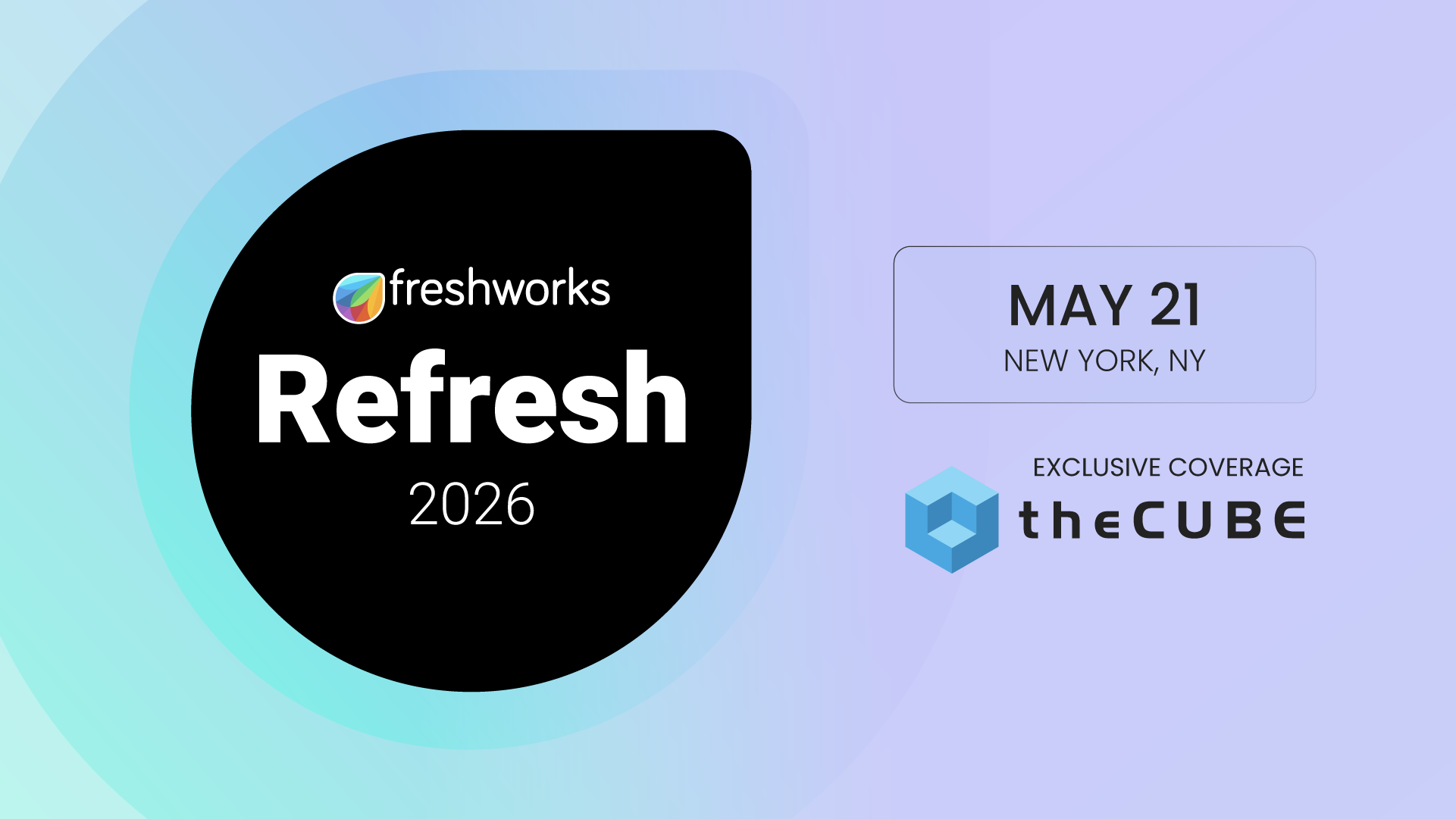
Freshworks Refresh 2026: What the repositioning signals
Cloud-services platform restructures its market position and identity layer ahead of analyst coverage cycle.
Freshworks has called its GOLD-tier Refresh 2026 event to announce a significant product and brand repositioning. The announcement surfaces a company recalibrating its relationship to the market—moving from a feature-dense cloud platform toward a more defined operational narrative. Analyst-led coverage will frame this reset. What matters to branded-identity strategists is what comes next: the physical and identity infrastructure required to make this repositioning stick with enterprise buyers, their teams, and the gatekeepers who control access.
What the move signals about market position
Freshworks operates in the crowded customer-engagement software space. A major relaunch—especially one timed for analyst coverage—indicates the company believes its current positioning no longer outranks its competitors in buyer perception. The Refresh 2026 event structure itself is notable: analyst-led, not customer-led. This means Freshworks is resetting the narrative at the influencer layer first, before it touches end-users or field teams. That's disciplined. It also means the brand faces an eighteen-to-twenty-four-month window where its identity infrastructure must reinforce—not contradict—what analysts will write about the platform's new direction.
The repositioning likely includes a visual identity refresh, messaging architecture, and product naming convention. These elements manufacture buyer confidence. They also create friction. Sales teams, customer success managers, and partner ecosystems operate on the old language and visual system until new materials reach them. That gap between announcement and field adoption is where most repositioning efforts lose coherence.
Where the identity layer requires structural work
Brand refresh events produce collateral: websites, analyst decks, event signage, sales enablement materials, video assets, and the physical objects that move through premium channels—event materials, executive gifts, client-facing branded objects that imprint the new positioning into memory. Freshworks must now manufacture an entire secondary layer of identity infrastructure that reaches beyond the marketing department.
Consider the Chief of Staff overseeing a $250M SFO investment in enterprise software. She reads the analyst report. She sees the website. Then she sits in a boardroom where a Freshworks VP presents the platform. The branded objects in that room—the way the pitch deck is bound, the notebook provided, the quality and language of the sales kit—either reinforce the repositioning or expose it as surface-level rebranding. Single Family Office principals and their operational teams detect inconsistency. Heritage-house CMOs and event planners at the $250K+ tier understand that branded identity infrastructure must reach the decision-maker's hand, not just the screen.
Freshworks now operates under scrutiny. Analysts will watch whether the company keeps its positioning discipline across channels. Enterprise buyers will note whether the new identity appears in sales conversations, executive briefings, and the materials that leave those rooms.
What experienced operators do in this window
Operators understand that a repositioning announcement creates an eighteen-month opportunity. Freshworks will invest heavily in core marketing and sales enablement. But the secondary and tertiary identity layers—the branded objects and materials that reach premium audiences, the executive-tier materials, the client-facing collateral that sits on tables during high-stakes conversations—often receive less rigorous design governance than they should.
This is where experienced procurement leads and CMOs intercede. They recognize that a company mid-repositioning is receptive to partnership conversations about branded identity infrastructure. Event planners at the premium tier know that Freshworks will need to host analyst events, customer advisory board meetings, and executive roundtables over the next two years. Each of these events requires materials that reflect the new positioning with precision.
The window closes once the repositioning reaches critical mass in the market—roughly twenty to twenty-four months from announcement. After that, branded identity infrastructure becomes maintenance work, not strategic positioning work. Operators who engage now manufacture an advantage: they become partners in reinforcing the narrative, not vendors executing someone else's strategy.
This is how the most rigorous branded-identity work gets handled: by understanding when a major company repositions, and moving toward that aperture before it narrows.
Editorial & Disclosure Notice: This article was written with artificial intelligence from public sources and is published without individual human review. Artificial intelligence and other digital tools are also used for research, analysis, editing, formatting, and production. Errors, omissions, outdated information, or inaccuracies may occur. References to companies, brands, products, services, organizations, or individuals are for informational and editorial purposes and do not imply endorsement, sponsorship, affiliation, partnership, or approval unless expressly stated. All trademarks and other intellectual property remain the property of their respective owners. Opinions, analysis, estimates, and commentary are informational only and should not be construed as financial, investment, legal, tax, medical, procurement, or other professional advice. Information may be corrected, clarified, or updated after publication. Corrections or removal requests: jenny@pops4.com.