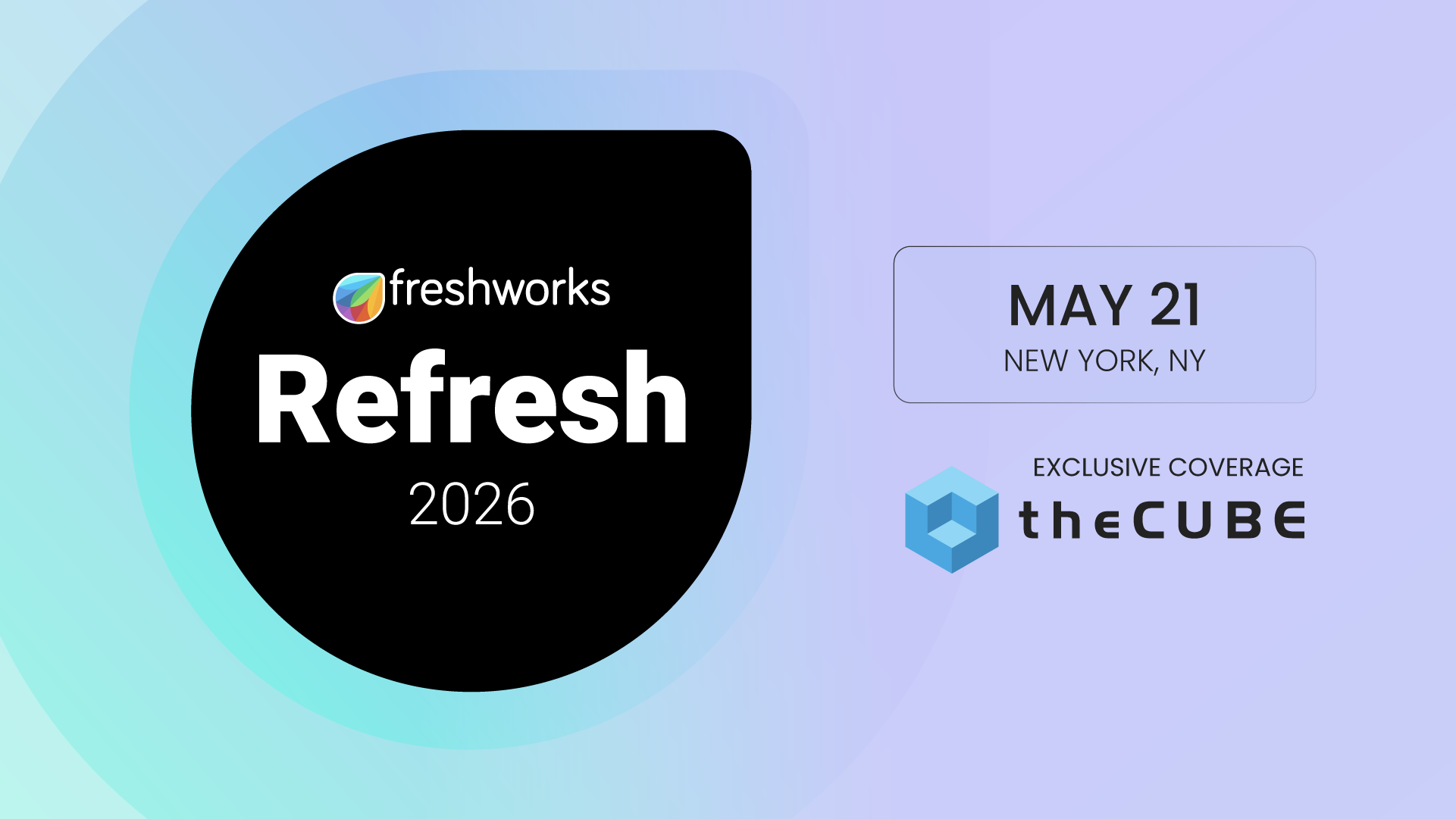
Freshworks Refresh 2026: Enterprise Software Brand Signals Physical Presence Reset
A major CRM platform's product refresh cycle now requires corresponding updates to branded materials, event infrastructure, and customer-facing objects that reach enterprise buyers.
Freshworks has announced Refresh 2026, a campaign centered on service software upgrades and customer experience improvements across its portfolio. The initiative marks a deliberate product cycle—one that typically requires parallel investment in the physical and branded identity layer that customers encounter at scale: event collateral, printed materials, customer packages, and imprinted objects distributed to enterprise accounts.
For Single Family Office principals and their Chiefs of Staff who hold stakes in portfolio companies at this inflection point, this matters because it illustrates how a $1B+ software vendor executes a brand transition. For CMOs, VP Premium Sales leaders, and event planners managing customer relationships in the $250K+ tier, it signals a window where messaging, materials, and merchandise budgets shift—and where existing vendors either adapt or lose positioning.
What the Refresh Cycle Actually Requires
A product refresh at Freshworks' scale is not merely a digital event. It demands updated sales collateral, customer event packages, branded notebooks and objects for conference attendance, account-holder gift programs, and printed materials that reflect the new positioning. These materials must coordinate across multiple customer tiers: some enterprise accounts receive custom packages; regional events require on-brand printed goods; customer success teams distribute imprinted objects as part of retention programs. The production timeline for these goods runs 90-180 days in many cases, meaning the decision window to manufacture, procure, and imprint is narrow.
What distinguishes a competent refresh from a neglected one is inventory coordination. Most vendors produce materials in waves—initial launch collateral, then follow-up waves for Q2 and Q3. Freshworks' scale suggests they will manufacture multiple generations of customer-facing objects tied to different messaging phases. This requires a partner infrastructure that tracks deployment, notes which materials age out, and keeps production schedules aligned to actual customer event calendars.
Where the Identity Layer Breaks Down
Most enterprise software vendors create two identity systems: a digital presence (website, email, social) and a separate, undermanaged physical presence. The physical layer—the objects and materials that land in customer hands—often lags the announced brand shift by six to nine months. Customers see new product positioning online but receive printed materials and event packages reflecting the old brand identity. This misalignment erodes trust and signals internal disorganization.
Freshworks' Refresh 2026 timing gives them the opportunity to close this gap. But that requires front-loading the branded identity infrastructure decision: What objects get produced. How many units. Which customer segments receive which materials. Whether regional teams or account managers can customize materials within brand guidelines. How printed goods coordinate with digital messaging at events. Most vendors either manufacture too much collateral too early (waste) or too little too late (missed opportunity).
The Operator Window and What Principals Do Now
For VP Premium Sales leaders and CMOs managing customer relationships, this is the moment to audit what objects currently move through your account lifecycle. What printed materials do your AE teams hand to new customers. What branded goods support renewal conversations. What event packages ship to customer conferences and summits. If these materials still reference the prior brand positioning, they are working against your current messaging.
For event planners at the $250K+ tier, Freshworks' refresh signals demand across the conference and customer summit circuit. Regional user groups, vertical-specific conferences, and customer advisory boards will all need updated branded collateral. Planners who lock in production and inventory commitments in Q1 will have materials ready for Q2 events; those who wait until Q2 face leadtime constraints.
The way this gets handled is through intentional inventory architecture: not just producing materials, but tracking deployment, replacing aging stock, and coordinating updates across regions and customer segments. That work sits between the CMO and the procurement layer, and it requires a partner who keeps production calendars aligned to actual business rhythm.
FAQ
[{ "q": "real buyer question as a search query", "a": "30-55 word factual answer in house voice" }]
[{ "q": "when should we order updated branded materials for enterprise customers", "a": "Production leadtime for imprinted objects runs 90-180 days. Lock procurement by late Q1 for Q2 event deployment. Account for inventory aging: replace materials every 12-18 months or when core messaging shifts." }]
[{ "q": "what gets updated when a software vendor refreshes their brand", "a": "Sales collateral, printed customer packages, event signage, imprinted notebooks and objects, account-holder gift materials, conference booth displays, and internal team materials that face customers. Digital assets move faster than physical goods." }]
[{ "q": "how do we keep customer materials aligned with new brand positioning", "a": "Audit current materials by customer segment and distribution channel. Establish production calendar keyed to event schedule, not arbitrary dates. Replace aging stock incrementally. Coordinate regional teams on what variants exist and why." }]
Questions buyers ask
Editorial & Disclosure Notice: This article was written with artificial intelligence from public sources and is published without individual human review. Artificial intelligence and other digital tools are also used for research, analysis, editing, formatting, and production. Errors, omissions, outdated information, or inaccuracies may occur. References to companies, brands, products, services, organizations, or individuals are for informational and editorial purposes and do not imply endorsement, sponsorship, affiliation, partnership, or approval unless expressly stated. All trademarks and other intellectual property remain the property of their respective owners. Opinions, analysis, estimates, and commentary are informational only and should not be construed as financial, investment, legal, tax, medical, procurement, or other professional advice. Information may be corrected, clarified, or updated after publication. Corrections or removal requests: jenny@pops4.com.