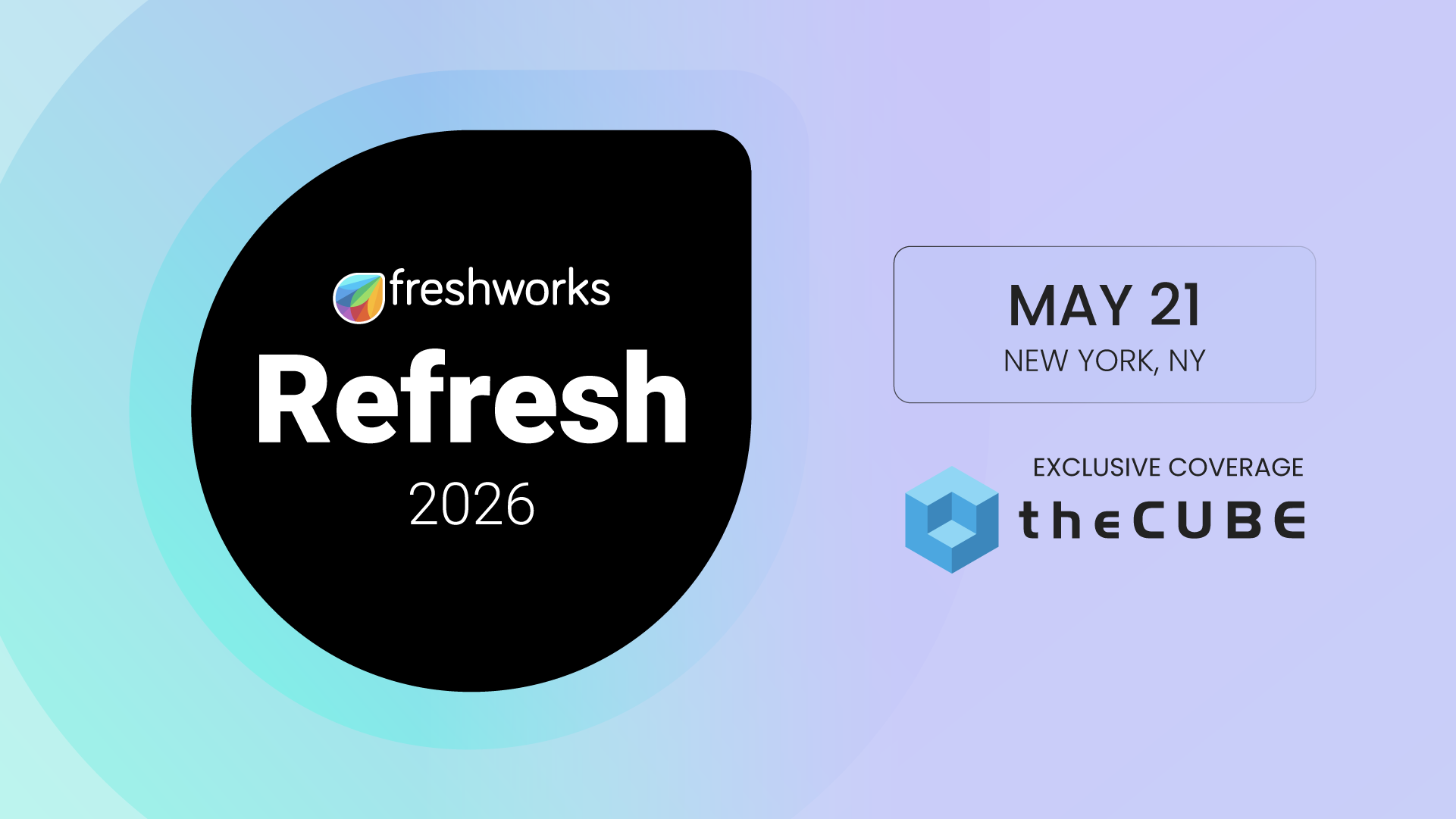
Freshworks Refresh 2026: Where SaaS Identity Moves Off Screen
A major product and brand repositioning campaign signals the moment when digital-first companies anchor their new positioning in physical, distributed identity infrastructure.
Freshworks Inc. has announced Refresh 2026, a substantial product and brand positioning initiative for its service software platform. The trigger is clear: the company is moving beyond its existing product architecture and market narrative. What matters more is what comes next—the phase where that repositioned brand lands in the hands of executives, clients, and the field sales organization through physical branded identity infrastructure.
What the move signals for identity infrastructure
When a SaaS platform undertakes a refresh of this scale, the work is not finished in design systems or messaging decks. The company faces an immediate operational requirement: how does the new positioning show up in the room. Executive gifts, client engagement materials, and field-facing branded objects must imprint the new brand narrative into memory and into organizational practice. For a B2B software vendor, this is not decoration. It is architecture.
Freshworks operates in a crowded service software category. The refresh is explicitly competitive—a repositioning against Zendesk, Gorgias, and the emerging wave of AI-enabled service platforms. The physical and distributed branded objects that accompany the launch are the first proof that the repositioning is real. When a CEO receives an executive gift that reflects the new brand language, or when a client sees branded materials at an engagement event, those objects perform work that screens cannot. They say: we have changed, we are serious, and we are in your space.
Where the identity layer breaks without structure
Most companies approach this moment reactively. Marketing procurement a set of items. Sales grabbing what is available. Events teams assembling materials without consistent production architecture. What happens instead is fragmentation: the new brand lives on the website, but the physical infrastructure still carries the old narrative, or worse, no coherent narrative at all.
The window for Freshworks is narrow. Between now and Refresh 2026 activation, the company must manufacture and distribute a complete set of branded identity infrastructure—from executive gifts that reflect the new positioning, to client materials that educate and imprint, to event collateral that anchors the repositioning in live audience memory. This infrastructure must be kept consistent across geography, tier, and channel. It must be sourced and produced with enough lead time to be available at launch, not three months after.
Operators who have managed this before know the pattern: the brand refresh is announced. The field discovers nothing has changed in what they can hand to a prospect. Client events proceed without materials that reflect the new positioning. Six months later, scrambling begins. By then, the repositioning has lost velocity.
What experienced operators do in this window
The companies that outrank their competition in this moment do three things. First, they audit what branded identity infrastructure currently exists and what must be retired or retooled. Second, they commission production runs of core items—executive gifts, leave-behind materials, event collaterals—with enough calendar buffer to have stock before launch. Third, they keep a production roadmap that extends through the first eighteen months of the refresh, so that field teams, events groups, and client success can all activate from the same infrastructure.
For Freshworks, the opportunity is to make the physical side of the refresh as disciplined as the product side. This is where identity houses that work in this tier operate. The work is not decoration or an afterthought. It is the distributed, physical manifestation of the repositioning, and it moves faster than most vendors plan for. The way this gets handled determines whether the refresh lands with force or dissipates into the market without impression.
Editorial & Disclosure Notice: This article was written with artificial intelligence from public sources and is published without individual human review. Artificial intelligence and other digital tools are also used for research, analysis, editing, formatting, and production. Errors, omissions, outdated information, or inaccuracies may occur. References to companies, brands, products, services, organizations, or individuals are for informational and editorial purposes and do not imply endorsement, sponsorship, affiliation, partnership, or approval unless expressly stated. All trademarks and other intellectual property remain the property of their respective owners. Opinions, analysis, estimates, and commentary are informational only and should not be construed as financial, investment, legal, tax, medical, procurement, or other professional advice. Information may be corrected, clarified, or updated after publication. Corrections or removal requests: jenny@pops4.com.