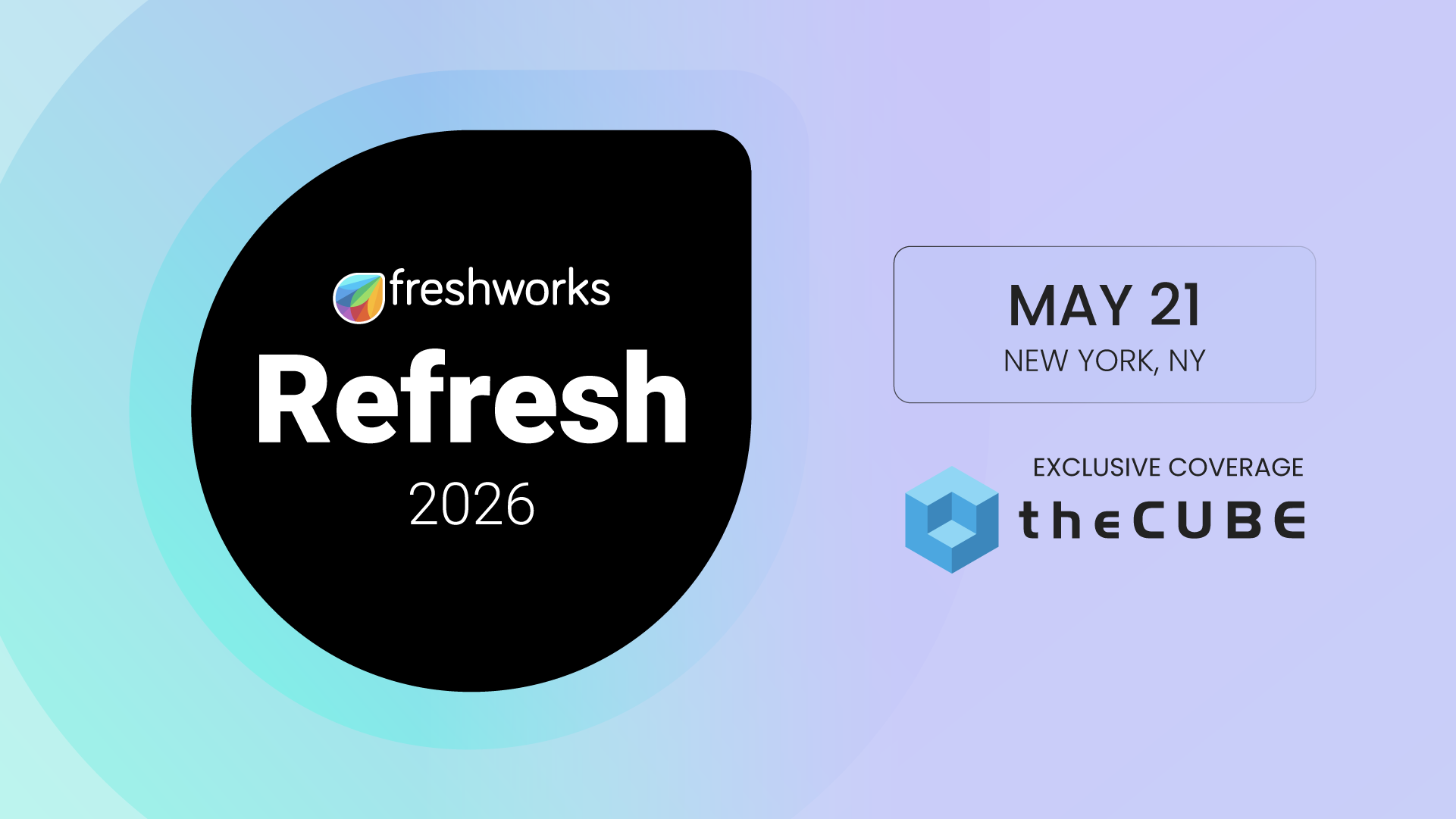
Freshworks Refresh 2026: SaaS Repositioning Demands Identity Layer
A comprehensive brand and product overhaul signals Freshworks is moving upstream—and operators must prepare the physical infrastructure to match.
Freshworks Inc. has announced Freshworks Refresh 2026, a major repositioning that touches product architecture, market messaging, and visual identity across the platform. The move includes analyst-led market coverage and a coordinated go-to-market strategy. This is not a cosmetic update. The company is fundamentally reframing how it competes in the customer engagement software space, signaling a shift toward enterprise customers and away from the mid-market positioning that built the business. For principals and operators who work with Freshworks—or who compete near it—this refresh creates a window where brand coherence becomes essential.
What the repositioning actually signals
Freshworks built its reputation on ease of deployment and transparent pricing for smaller teams. The 2026 refresh moves the company toward complexity: more integrations, deeper analytics, and enterprise-grade security. This is upstream movement. When SaaS companies migrate upmarket, they typically encounter a new buyer—the Chief of Staff, the procurement lead, the VP running a multi-million-dollar software budget. These buyers do not evaluate companies based on product demos alone. They read analyst reports, attend curated events, and absorb branded objects and communications that carry institutional weight. Freshworks is investing heavily in analyst relationships and go-to-market velocity. The company is manufacturing the perception of momentum and scale.
The visual identity overhaul matters because it signals intent to the market. A rebrand at this scale—touching color, typography, motion, and spatial design—is a declaration. It says: we are not the scrappy platform you knew. We are building infrastructure that serves enterprises. The old visual language gets retired. The new one must imprint across every surface where Freshworks meets a buyer: conference materials, executive communications, event environments, and the physical objects that carry the brand into a boardroom.
Where the identity layer breaks without planning
Most companies manage rebrand transitions poorly because they separate the product announcement from the identity infrastructure build. Freshworks will launch new messaging, a refreshed website, and updated sales collateral. That covers the digital layer. But the physical presence—the branded objects that live on desks, travel in briefcases, sit on tables during negotiations—often lags six to twelve months. This creates friction.
A Chief of Staff or procurement lead visiting Freshworks at a major conference in Q2 2026 will encounter the new visual identity on signage, on printed agendas, on the stage backdrop. Then they receive a branded object—a pen, a notebook, a conference bag—that still carries the old mark. The discontinuity registers. It reads as unfinished, underfunded, or internally unaligned. Enterprise buyers notice this. They interpret it as a signal about execution rigor. For Freshworks' go-to-market to land with the intended weight, every branded object, every imprinted surface, every physical touchpoint must reflect the new identity architecture. That infrastructure must be planned, sourced, and manufactured before analyst conferences begin.
How experienced operators prepare for the window
The window between now and major industry events in 2026 is where smart operators move. First: audit the entire branded object inventory. Note what ships with sales kits, what travels to events, what gets handed to prospects. Second: establish relationships with manufacturers and imprinters who can scale quickly. Third-party vendor delays often create the bottleneck, not design. Third: work backward from event calendars. Know when Freshworks will show up at major conferences, and ensure the branded identity layer is locked two months before. Fourth: coordinate with Freshworks' internal teams early. The company will have new brand guidelines, new approved vendor lists, new production timelines. Moving ahead of that schedule—or aligned with it—determines whether your execution reads as institutional or reactive.
For Single Family Offices investing in or partnering with Freshworks, this is the moment to clarify brand governance. For CMOs at heritage houses who work with Freshworks on events or sales environments, this is the moment to secure manufacturing capacity and lock in new identity specifications. The way this gets handled—the discipline applied to the physical layer—determines whether the Freshworks Refresh lands with the intended force or reads as incomplete.
Editorial & Disclosure Notice: This article was written with artificial intelligence from public sources and is published without individual human review. Artificial intelligence and other digital tools are also used for research, analysis, editing, formatting, and production. Errors, omissions, outdated information, or inaccuracies may occur. References to companies, brands, products, services, organizations, or individuals are for informational and editorial purposes and do not imply endorsement, sponsorship, affiliation, partnership, or approval unless expressly stated. All trademarks and other intellectual property remain the property of their respective owners. Opinions, analysis, estimates, and commentary are informational only and should not be construed as financial, investment, legal, tax, medical, procurement, or other professional advice. Information may be corrected, clarified, or updated after publication. Corrections or removal requests: jenny@pops4.com.