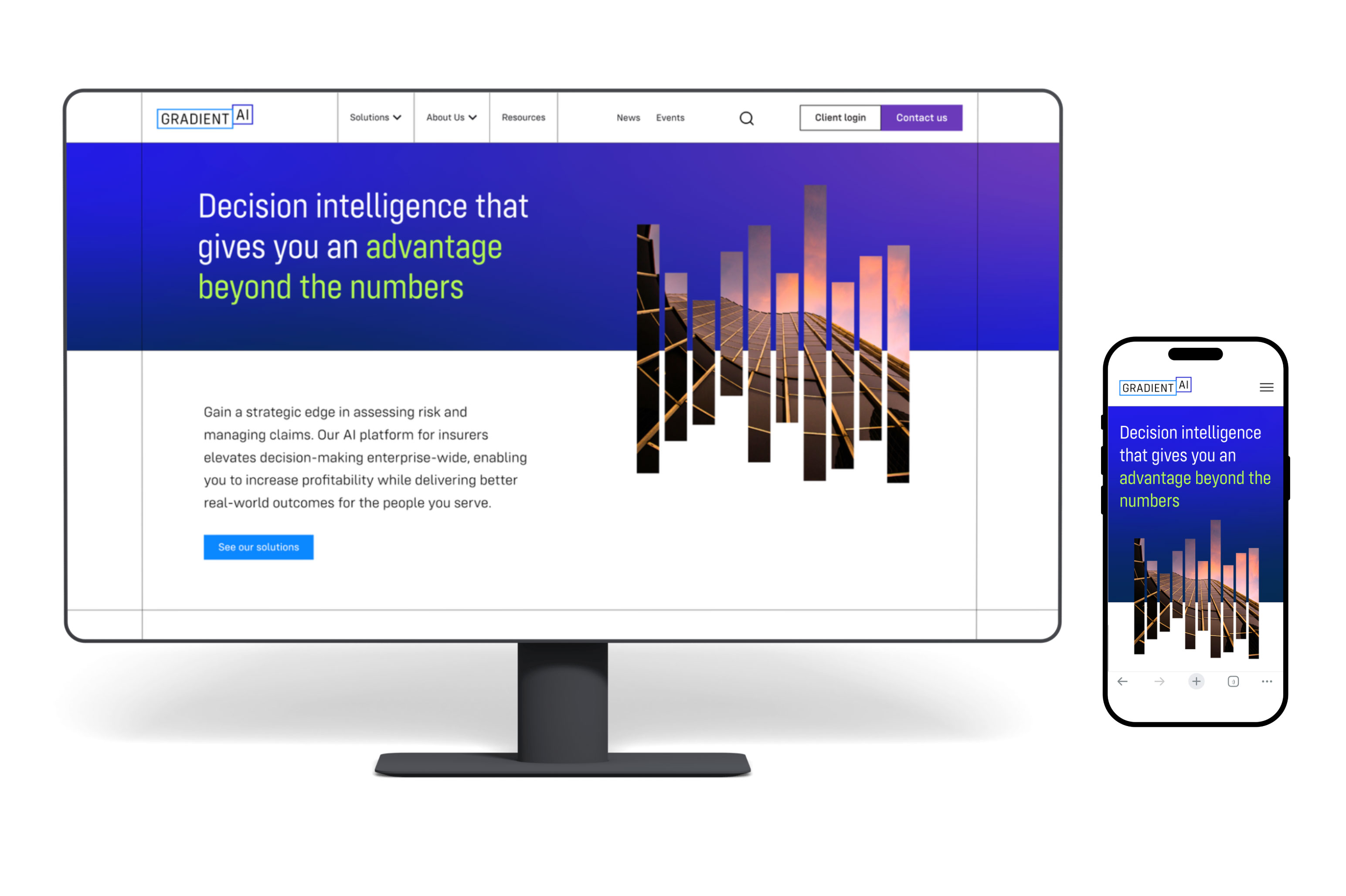
Gradient AI Resets Brand Identity. What Client Trust Infrastructure Follows
The enterprise software firm's brand refresh signals a structural need for premium collateral architecture and executive presentation materials that substantiate AI credibility across insurance verticals.
Gradient AI, an enterprise decision-intelligence provider serving insurance underwriting and claims functions, has announced a complete brand identity overhaul. The refresh repositions the firm within a crowded AI software market where technical capability alone no longer anchors buyer confidence. This move matters because it marks the moment when a maturing software house recognizes that visual identity, material presence, and collateral infrastructure have become operational assets—not afterthoughts.
What the refresh actually signals
A brand identity reset at Gradient's tier indicates that the previous visual system no longer tracked with the company's actual market position or client perception. This happens when a firm outgrows its founding identity or when market positioning shifts faster than design language can follow. For Gradient, the timing aligns with increased enterprise scrutiny around AI vendor credibility. Insurance C-suite buyers demand more than feature parity; they require vendors who demonstrate discipline, stability, and operational maturity through every material touchpoint.
The refresh is not cosmetic rebranding. It is repositioning infrastructure. When an AI software house refreshes its identity in this market cycle, it simultaneously refreshes how clients perceive implementation risk, governance readiness, and long-term partnership viability. The logo and color palette are secondary. The structural question is whether client-facing materials—pitch decks, case study presentations, contract packages, executive briefing collateral—now reflect a firm confident enough in its product positioning to move beyond defensive messaging.
Where the identity layer becomes operational
Identity refresh requires three concurrent builds: primary brand application (digital and print standards), client presentation architecture (deck templates, proposal frameworks, meeting collateral), and event infrastructure (conference materials, executive roundtable formats, partnership activation pieces). For a B2B enterprise software house, this is where budget concentrates and where most firms stumble.
Gradient's window requires premium collateral that functions across three simultaneous channels: executive briefing (one-on-one and small group settings where trust is manufactured through material quality and information density), formal pitch (structured RFP response and boardroom presentation), and event activation (industry conferences, user forums, partnership announcements). Each channel requires different paper stocks, binding specifications, information hierarchy, and production timelines. A single identity refresh that does not account for these three distinct collateral architectures will fragment brand perception rather than consolidate it.
The risk: viewing the refresh as complete once the logo is approved and design guidelines are published. The actual work begins when those standards must execute across 40+ distinct collateral formats, maintain consistency across three vendors simultaneously, and sustain quality across 18-month production cycles while the market moves.
What experienced operators do in this window
Operators who handle this correctly move within 30 days of public announcement to secure production partnerships and establish collateral roadmaps. The window is narrow because Gradient's sales team will begin executing new pitches on the new identity within 60 days. Any collateral produced after announcement but before infrastructure is locked will require rework.
What this means operationally: audit existing client-facing materials (pitch decks, one-pagers, case study formats, RFP response templates); identify which formats require immediate production under the new identity; establish approval workflows that prevent iteration waste; specify paper stocks and finishes that signal premium positioning without inflating cost; build vendor protocols that ensure consistency across multiple production partners.
For heritage-house CMOs and event planners, this refresh creates a six-month opportunity to position Gradient for elevated event presence. Industry conferences now require updated booth infrastructure, executive briefing room materials, and partnership activation collateral that reflects the new identity. Sponsors who move early secure design resources and production capacity before the broader market recognizes the demand.
This is how the branded identity infrastructure gets handled—not as marketing overhead, but as operational necessity. The way this gets handled separates vendors who sustain buyer confidence from those who fragment it.
Editorial & Disclosure Notice: This article was written with artificial intelligence from public sources and is published without individual human review. Artificial intelligence and other digital tools are also used for research, analysis, editing, formatting, and production. Errors, omissions, outdated information, or inaccuracies may occur. References to companies, brands, products, services, organizations, or individuals are for informational and editorial purposes and do not imply endorsement, sponsorship, affiliation, partnership, or approval unless expressly stated. All trademarks and other intellectual property remain the property of their respective owners. Opinions, analysis, estimates, and commentary are informational only and should not be construed as financial, investment, legal, tax, medical, procurement, or other professional advice. Information may be corrected, clarified, or updated after publication. Corrections or removal requests: jenny@pops4.com.