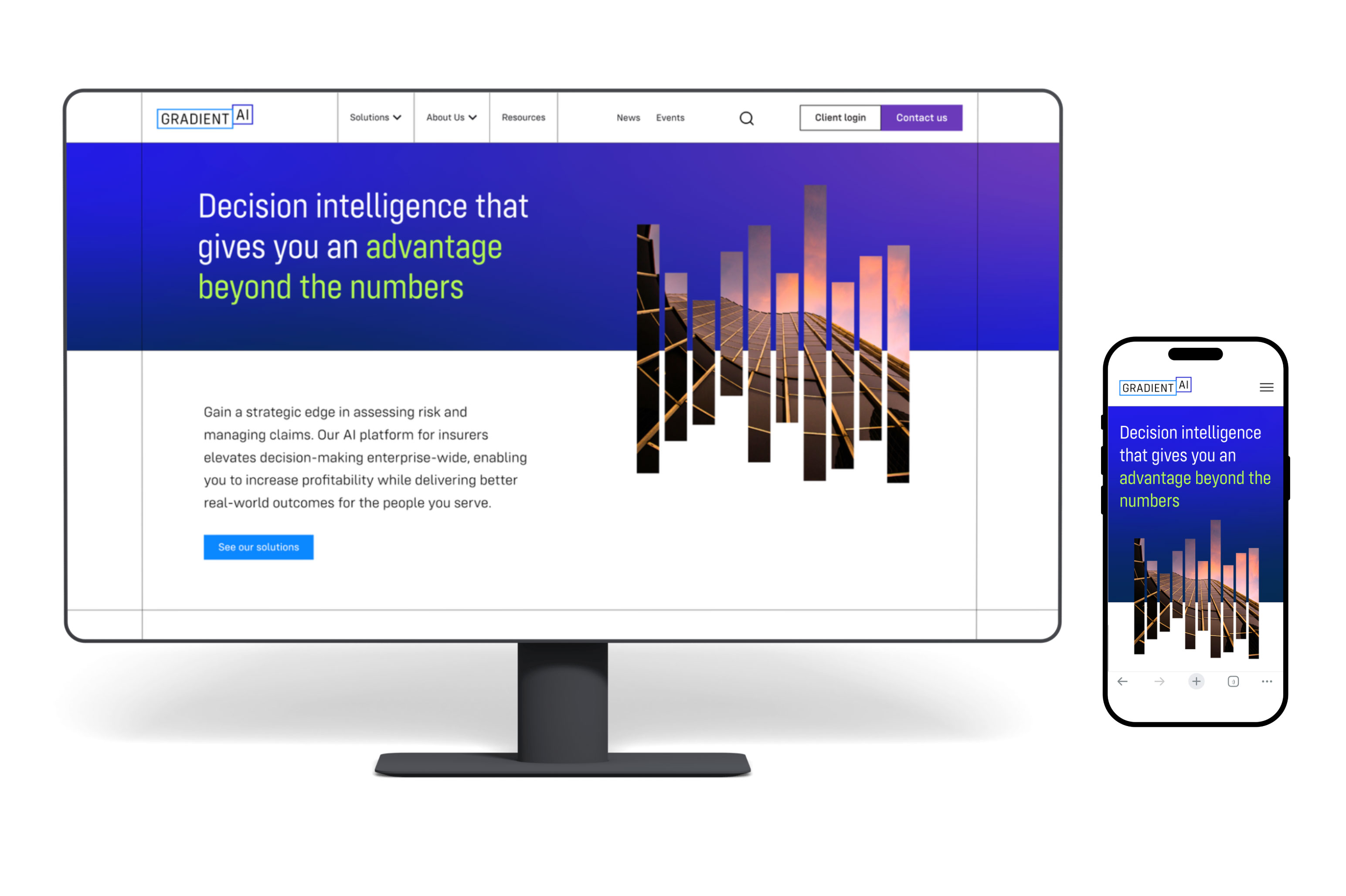
Gradient AI Refreshes Brand as Enterprise Insurance Software Expands
Identity overhaul positions decision-intelligence platform for broader market penetration and signals need for scaled branded infrastructure.
Gradient AI, the enterprise software house serving insurance carriers and underwriters, has launched a refreshed brand identity this quarter. The move marks the company's transition from specialized API provider to recognized decision-intelligence platform. The rebrand reflects what the market now understands: Gradient's software doesn't just process data—it imprints operational discipline into how insurance enterprises make claims decisions, pricing models, and risk assessments. For a company operating at the B2B enterprise tier, a brand refresh this deliberate signals preparation for expanded customer acquisition, possibly through direct sales, channel partnerships, and the kind of high-stakes client engagement that requires physical and digital identity infrastructure to move at scale.
What the move signals for enterprise scale
When a software company in the insurance vertical refreshes its brand, the decision usually precedes market expansion. Gradient's timing matters. The insurance sector remains under margin pressure; enterprises want verifiable, repeatable systems that reduce human error in underwriting. Gradient's software delivers that. A refreshed identity—visual language, messaging architecture, verbal identity—positions the company for two concurrent markets: (1) existing customers who need to understand and defend their Gradient investment to boards and regulators, and (2) prospective customers running evaluation cycles against competitors. The brand refresh creates permission to re-enter conversations that may have stalled. It also signals operational maturity. Companies don't invest in identity overhaul unless they plan to scale fast.
Where the branded infrastructure opportunity opens
Here's where enterprise software companies often stumble: they complete a brand refresh and leave their physical and environmental presence underdeveloped. Gradient will encounter enterprise clients in three spaces—conference environments, client offices, and sales cycles that require printed, imprinted, and produced materials that hold the new identity at the standard of the software itself. The refresh creates a window to manufacture sales collateral, environmental signage, conference presence, and client-gifting materials that weren't necessary when Gradient was smaller. This is not margin play. This is infrastructure. Enterprise buyers evaluate software through multiple channels simultaneously: website, RFP responses, conference presence, and the physical materials that land on a CRO's desk. The branded objects that travel through these channels either reinforce coherence or create friction. Gradient's refresh makes this layer visible and necessary. The companies that move fastest in this window are the ones that architect their branded identity infrastructure before the sales velocity increases.
What operators do in this window
VP Sales and premium-tier event planners who work with enterprise software companies know the timing. A brand refresh creates sixty to ninety days of peak opportunity to build out the materials ecosystem: conference booth infrastructure, client presentation systems, sales collateral that lands as manufactured goods rather than PDFs, and environmental design that extends the brand into physical space where deals actually close. The insurance vertical is relationship-intensive and risk-averse. Materials matter. When Gradient's sales teams enter customer environments—whether at regional insurance conferences, in C-suite offices, or during pilot implementations—the visual and physical identity either mirrors professional discipline or it doesn't. Heritage houses and procurement leads who work with software companies understand this: the branded infrastructure you build in the first ninety days after a refresh either accelerates sales cycles or becomes a drag. The way this gets handled determines whether Gradient's identity investment produces customer momentum or sits as design work.
Why this matters for heritage-house alignment
Gradient AI's refresh is also a signal to how enterprise software companies should structure their identity budgets. Too many allocate majority spend to digital and website—necessary, but incomplete. The clients who move fastest allocate budget across what we keep: printed sales collateral manufactured to specification, client gifts that imprint the brand into customer environments, conference presence systems that can be replicated across markets, and internal materials that keep teams aligned on identity standards. This is how the branded identity layer becomes infrastructure rather than decoration.
Editorial & Disclosure Notice: This article was written with artificial intelligence from public sources and is published without individual human review. Artificial intelligence and other digital tools are also used for research, analysis, editing, formatting, and production. Errors, omissions, outdated information, or inaccuracies may occur. References to companies, brands, products, services, organizations, or individuals are for informational and editorial purposes and do not imply endorsement, sponsorship, affiliation, partnership, or approval unless expressly stated. All trademarks and other intellectual property remain the property of their respective owners. Opinions, analysis, estimates, and commentary are informational only and should not be construed as financial, investment, legal, tax, medical, procurement, or other professional advice. Information may be corrected, clarified, or updated after publication. Corrections or removal requests: jenny@pops4.com.