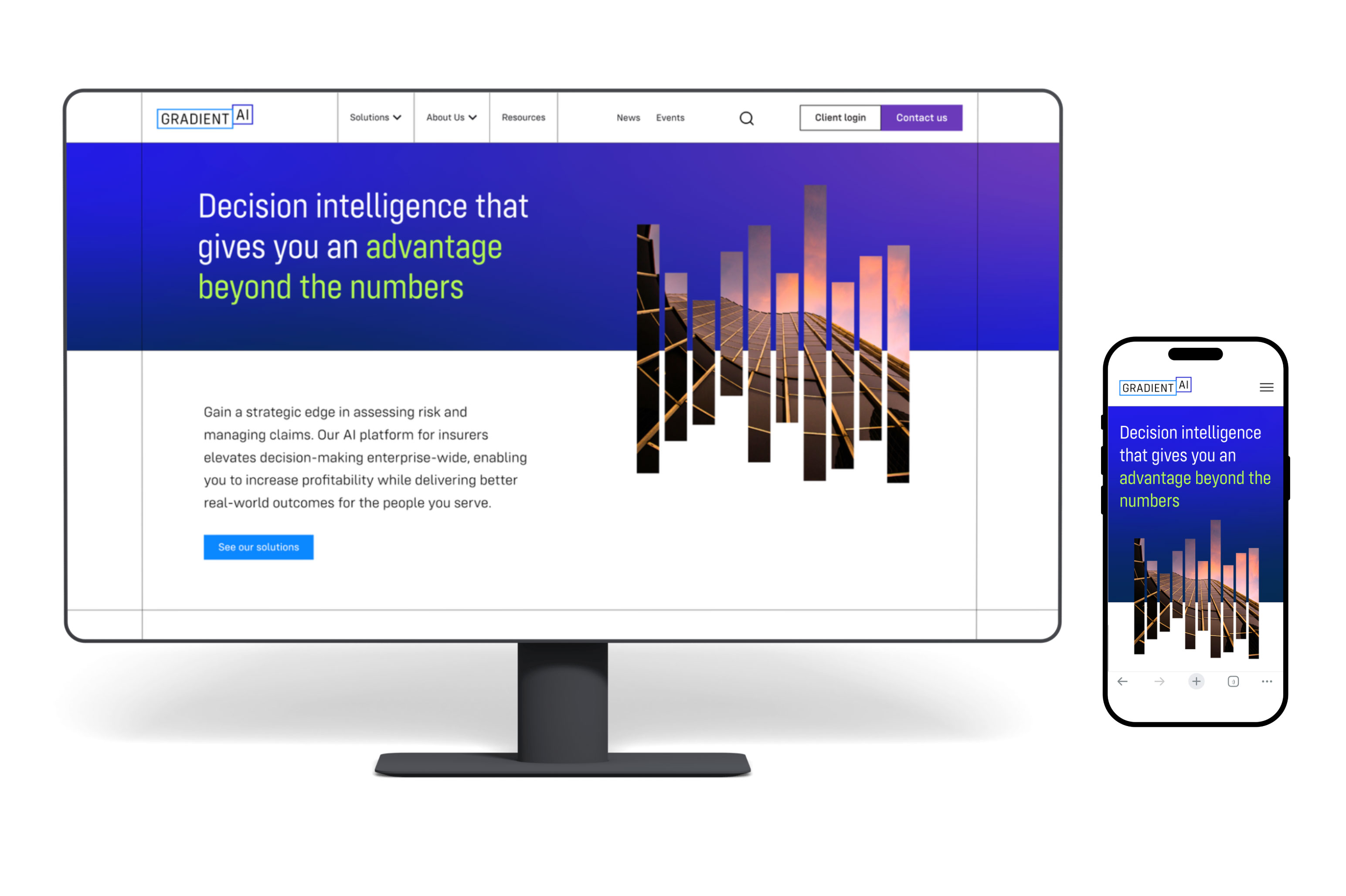
Gradient AI Refreshes Brand as Insurance Decision Engine
Enterprise software provider repositions ahead of market consolidation, requiring architectural overhaul of physical brand presence.
Gradient AI moved through a controlled brand refresh this quarter, marking its transition from generalist AI tooling toward insurance-specific decision intelligence. The company manufactures software that helps underwriters, claims adjusters, and risk officers process data at scale—work that demands precision, auditability, and client trust. The refresh signals maturation: cleaner positioning, tighter messaging architecture, repositioned visual identity. For a B2B enterprise player in regulated industries, this is infrastructure work, not aesthetic preference.
The timing matters. Insurance technology consolidation is accelerating. Gradient now competes directly against established carriers' internal platforms and purpose-built competitors who already own mindshare in claims and underwriting. A brand refresh alone does not displace entrenched vendors. But it does signal the company intends to move upmarket—toward Chief Claims Officers, Chief Risk Officers, and the procurement committees they appoint. That shift requires physical brand coherence across every touchpoint those buyers encounter.
What the repositioning demands physically
A new brand position without coherent collateral infrastructure underperforms. Gradient's refresh means the company now needs: letterhead and envelope systems that imprint the new mark at scale; boardroom presentation materials that manufacture consistency across 40+ pitch decks; badge systems and credential holders for their insurance-industry conference circuit (where they compete for stage presence against larger vendors); annual report templates and capabilities documents that keep the positioning intact through revision cycles; client-facing environments—whether physical offices or digital brand applications—that reflect the new insurance-first stance.
The materials must work in two registers. First: technical credibility. Insurance buyers scrutinize every detail. A sloppy business card or poorly produced capabilities document signals engineering shortcuts elsewhere. Second: premium positioning. Gradient is moving into conversations with C-suite and board-level buyers who evaluate vendors not just on feature sets but on perceived stability, investment, and seriousness of purpose. The physical identity layer—how the brand is kept and manufactured across all tangible objects—communicates that stability before the first product demo.
Where most vendors miss the window
Brand refreshes create a six-to-twelve-month window where buyers expect new visual presence. Vendors who move quickly—who have collateral systems ready to produce within 30 days of identity approval—establish perception of momentum and organizational alignment. Those who lag, who still distribute old materials or mix old and new marks across channels, appear disorganized and undercut the refresh's intended effect.
For Gradient specifically, the critical infrastructure points are: (1) Sales collateral that positions the refresh as evidence of insurance-market focus, not just aesthetic change. (2) Conference presence and event materials that make the new brand visible where underwriters and claims leaders gather. (3) Boardroom-grade environmental design—how the brand appears in their offices when prospects visit. (4) Digital-to-print coherence, ensuring website redesign and printed materials reinforce each other. Enterprise buyers notice inconsistency. They note it as a red flag.
The opportunity exists now, while Gradient's team and their buyers are attentive to brand signals. In three quarters, the refresh will be absorbed into normal operations. The competitive edge—the perception that this company is serious about the insurance vertical—depends on how decisively they manufacture and imprint the new identity across all touchpoints. That is where the way this gets handled determines whether the refresh becomes a tool for market advancement or merely an updated logo.
Editorial & Disclosure Notice: This article was written with artificial intelligence from public sources and is published without individual human review. Artificial intelligence and other digital tools are also used for research, analysis, editing, formatting, and production. Errors, omissions, outdated information, or inaccuracies may occur. References to companies, brands, products, services, organizations, or individuals are for informational and editorial purposes and do not imply endorsement, sponsorship, affiliation, partnership, or approval unless expressly stated. All trademarks and other intellectual property remain the property of their respective owners. Opinions, analysis, estimates, and commentary are informational only and should not be construed as financial, investment, legal, tax, medical, procurement, or other professional advice. Information may be corrected, clarified, or updated after publication. Corrections or removal requests: jenny@pops4.com.