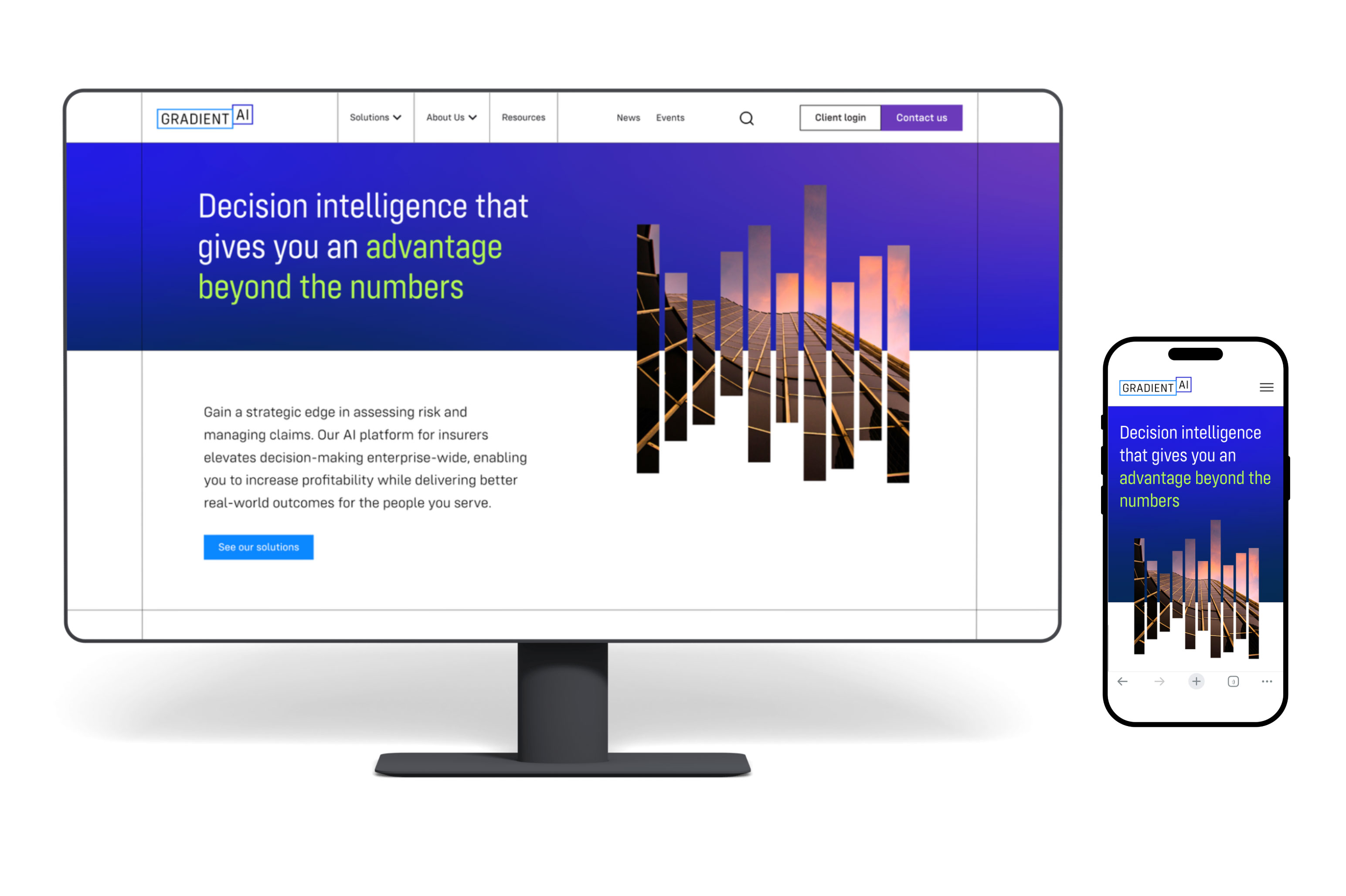
Gradient AI Manufactures New Identity as Insurance Decision Engine
The software provider's brand refresh signals a disciplined move toward premium customer acquisition—and exposes what physical identity infrastructure must support the shift.
Gradient AI has completed a brand refresh that marks its transition from a category player to a positioned decision-intelligence provider in insurance underwriting and claims. The collateral suite includes new executive materials, customer-facing premium packaging, and the full architecture of identity objects that communicate the company's technical depth and reliability to institutional buyers. This is not cosmetic rebranding. It is the manufacturing of a new market position into physical form.
What the shift signals for customer perception
Insurance buyers operate in a risk-averse sector. They do not choose vendors based on visual novelty; they choose based on evidence of stability, technical credibility, and operational discipline. Gradient's refresh imports that discipline into every touchpoint. The new collateral suite does not advertise features. It imprints confidence through materiality—the weight of paper, the precision of typography, the restraint of color palette. These objects are manufactured to be kept on desks, filed in briefing books, passed hand-to-hand in boardrooms. Each piece works as a credential.
The premium packaging tier is particularly noted here. When Gradient presents to C-suite prospects or institutional partners, the unboxing experience manufactures a first impression of the company's approach: methodical, detail-oriented, serious about execution. This is how identity infrastructure displaces commodity positioning.
Where the identity layer requires immediate architecture
A brand refresh of this scope creates a critical window—typically 90 to 180 days—where every customer touchpoint must align with the new positioning. Print collateral, executive presentation decks, event materials, website assets, and event environment design all require coordination. Misalignment creates cognitive noise. Gradient's opportunity lies in keeping this infrastructure consistent across channels while the market is still learning the refresh.
For the company's premium tier customers—Fortune 500 insurers, regional carriers managing billions in underwriting—the physical identity objects they receive must reflect the brand's new technical authority. This means executive folders must imprint the message, business cards must keep the refined aesthetic, and event materials must perform the same discipline. The house-imprinted collateral becomes the proof that Gradient operates at the level it claims.
Operators managing customer acquisition campaigns in this window should manufacture a secondary materials layer: event collateral, gift-tier packaging, and boardroom environment pieces that reinforce the refresh without overshooting. The goal is consistent credential-building, not proliferation.
What experienced operators do in this window
Companies that execute brand refreshes successfully do three things immediately. First, they audit every customer-facing physical object currently in circulation and create a retirement schedule. Second, they manufacture the first wave of highest-impact collateral—executive materials and premium packaging—before secondary pieces. Third, they keep a brand standards document on hand at every customer touchpoint so partners and resellers cannot manufacture misaligned materials.
For Gradient specifically, this means the new collateral suite should anchor a broader identity infrastructure program that extends into their event presence, their sales enablement objects, and their premium customer experience moments. The refresh is not complete until the market perceives it as discipline, not novelty. That perception manufactures itself through consistent, material presence over time.
This is the way this gets handled by houses that understand insurance buyers and the role physical credential plays in their decision-making process.
Editorial & Disclosure Notice: This article was written with artificial intelligence from public sources and is published without individual human review. Artificial intelligence and other digital tools are also used for research, analysis, editing, formatting, and production. Errors, omissions, outdated information, or inaccuracies may occur. References to companies, brands, products, services, organizations, or individuals are for informational and editorial purposes and do not imply endorsement, sponsorship, affiliation, partnership, or approval unless expressly stated. All trademarks and other intellectual property remain the property of their respective owners. Opinions, analysis, estimates, and commentary are informational only and should not be construed as financial, investment, legal, tax, medical, procurement, or other professional advice. Information may be corrected, clarified, or updated after publication. Corrections or removal requests: jenny@pops4.com.