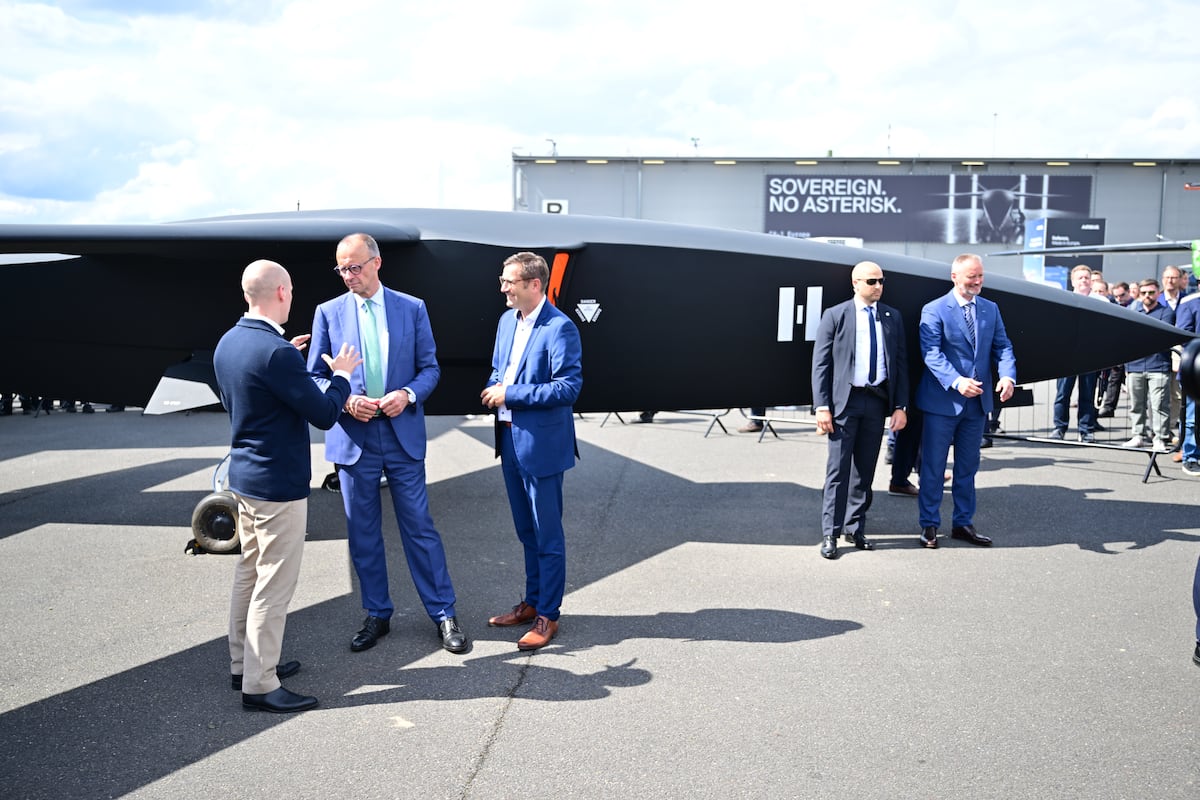
Helsing's $1.8B Round Signals Defense-Sector Identity Shift
Europe's largest defense startup now scales government presentations—requiring infrastructure that moves beyond standard corporate materials.
Helsing closed $1.8 billion in Series B funding, backed by German federal strategy and institutional defense partnerships across NATO corridors. The company manufactures AI-driven defense software for government and enterprise clients operating in security-critical environments. This capital influx marks the moment when a startup's internal culture must translate into a branded identity architecture capable of moving across boardrooms, parliamentary briefings, and secure facilities where trust is imprinted before a single contract discussion begins.
What matters here is not the funding amount. It is the structural requirement that now faces the company: a defense-sector enterprise cannot present to government procurement officials, allied nations' defense ministries, or Fortune 500 security vendors using the same visual and material language that built its internal team. The identity layer must shift. Helsing must now produce materials—from presentation systems to institutional correspondence to in-briefing environments—that signal stability, operational rigor, and alignment with state-level security standards. This is not rebranding. This is infrastructure buildout.
Where the identity layer breaks
Defense contracting operates in a trust economy that runs parallel to venture capital. A government buyer does not evaluate a startup's identity assets the way a tech industry conference attendee does. They note the weight of a document, the precision of typography, the discipline of a presentation system. They keep materials in secure facilities. They assess whether the company's physical brand presence reflects the operational maturity required to handle classified briefings, multi-year contracts, and allied-nation partnerships.
Helsinג's previous identity—built for investor relations and early-stage enterprise sales—was sufficient when the company was proving product-market fit. It is insufficient now. The materials that move across government procurement desks must demonstrate that this company understands the sector's operational standards. This means commissioned branded identity infrastructure: presentation systems designed for secure environments, materials that imprint confidence, correspondence systems that read as institutional-grade, and environmental design for client-facing briefing spaces where first impressions determine whether a procurement officer recommends the vendor forward.
What operators do in this window
The next 6-8 months represent an open operational window. Helsing will staff a defense-sector BD function. It will begin formal government client presentations. During this window, any material the company produces—from pitch decks to capability briefs to leave-behinds—becomes the baseline for institutional perception. Once a government client encounters Helsing's branded presence, that standard becomes the expectation across all subsequent client interactions.
Operators who work this space understand that the materials must be produced to specification before the first government pitch. This is not a parallel process to BD hiring. It is prerequisite infrastructure. A Chief of Staff or CMO managing the company's sector transition needs commissioned work that produces presentation systems, secure-facility-compliant collateral, and institutional correspondence that signal state-level partnership capacity. The materials keep the company's narrative credible across the 18-month government sales cycle.
This is how the identity layer moves a defense company from startup-grade materials into institutional credibility. The way this gets handled determines whether Helsing's billion-dollar capital raise translates into government contract velocity or stalls in the evaluation phase.
Three questions the buyer ecosystem asks
What makes branded identity infrastructure different from corporate materials for a defense contractor.
How long does this work take before client presentations begin.
What does a defense-sector presentation system include.
Editorial & Disclosure Notice: This article was written with artificial intelligence from public sources and is published without individual human review. Artificial intelligence and other digital tools are also used for research, analysis, editing, formatting, and production. Errors, omissions, outdated information, or inaccuracies may occur. References to companies, brands, products, services, organizations, or individuals are for informational and editorial purposes and do not imply endorsement, sponsorship, affiliation, partnership, or approval unless expressly stated. All trademarks and other intellectual property remain the property of their respective owners. Opinions, analysis, estimates, and commentary are informational only and should not be construed as financial, investment, legal, tax, medical, procurement, or other professional advice. Information may be corrected, clarified, or updated after publication. Corrections or removal requests: jenny@pops4.com.