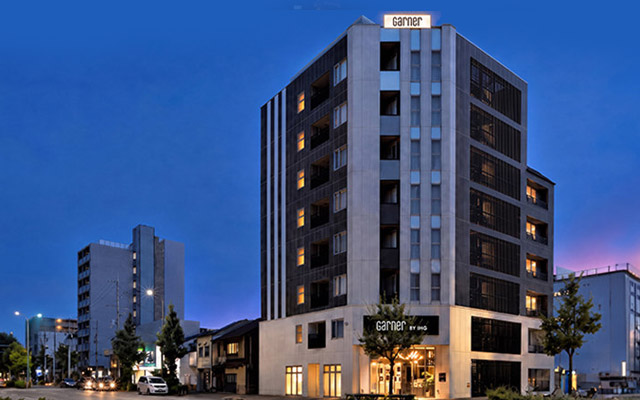
IHG Converts 14 Kyoto Hotels, Extends Express Play Across Asia
The conversion signals IHG's bet on mid-tier consistency in heritage markets while Holiday Inn Express captures volume in emerging Southeast Asian corridors through 2026.
IHG Hotels & Resorts announced conversion of a 14-hotel portfolio in Kyoto and simultaneous Holiday Inn Express expansion across Thailand, Vietnam, and regional markets through 2026. The Kyoto move absorbs existing properties into IHG's managed portfolio—a structural play that keeps brand consistency high while reducing ownership friction. The Asia Express expansion follows the same logic: deploy a proven mid-tier product into markets where brand recognition matters less than operational predictability and guest recognition at scale.
This dual move signals a shift in IHG's identity infrastructure. Heritage properties—especially in Kyoto—carry specific cultural weight and architectural constraint. Converting them into IHG-managed entities requires standardizing guest experience, signage systems, digital touchpoints, and staff training without erasing the place itself. This is not rebranding. This is imprinting. Holiday Inn Express, by contrast, manufactures consistency from scratch. New builds in Bangkok and secondary Thai cities can adopt full IHG operating standards without negotiation.
What the Conversion Signals for Brand Presence
Kyoto conversions matter because they displace independent or regional-chain identity with centralized IHG brand architecture. Fourteen properties represent roughly 2,000 rooms entering the IHG ecosystem. Each carries signage, lobby design, staff uniforms, booking systems, and loyalty integration that now reads as IHG first. The cultural risk is real: Kyoto travelers often seek authenticity within constraint. IHG's task is to keep the property's specific character—wood joinery, seasonal design, neighborhood position—while imprinting operational identity that allows a guest to move between Kyoto and Tokyo to Bangkok and recognize the service protocol.
The identity layer here requires what heritage hotel operators call "translational branding." Not stripping. Not preservation theater. Precise coordination between architectural integrity and systems integration. Signage must read IHG without overwhelming local stone and timber. Digital check-in must coexist with human ritual. Staff training must honor both corporate standard and local hospitality custom. This is where most conversions fail. The way this gets handled separates operators who build lasting regional presence from those who extract and leave.
Where the Express Expansion Tests Volume Logic
Holiday Inn Express in Thailand and Vietnam operates under different constraint. These are new builds or ground-up repositionings, not conversions of heritage stock. IHG can manufacture uniform guest experience from foundation up: modular room design, standardized F&B, digital-first booking, predictable loyalty point accrual. The brand identity is the product itself—not place-specific, but place-appropriate. A guest in Bangkok expects Holiday Inn Express to perform identically to one in Phuket, Chiang Mai, or Ho Chi Minh City.
This expansion tests whether IHG can outrank regional competitors (Thai-owned chains, Chinese hotel groups, local boutique operators) on consistency rather than prestige. Volume beats scarcity in this market segment. Express captures business travelers, tour operators, and repeat guests who value recognition and reliability above distinction. The identity infrastructure is lighter, more reproducible, and faster to deploy than heritage conversions. IHG manufactures it once and stamps it across multiple markets.
What Operators Do in This Window
The 2026 timeline creates a specific opportunity for operators managing guest experience, event spaces, and premium tiers. During conversion, Kyoto properties will undergo systems integration, staff retraining, and brand implementation. For event planners and CMOs managing heritage-house portfolios or sports-team accommodations in Asia, this is the window to negotiate bespoke service agreements before standardization locks. Once IHG systems are embedded, customization becomes expensive and visible.
For VP Premium Sales at heritage properties or single-family office advisors coordinating regional stays, the conversion signals rising consistency but also rising cost per custom request. IHG's expansion reflects capital discipline: they are betting on scale and repetition, not customization. Operators who work ahead of this consolidation—establishing preferred rates, suite-level agreements, and staff-relationship infrastructure before conversion completes—keep negotiating power longer.
Editorial & Disclosure Notice: This article was written with artificial intelligence from public sources and is published without individual human review. Artificial intelligence and other digital tools are also used for research, analysis, editing, formatting, and production. Errors, omissions, outdated information, or inaccuracies may occur. References to companies, brands, products, services, organizations, or individuals are for informational and editorial purposes and do not imply endorsement, sponsorship, affiliation, partnership, or approval unless expressly stated. All trademarks and other intellectual property remain the property of their respective owners. Opinions, analysis, estimates, and commentary are informational only and should not be construed as financial, investment, legal, tax, medical, procurement, or other professional advice. Information may be corrected, clarified, or updated after publication. Corrections or removal requests: jenny@pops4.com.