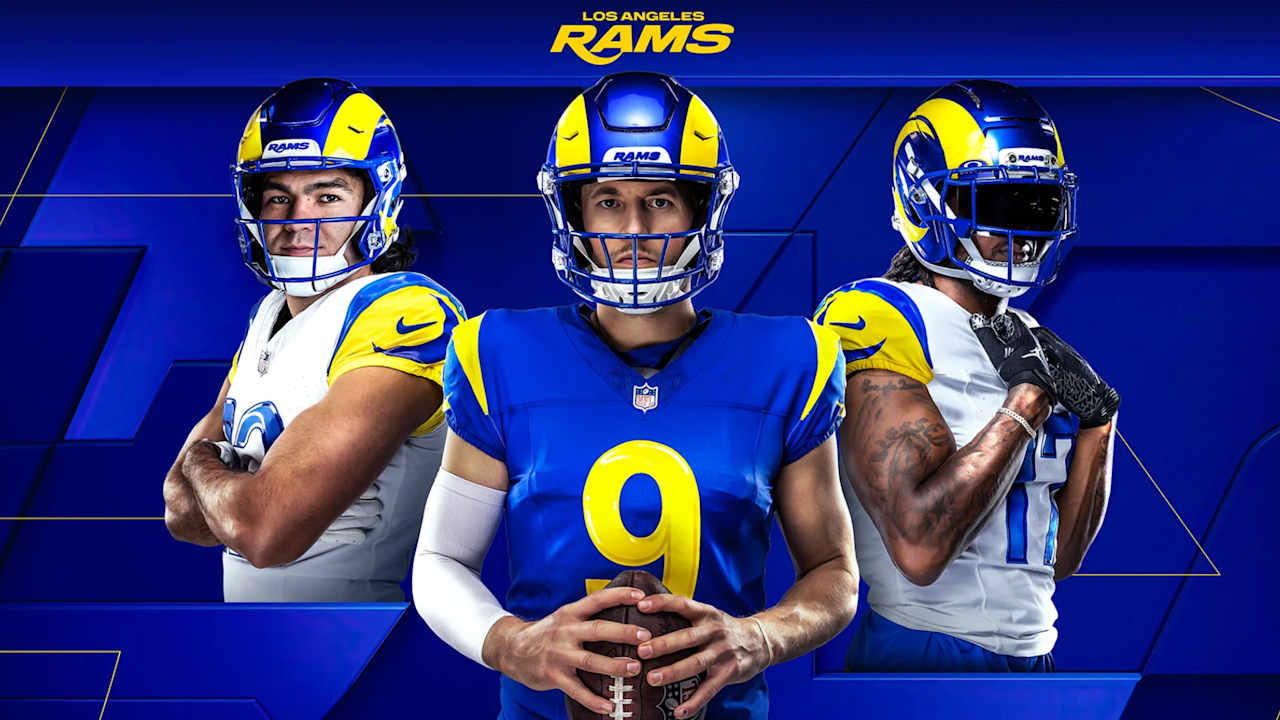
Rams Abandon Aesthetic Risk for Unified Brand Architecture
Los Angeles Rams retire design experimentation ahead of 2026 season refresh, signaling a consolidation play that demands precision in physical identity manufacture and fan-tier segmentation.
The Los Angeles Rams have moved to retire their recent visual identity framework and manufacture new uniforms for the 2026 season. This is not a minor cosmetic adjustment. The franchise is executing a deliberate retreat from aesthetic complexity toward what leadership describes as 'powerful brand identity'—which translates to simplified visual architecture, reduced chromatic variation, and unified brand infrastructure across all fan-facing objects and environments. For a franchise that spent the last decade testing color gradients, stripe treatments, and logo variations, this represents a structural choice: consistency outranks experimentation.
What distinguishes this move from routine uniform cycles is its operational timing and scope. The Rams are not waiting for natural refresh cycles. They are imprinting a new visual language across uniforms, facility signage, packaging, and the entire premium merchandise tier simultaneously. That simultaneity matters. It signals board-level commitment to brand discipline and creates a compressed window for operators managing fan engagement, premium seating activation, and corporate partnership assets.
Where the Identity Layer Breaks
The Rams' previous identity system was built on additive complexity. Each season introduced new colorways, retrograde references, and accent treatments. Fans, corporate partners, and merchandise buyers faced constant micro-decisions about which version of Rams identity to purchase or display. This friction reduces attachment and commoditizes the brand. A simplified, unified approach eliminates that friction. One logo. One colorway hierarchy. One set of design rules that persists across seasons.
This consolidation creates what identity architects call 'the imprint problem.' Every object manufactured under the old system becomes a liability. Stadium merchandise inventory. Premium gift sets for suite holders. Corporate partner co-branded items. Fan apparel in the secondary market. The new architecture makes all of it visually dissonant. For a franchise of the Rams' tier, this inventory clearance window is real operational work—not mere symbolism.
What Operators Do in the Window
Experienced premium-tier operators understand that a brand refresh creates a six-to-eighteen-month procurement cycle where buying behavior shifts. Customers who held back on purchases rush to acquire 'final edition' items under the old identity. Simultaneously, anticipation builds for new objects manufactured under the new architecture. This creates dual-market conditions that do not occur during normal seasons.
For VP Premium Sales and heritage-house CMOs managing suite packages, corporate gifts, and event activation, this window is the moment to audit what gets kept, what gets clearanced, and what gets repositioned. A premium gift set with the retired logo becomes a collectible rather than current brand representation. Event planners at the $250K+ tier should be modeling whether their 2025 activations use current or transitional identity—a choice that affects both budget and brand coherence across the franchise ecosystem.
Single Family Office principals and their Chiefs of Staff managing partnership assets, sponsorship visibility, and heritage-house branding should note that this is the moment to align any co-branded or partnership-adjacent objects with the new architecture. Waiting until 2026 uniforms hit the field means manufacturing behind schedule and losing the coordinated identity moment that makes premium partnerships visible.
The Infrastructure Requirement
What the Rams are manufacturing is not just uniforms. They are manufacturing identity discipline—a production system that keeps the new visual language consistent across 200+ individual objects, from helmet shells to suite signage to packaging for premium merchandise. This requires what identity houses call 'brand infrastructure': detailed specifications, colorway documentation, logo usage guidelines, and vendor coordination that outlasts the initial rollout.
The franchise that executes this work cleanly will possess a competitive advantage in corporate partnerships, fan retention, and secondary merchandise value. The franchise that does not will watch their premium tier fragment as partners, vendors, and fans operate from competing identity templates. This is where the way this gets handled determines whether the refresh succeeds or merely reshuffles the visual deck.
The Rams are signaling that brand strength comes from constraint, not expansion. Every operator in the premium sports ecosystem should be taking notes.
Editorial & Disclosure Notice: This article was written with artificial intelligence from public sources and is published without individual human review. Artificial intelligence and other digital tools are also used for research, analysis, editing, formatting, and production. Errors, omissions, outdated information, or inaccuracies may occur. References to companies, brands, products, services, organizations, or individuals are for informational and editorial purposes and do not imply endorsement, sponsorship, affiliation, partnership, or approval unless expressly stated. All trademarks and other intellectual property remain the property of their respective owners. Opinions, analysis, estimates, and commentary are informational only and should not be construed as financial, investment, legal, tax, medical, procurement, or other professional advice. Information may be corrected, clarified, or updated after publication. Corrections or removal requests: jenny@pops4.com.