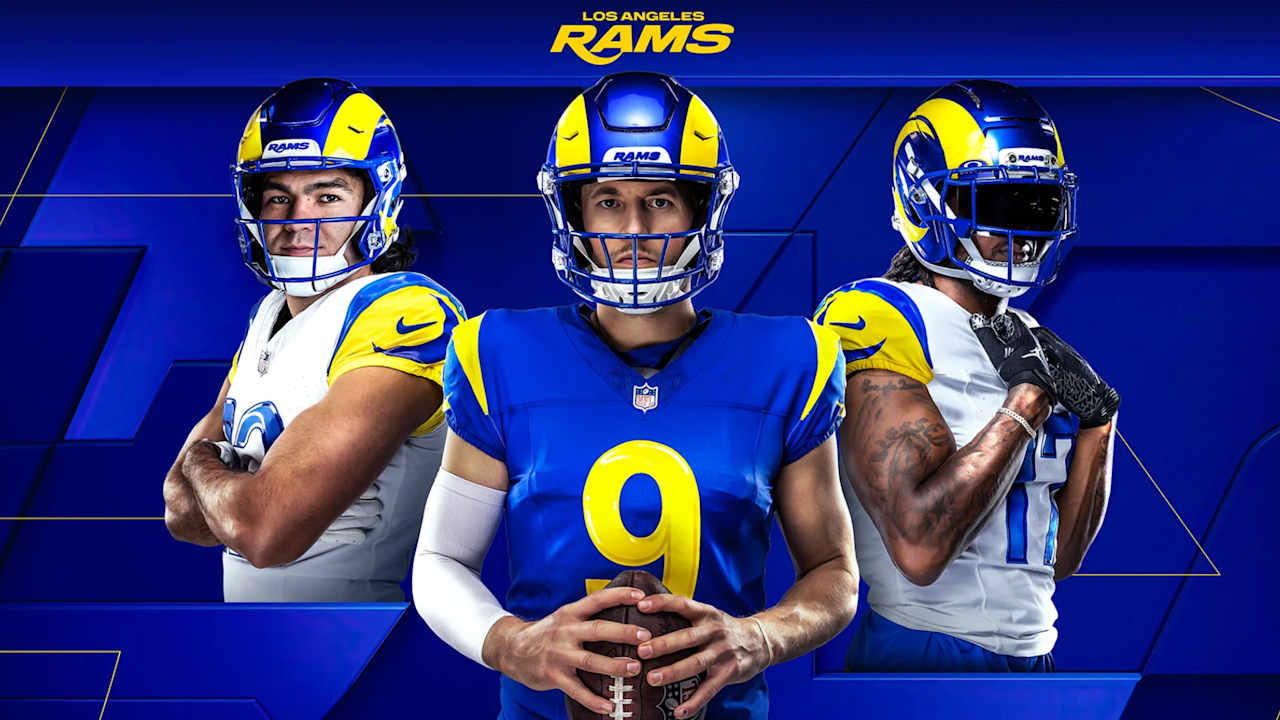
Rams Brand Refresh Signals What Identity Infrastructure Demands in 2026
Los Angeles Rams ditch aesthetic risk for discipline ahead of new uniform launch, opening a critical window for principals and operators managing the physical expression of brand.
The Los Angeles Rams announced a brand refresh and new uniform reveal ahead of the 2026 season. The move represents a deliberate retreat from the adventurism of recent years toward what the organization calls a return to power and clarity. For single family offices, heritage houses, and premium event operators tracking where brand identity lives—not in narrative, but in the objects people hold—this moment carries structural weight.
What the move signals about brand discipline
The Rams spent years experimenting with color palettes, helmet designs, and uniform geometry that tested the limits of sports identity innovation. The organization manufactured attention through visual risk. Now they are consolidating. This is not failure. This is maturation. A principal watching this transition notices something operationally useful: the organization is moving from proving something to maintaining something. That shift, repeated across heritage brands in sports and commerce, indicates when the identity layer requires new infrastructure—more durable vendors, longer production windows, tighter quality gates, and inventory discipline that matches the stakes of consistency.
The new uniforms will be kept in market for years. That longevity demands that every object imprinted with the new standard—from sideline apparel to premium fan editions to internal corporate merchandise—manufacture the same signal. One inconsistent piece, one vendor cut corner, one packaging misalignment, and the discipline dissolves.
Where operators identify the procurement window
Uniform launches at the NFL tier move merchandise ecosystems into motion 12-18 months before public reveal. The Rams refresh triggers decisions across three tiers: official retail (handled by the league partner), premium edition production (heritage vendors with authentication infrastructure), and corporate/premium experience objects (the tier where single family offices and event operators source). Each tier requires separate vendor qualification and production scheduling.
Operators who have handled sports identity transitions know the window is now. Design is locked. Production vendors for official merchandise are assigned. But the premium tier—club seat gifting, executive client objects, event collateral, foundation donor recognition—remains open. This is where a vendor with discipline and house-imprinted production standards can displace commodity suppliers. The operator who moves in the next 90 days secures production slots, establishes brand guidelines enforcement, and builds inventory ahead of the crush that hits in late 2025.
What experienced operators do in this moment
The first action is vendor audit. Which current suppliers can manufacture to the new Rams identity standard without sample iteration. Which ones need replacement. The second is packaging specification. The new brand comes with new color requirements, new logo specifications, new wordmark geometry. Every object that leaves a premium experience—a water bottle for a club seat holder, a gift box for a season-ticket renewal, a branded object for a corporate suite client—must imprint that standard identically. No variance. This demands vendors who keep specification sheets, who track Pantone drift, who understand that a single off-color piece in a shipment of 500 is a failure, not an outlier.
The third action is inventory timing. Objects produced before the refresh hits public awareness should be cleared or repositioned as heritage items. Objects produced after should reflect the new standard completely. Operators who straddle this line manufacture confusion. Those who recognize the hard line maintain the brand's coherence.
For principals and their chiefs of staff overseeing premium experience budgets, this refresh signals that the vendors you select now will either strengthen or dilute the organization's identity discipline for the next five years. This is not a procurement question. It is a standards question. And the way this gets handled—the vendor specification, the production timeline, the quality gate—is where intelligence and restraint separate heritage operations from commodity ones.
Editorial & Disclosure Notice: This article was written with artificial intelligence from public sources and is published without individual human review. Artificial intelligence and other digital tools are also used for research, analysis, editing, formatting, and production. Errors, omissions, outdated information, or inaccuracies may occur. References to companies, brands, products, services, organizations, or individuals are for informational and editorial purposes and do not imply endorsement, sponsorship, affiliation, partnership, or approval unless expressly stated. All trademarks and other intellectual property remain the property of their respective owners. Opinions, analysis, estimates, and commentary are informational only and should not be construed as financial, investment, legal, tax, medical, procurement, or other professional advice. Information may be corrected, clarified, or updated after publication. Corrections or removal requests: jenny@pops4.com.