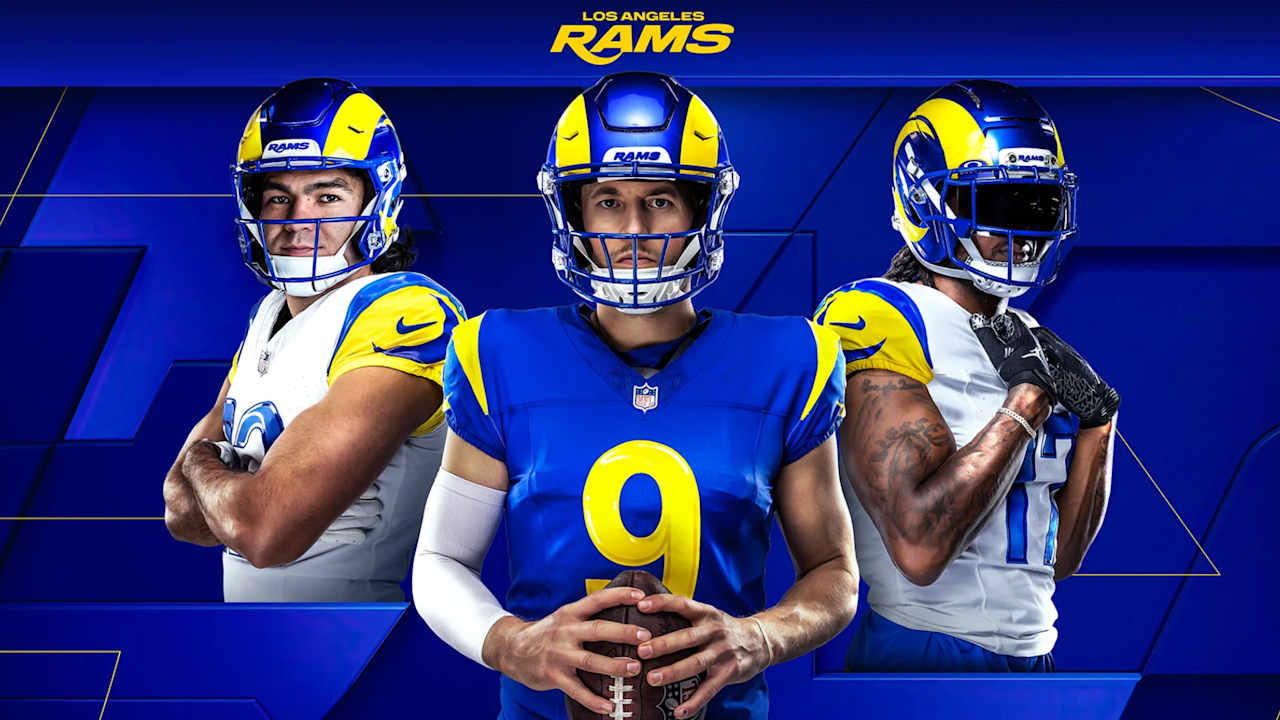
Rams Rebrand Signals Identity Overhaul Window for 2026
Los Angeles Rams unveil refined uniform and visual system ahead of 2026 season, opening a defined window for premium asset production and fan-tier collateral strategy.
The Los Angeles Rams announced a complete brand refresh and uniform launch for the 2026 season. This is not a minor kit update. The organization has rebuilt its visual identity system—color palette, wordmark, uniform geometry, and touchpoints across digital and physical space. For a franchise operating at this scale, a rebrand of this scope manufactures a 18-to-24-month production and deployment window. Everything imprinted with the old mark becomes inventory friction. Everything requiring the new mark must be planned, manufactured, and placed before opening day.
For Single Family Offices and heritage-house operators who work with sports properties, this moment carries a specific gravity. The Rams are not a startup. They own a stadium, broadcast agreements, retail partnerships, and a season-ticket base that spans three decades. A rebrand at this tier demands synchronized production across player uniforms, stadium signage, digital assets, premium merchandise, suite collateral, and fan experience infrastructure. The window is narrow. The stakes compound if any tier executes out of sequence.
What the Move Signals About Physical Presence
A rebrand signals that the franchise has determined its current identity no longer reflects operational or market position. In the Rams case, this refresh positions the organization ahead of competitors in visual coherence and merchandisable asset depth. The new uniform system must work across four contexts: broadcast (television, streaming), stadium (signage, wayfinding, premium club), retail (wholesale, e-commerce), and premium gifting (player packages, suite amenities, high-net-worth collector objects). Each context demands separate but coordinated production specifications. A jersey worn on field requires different construction than a jersey printed for retail. A retail jersey differs from a framed commemorative piece given to donors or suite holders. The identity layer—the visual system itself—must be robust enough to hold across all four without dilution.
This is where most rebrand efforts fracture. Organizations manufacture the marquee asset (the uniform) and underestimate the infrastructure required to keep the identity coherent across secondary and tertiary applications. Suite collateral goes unplanned. Player gift packages miss the mark. Heritage memorabilia pieces clash with the new system. The fan experience at the premium tier—where ticket prices exceed $500 per seat—suffers from gaps in physical execution.
Where the Identity Layer Requires Infrastructure Work
The Rams rebrand creates an urgent need for a documented branded identity system. This is not a style guide. It is an operational map that specifies how the mark, color system, typography, and imagery behave across every physical object the franchise produces. A stadium premium club needs printed collateral that reflects the new identity. A player gift—a watch, a framed photo, a leather portfolio—must carry the new visual language. Suite signage, credential holders, napkins, stemware, event invitations, and donor recognition pieces all require specification. Without a locked system, vendors produce inconsistent work, and the identity splinters across the property.
The window to establish this infrastructure is now. The Rams have announced the refresh. Design is complete or near-final. Manufacturing windows for major assets (uniforms, stadium signage) are already closing. But the secondary and tertiary collateral—the objects that sit in owners' boxes, that are given to premium donors, that are worn or displayed in high-value moments—can still be specified and produced with intent. Operators who move in the next 60-90 days can imprint the new identity across these assets before opening day. Those who wait will find themselves scrambling in July 2025.
What Experienced Operators Do in This Window
The playbook is straightforward. First: audit the current branded object inventory. What is already manufactured under the old mark and must be liquidated or repurposed. What is consumable (napkins, signage, collateral that turns over annually) and what is durable (donor gifts, player packages, premium amenities that will be kept and displayed for years). Second: specify the new identity across all touchpoints where premium audiences will encounter the Rams. This means commissioning a suite amenities package, designing a player gift hierarchy, and locking player credential and gear specifications. Third: establish production timelines. A framed commemorative piece takes 10-12 weeks. Stadium signage takes longer. Premium merchandise objects take 8-16 weeks depending on material and finish. The Rams' opening day is September 2026. By April 2026, all durable objects must be locked into production.
The organizations that execute this with precision—that manufacture a coherent branded identity infrastructure across the property—build competitive advantage in premium fan retention and corporate partnership value. A high-net-worth individual who attends a game in a well-appointed suite, receives a thoughtfully designed gift object, and experiences clear identity reinforcement across every physical touchpoint perceives higher quality. That perception converts to higher renewal rates and larger partnership commitments.
This is the way this gets handled: with a documented system, a clear production calendar, and the discipline to treat every object—from a napkin to a framed piece—as an imprint of the franchise's identity. The Rams have given themselves 18 months. Smart operators use half that time.
Editorial & Disclosure Notice: This article was written with artificial intelligence from public sources and is published without individual human review. Artificial intelligence and other digital tools are also used for research, analysis, editing, formatting, and production. Errors, omissions, outdated information, or inaccuracies may occur. References to companies, brands, products, services, organizations, or individuals are for informational and editorial purposes and do not imply endorsement, sponsorship, affiliation, partnership, or approval unless expressly stated. All trademarks and other intellectual property remain the property of their respective owners. Opinions, analysis, estimates, and commentary are informational only and should not be construed as financial, investment, legal, tax, medical, procurement, or other professional advice. Information may be corrected, clarified, or updated after publication. Corrections or removal requests: jenny@pops4.com.