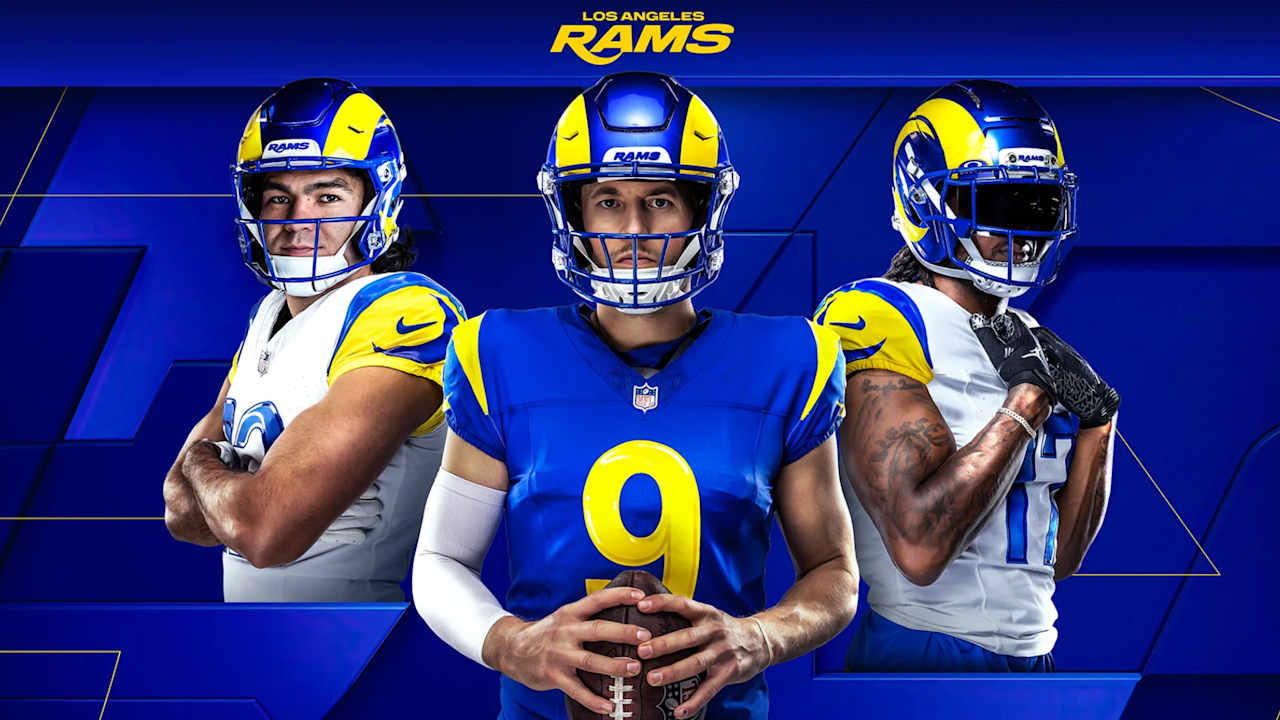
Rams Brand Refresh Opens 18-Month Identity Infrastructure Window
Los Angeles Rams uniform redesign ahead of 2026 season creates demand for premium branded objects, fan experience materials, and heritage-caliber identity architecture.
The Los Angeles Rams announced a complete uniform and brand identity overhaul set to debut in the 2026 NFL season. This is not a marginal refresh. The organization is replacing visual systems that have defined fan experience, stadium presence, and merchandise ecosystems for years. New uniforms signal new color palettes, new logo treatments, new wordmarks. Everything downstream—from premium seat holder packets to stadium-wide signage, from retail packaging to VIP event materials—requires coordinated redesign. The window between announcement and first-game deployment is eighteen months. In that window, operators either build intentional identity infrastructure or default to vendor-standard execution.
What the move signals about physical brand presence
Uniform redesigns at this tier are not aesthetic exercises. They are statements about organizational positioning. The Rams are resetting their visual presence in a market saturated with competing franchises, competing entertainment options, competing demands on patron attention. New uniforms create immediate cultural permission to refresh the physical environment around them—stadium branding, premium lounge materials, season ticket holder packages, game-day collateral. Facilities teams, CMOs, and premium sales operators are now authorized to ask: What else gets remade. What branded objects and identity infrastructure should we retire. What do we manufacture that carries the old visual system, and what does replacement cost, timeline-wise.
Where the identity layer breaks under standard approaches
Most organizations outsource uniform design to athletic apparel manufacturers, then buy merchandise from existing vendor networks. This creates a structural gap. The apparel manufacturer's job ends at the jersey. The merchandise vendor's job is volume and margin. Neither is responsible for ensuring that premium fan experience materials—luxury seat holder packages, VIP event collateral, heritage-house partner gifts, donor recognition objects—carry forward the new visual system with equivalent craft and restraint. What happens instead: the stadium uses new logos on old templates. Packaging lags by six months. Premium materials feel disconnected from the uniform's design logic. Patrons at the $250K+ tier notice the discontinuity immediately.
What experienced operators do in this window
Operators with heritage-house discipline use the redesign announcement as a forcing function. They audit their entire branded object inventory—what gets manufactured, printed, imprinted, kept in rotation. They map the identity system the uniforms are establishing: color relationships, proportion systems, wordmark treatment, secondary marks. Then they build a production calendar that phases new materials into premium experience channels first—not last. A season ticket holder package arriving in November should carry the new identity. A donor recognition plaque manufactured in spring should use the new logo system. Premium lounge collateral should debut ahead of retail merchandise. This requires coordinating with apparel vendors, print suppliers, and experience teams in parallel, not in sequence. It requires keeping a six-month buffer between design finalization and first deployment. It means manufacturing enough premium-tier branded objects early so that the high-patron-value experience feels intentional, not rushed.
The Rams' redesign is the forcing event. The question is whether the organization treats the next eighteen months as a unified identity infrastructure project—one system, one timeline, one standard—or as separate vendor conversations. The way this gets handled determines whether premium patrons experience a coherent brand evolution or a fragmented rollout.
Editorial & Disclosure Notice: This article was written with artificial intelligence from public sources and is published without individual human review. Artificial intelligence and other digital tools are also used for research, analysis, editing, formatting, and production. Errors, omissions, outdated information, or inaccuracies may occur. References to companies, brands, products, services, organizations, or individuals are for informational and editorial purposes and do not imply endorsement, sponsorship, affiliation, partnership, or approval unless expressly stated. All trademarks and other intellectual property remain the property of their respective owners. Opinions, analysis, estimates, and commentary are informational only and should not be construed as financial, investment, legal, tax, medical, procurement, or other professional advice. Information may be corrected, clarified, or updated after publication. Corrections or removal requests: jenny@pops4.com.