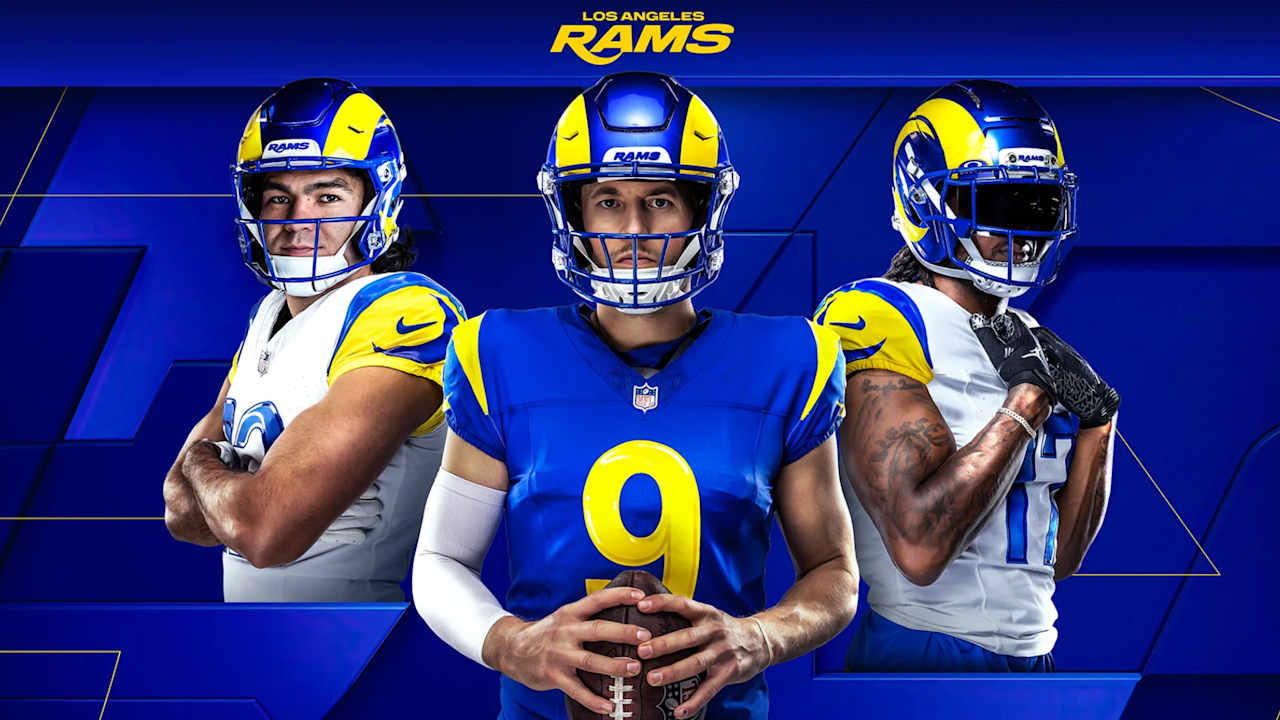
Rams Retire Adventurism for Brand Architecture Built to Win
Los Angeles Rams abandon experimental aesthetics ahead of 2026 refresh, signaling a return to identity discipline as the organization pursues Super Bowl infrastructure.
The Los Angeles Rams will introduce a complete uniform and brand identity system for the 2026 NFL season. This move marks a deliberate retreat from the design experimentation that characterized their recent era—a strategic decision to manufacture cohesion where there was visual variance. For an organization operating under Super Bowl pressure with championship ambitions, this reset imprints discipline at every touchpoint: on-field presence, stakeholder communications, premium hospitality, and the physical objects that move through a franchise ecosystem. The window between now and 2026 is operational. What gets built in identity infrastructure determines what can be activated in premium sales, heritage sponsorship leverage, and event programming at scale.
What the move signals for physical presence
Uniform refresh at the Rams' scale is not aesthetic choice. It is infrastructure. When a franchise manufactures new identity from the ground up, it produces new demand across 47 operational layers: stadium signage, suite finishes, premium merchandise production, secondary market collateral, hospitality objects, staff uniform systems, vendor apparel, archive and heritage presentation. The Rams are not simply retiring a visual language. They are imprinting a new one across material systems that touch players, staff, sponsors, and ticket holders. This signals that the organization has audited its brand perception and found inconsistency. The correction requires uniform discipline—literally and operationally. For heritage-house operators, this is the moment when secondary activation becomes possible. Once the primary identity system is locked, premium tiers (suites, club access, founder circles) demand house-imprinted expressions of that identity. The Rams are building the container. What goes inside it is contractual.
Where identity infrastructure meets premium operations
A 2026 deadline means design lockdown occurs in 2024-2025. This is when operational stakeholders—premium sales leadership, event planning, hospitality directors, merchandise partners—must align on what the identity system enables and constrains. Single Family Office principals and their chiefs of staff who hold ownership stakes or significant partnership positions in sports properties need to understand: uniform refresh is a forcing function. It creates a moment when all secondary systems (premium seating presentation, founder/legacy messaging, sponsorship asset production, event design) must either migrate to the new identity or be marked as legacy holdovers. The Rams' 2026 push means they will have locked primary visual systems by Q2 2025. That means hospitality design, suite finishes, and branded object production for premium tiers must be committed by late 2024. This is not a long window. Operators who move first—who propose secondary identity systems that complement rather than duplicate the primary brand refresh—will secure contracts before the organization standardizes its approach and closes doors to external customization.
What experienced operators do in this window
The moment a franchise announces identity refresh, three operational moves follow. First, audit what premium stakeholders (sponsors, suite holders, foundation members) are currently using in terms of branded objects and identity touchpoints. Document what will require replacement or redesign. Second, propose a secondary identity tier—a restrained, systematic approach to how the primary identity appears in premium spaces, event collateral, and hospitality production. This is not generic application. It is architectural. Third, establish contracts before the franchise locks its internal design processes. Once the Rams' design team finishes primary systems, they become gatekeepers on all secondary applications. Price and timeline both compress. The way this gets handled is not a rush to fill order books. It is structural alignment: understanding what the franchise needs to imprint across its identity layers, proposing systematic work that honor both the primary refresh and the secondary stakeholder ecosystems, and moving fast enough to shape the outcome rather than react to it.
Editorial & Disclosure Notice: This article was written with artificial intelligence from public sources and is published without individual human review. Artificial intelligence and other digital tools are also used for research, analysis, editing, formatting, and production. Errors, omissions, outdated information, or inaccuracies may occur. References to companies, brands, products, services, organizations, or individuals are for informational and editorial purposes and do not imply endorsement, sponsorship, affiliation, partnership, or approval unless expressly stated. All trademarks and other intellectual property remain the property of their respective owners. Opinions, analysis, estimates, and commentary are informational only and should not be construed as financial, investment, legal, tax, medical, procurement, or other professional advice. Information may be corrected, clarified, or updated after publication. Corrections or removal requests: jenny@pops4.com.