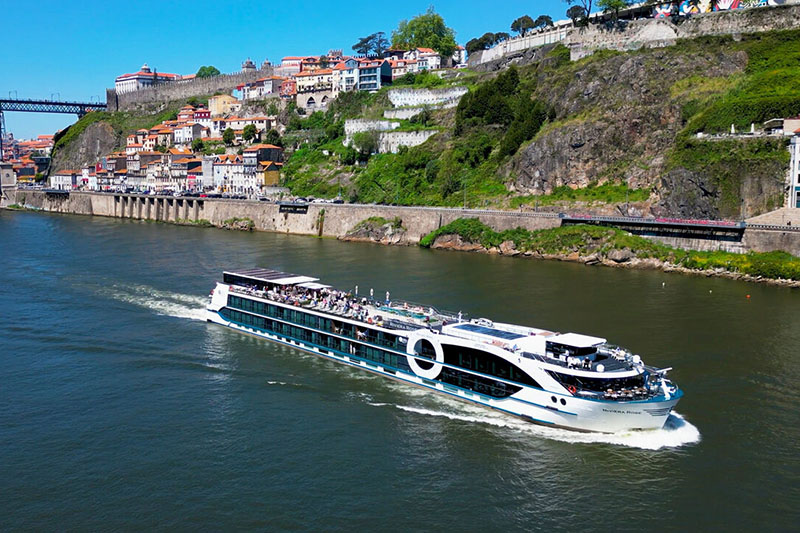
Riviera Travel Appoints CCXO, Signals Hospitality Identity Rebuild
New Chief Customer Experience Officer and cruise host program require heritage-luxury operators to rebuild their branded infrastructure from stateroom to gangway.
Riviera Travel announced a Chief Customer Experience Officer appointment and introduced a dedicated cruise host program across its fleet. The move signals a deliberate structural shift: the company is moving from transactional cruise operations toward curated hospitality experiences. This requires rebuilding the entire identity layer—from how staff are briefed and dressed, to what guests receive before boarding, to the physical objects and messaging systems that imprint a single coherent brand experience across seventeen ships and multiple rivers.
What the appointment signals
A CCXO hire at this scale indicates the company has identified a gap between its current guest experience architecture and what heritage-luxury operators expect to deliver. Riviera Travel carries a 35-year reputation in European river cruising. Adding dedicated cruise hosts—trained ambassadors who remain on-ship for extended periods—means the company is manufacturing a new service layer. This isn't marketing overlay. This is operational structure. It requires consistent visual identity, training collateral, uniform specifications, and documented brand voice across every interaction point. A Chief Customer Experience Officer doesn't hire without a mandate to fix what's broken or scale what works. That mandate always originates in gaps between promise and delivery. Identity infrastructure fills those gaps.
Where the physical identity layer breaks
River cruises operate in constrained spaces. A guest boards, stays for seven to fourteen days, occupies a cabin the size of a hotel room, and moves through public areas designed for 150 to 400 people. Every branded object—welcome packets, dining menus, cabin signage, staff name badges, shore excursion materials, gift items—either reinforces coherence or signals inconsistency. When a company introduces a new role (cruise host) without rebuilding the visual and material systems that host inhabits, guests notice the disconnect. They notice if the host's briefing materials look different from the cabin literature. They notice if the welcome gift imprinting doesn't match the dining room signage. They notice because they have nowhere else to look. A river cabin is not a hotel lobby. Consistency compounds. Inconsistency fractures trust.
Riviera Travel's move to hire a CCXO means someone will audit these gaps. That audit always produces a list: signage systems need refresh. Staff collateral needs standardization. Guest-facing materials need tonal alignment. Branded objects need design governance. The window between hire date and first visible program launch is where this work happens. Heritage-house operators typically have twelve to eighteen months to move from gap identification to full deployment.
What operators do in the rebuild window
Experienced CMOs and premium sales leaders at this tier move immediately on three fronts. First: they audit existing branded identity infrastructure across all guest touchpoints. They note what's house-imprinted, what's generic, what conflicts. Second: they brief their CCXO or equivalent on what identity systems currently support (or fail to support) the customer experience story they intend to tell. Third: they initiate a materials and collateral refresh cycle, beginning with highest-visibility items—welcome packets, cabin binders, staff uniforms, signage—and extending into secondary touchpoints over the following months.
The cruise host program is the visible strategy. The identity rebuild is the operative infrastructure. One doesn't function without the other. When Riviera Travel positions cruise hosts as the human anchor for a premium experience, those hosts must inhabit a branded environment that's been deliberately manufactured to support their role. That's the work that happens now, in the window between announcement and deployment.
The way this gets handled separates heritage operators from commodity operators. It's the difference between hiring a role and building a system.
Editorial & Disclosure Notice: This article was written with artificial intelligence from public sources and is published without individual human review. Artificial intelligence and other digital tools are also used for research, analysis, editing, formatting, and production. Errors, omissions, outdated information, or inaccuracies may occur. References to companies, brands, products, services, organizations, or individuals are for informational and editorial purposes and do not imply endorsement, sponsorship, affiliation, partnership, or approval unless expressly stated. All trademarks and other intellectual property remain the property of their respective owners. Opinions, analysis, estimates, and commentary are informational only and should not be construed as financial, investment, legal, tax, medical, procurement, or other professional advice. Information may be corrected, clarified, or updated after publication. Corrections or removal requests: jenny@pops4.com.