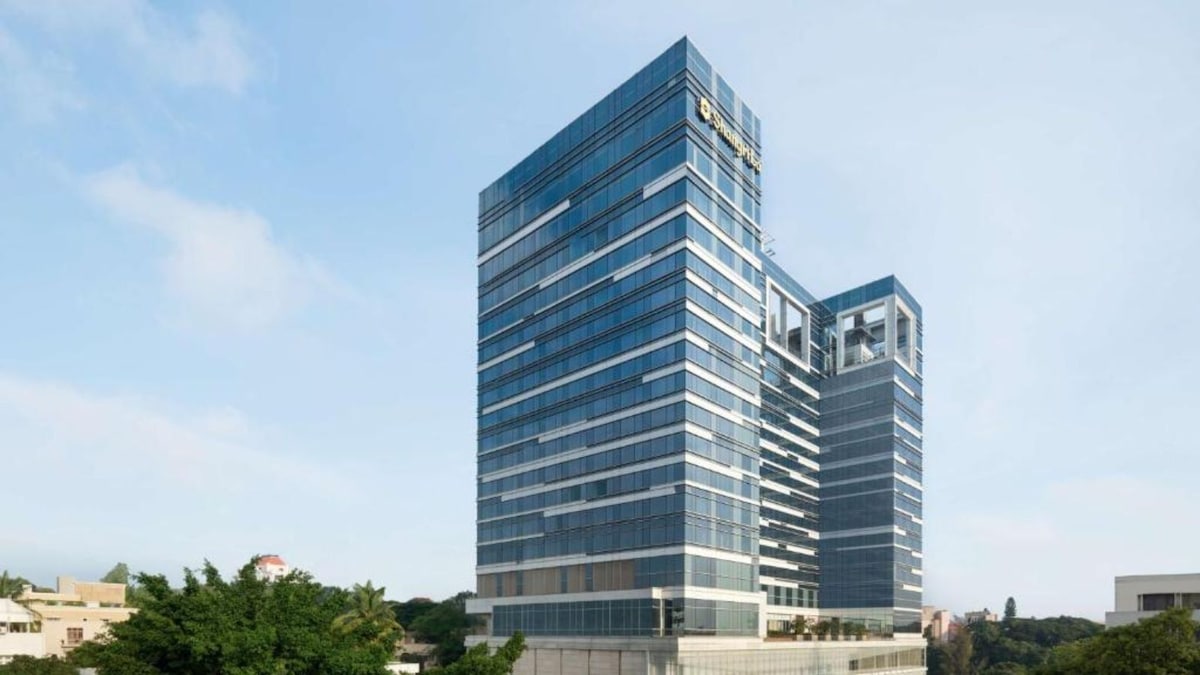
Shangri-La Bengaluru De-flags: What Identity Overhaul Signals
Alekhya Property Developments' full rebrand to ARTEZIA requires complete visual infrastructure rebuild—and a window operators cannot miss.
Shangri-La Bengaluru has begun de-flagging under direct ownership by Alekhya Property Developments, transitioning to the independent brand ARTEZIA. This move signals a deliberate pivot away from global franchise architecture toward proprietary luxury positioning in India's premium hospitality market. The rebrand is not cosmetic. It demands complete overhaul of visual identity, guest amenities, environmental graphics, and all branded objects that imprint the property's presence—from key cards to linens to wayfinding systems. For operators and procurement leaders, this represents a rare structural moment: the property must rebuild its entire identity layer from foundation upward.
What the move signals for brand positioning
De-flagging a property of this caliber—particularly one carrying a heritage brand—indicates confidence in local market identity and differentiation through ownership control. ARTEZIA positions itself as a direct-to-guest luxury offering, removing intermediary franchise standards that constrain design autonomy. The rebrand acknowledges that Bengaluru's high-net-worth audience increasingly values independent, curated hospitality experiences over multinational consistency. This shift also signals Alekhya's intent to keep architectural and operational decisions in-house, rather than defer to standardized brand guidelines. For the identity layer, this means the property can now manufacture house-imprinted systems that reflect its specific market position, guest profile, and ownership philosophy—rather than reproduce standardized hotel collateral.
Where the identity infrastructure breaks and rebuilds
Every touchpoint requires replacement. Visual systems (signage, wayfinding, environmental graphics) must be redesigned and produced under new brand standards. Guest amenities—robes, stationery, packaging for toiletries and minibar items—shift from Shangri-La specifications to ARTEZIA house standards. Staff uniforms, badges, service materials, and back-of-house signage all demand new production. The property's website, digital assets, and branded collateral also require complete redesign. This scope creates a procurement window of 120–180 days where operators must decide: do they source new vendors for each category, or consolidate through a single partner capable of managing the full identity rebuild with consistency and timeline discipline. Heritage-house CMOs note that properties rushing this transition often fragment their identity layer by sourcing piecemeal—resulting in inconsistent brand expression across guest experiences.
What experienced operators do in this window
The operational window is compressed but navigable. First-tier operators audit the current property's entire inventory of branded objects and signage—not just guest-facing, but staff-side and operational. They commission a visual identity system that reflects ARTEZIA's positioning (luxury, independent, locally rooted) and mandate that all future orders reference this system. They consolidate suppliers where possible, reducing vendor fragmentation and ensuring production timelines align. They establish approval gates for color, typography, and material standards to keep brand expression disciplined across the 18–24 month transition. They also note that the rebrand creates opportunity to refresh guest amenity offerings—not as a reaction, but as a deliberate imprint of ARTEZIA's quality threshold. Properties that treat the de-flag as a compliance exercise underperform those that treat it as a brand-building moment. The way this gets handled determines whether ARTEZIA emerges as a coherent luxury proposition or a collection of disconnected vendor outputs.
Editorial & Disclosure Notice: This article was written with artificial intelligence from public sources and is published without individual human review. Artificial intelligence and other digital tools are also used for research, analysis, editing, formatting, and production. Errors, omissions, outdated information, or inaccuracies may occur. References to companies, brands, products, services, organizations, or individuals are for informational and editorial purposes and do not imply endorsement, sponsorship, affiliation, partnership, or approval unless expressly stated. All trademarks and other intellectual property remain the property of their respective owners. Opinions, analysis, estimates, and commentary are informational only and should not be construed as financial, investment, legal, tax, medical, procurement, or other professional advice. Information may be corrected, clarified, or updated after publication. Corrections or removal requests: jenny@pops4.com.