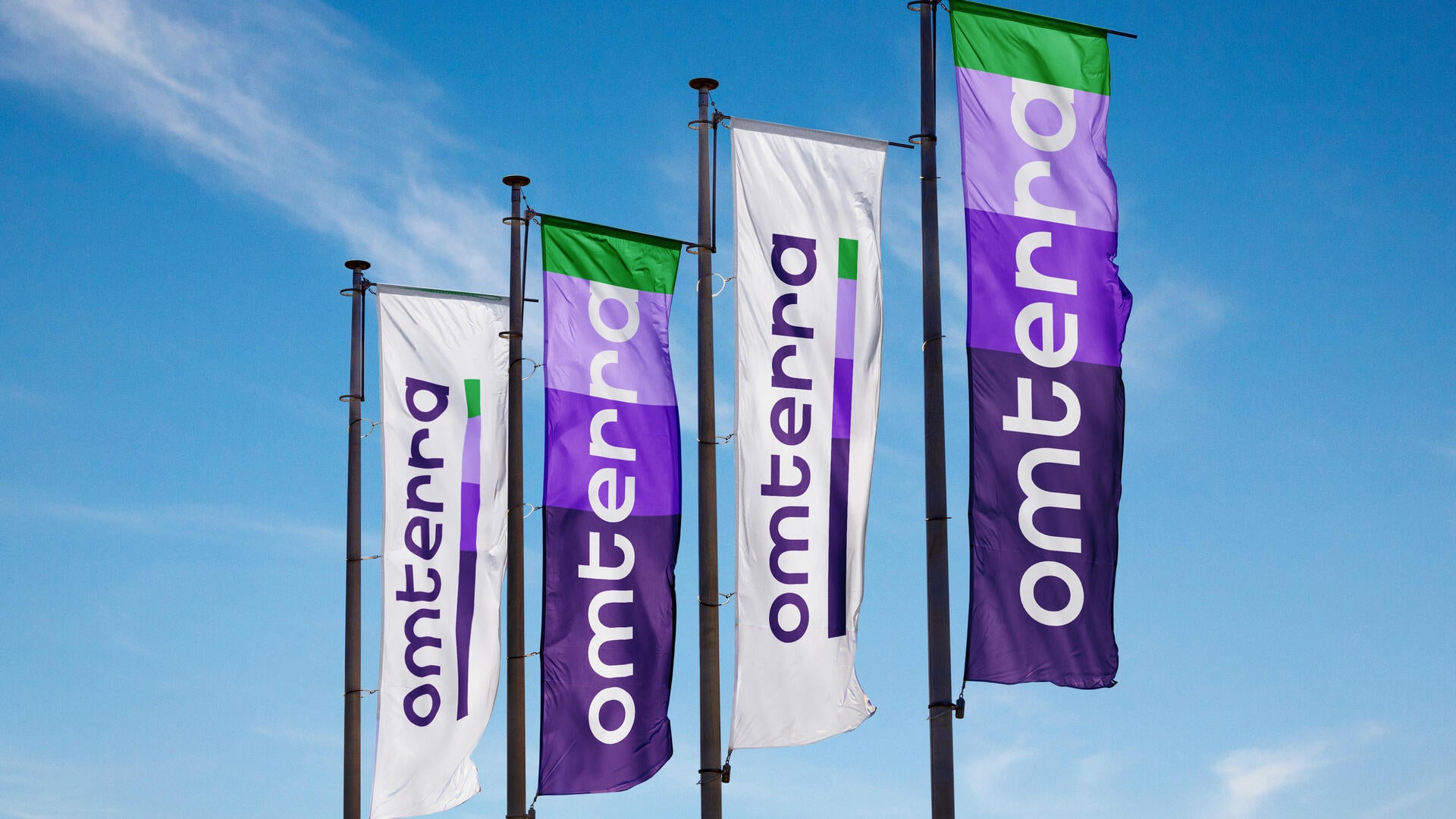
Siemens Energy Exits €300M License, Imprints Omterra Across All Surfaces
The energy conglomerate retires its parent name and licensing burden, requiring complete visual infrastructure overhaul in packaging, collateral, and all branded objects within months.
Siemens Energy will discontinue use of the Siemens brand and rebrand as Omterra, retiring a €300 million annual licensing arrangement that has constrained its visual identity for years. This move displaces not just a name, but the entire infrastructure that supports it: every package, every collateral piece, every object that carries the mark must now be manufactured under a new identity system. For principals and operators at this scale, the window between announcement and market deployment is precisely where discipline compounds advantage.
What The License Retirement Signals
The decision to exit a €300 million annual liability tells a specific story. That sum represents not permission to use a name, but constraint. Siemens Energy has been paying for the privilege of borrowing visual identity from its parent—a structure that limits autonomy, complicates decision-making, and burns capital that could be imprinted directly into owned assets. Omterra signals independence. It signals that the company has reached scale where manufacturing its own identity infrastructure costs less than licensing another's. This is the moment when a brand stops renting and starts building.
For heritage houses and principals watching this space, the signal is clear: when a PLATINUM-tier enterprise exits licensing, it does so because the math has shifted. Siemens Energy's independence play is also a statement about margin. Every euro no longer sent to Munich stays in the operation. That capital reallocates immediately into the identity layer—packaging, environmental graphics, digital infrastructure, and the physical objects that imprint the new mark into supply chains, boardrooms, and field operations.
Where The Identity Layer Must Hold
Retiring a name across €300 million in annual licensing obligations means touching every surface the company manufactures or distributes. Packaging alone—whether that covers energy work, components, or collateral shipped to partners—cannot transition in waves. The market sees inconsistency as weakness. A single Siemens box in a Omterra shipment reads as confusion or transition failure.
The infrastructure requirement cascades: printed collateral, branded objects for client meetings and events, environmental signage at facilities and partner sites, digital assets across customer portals, and the coded systems that govern what gets manufactured where. A rebrand at this tier is not a marketing initiative. It is a supply-chain reformation. Operators managing the transition must establish protocols that guarantee consistency across manufacturing, distribution, and client touchpoints within the first 90 days of market deployment. Partial implementation erodes the rebrand's credibility before it lands.
What Experienced Operators Do In This Window
The months between announcement and full-market deployment are when operators who understand identity infrastructure make their moves. First: audit every object and surface currently imprinted with Siemens. Second: sequence the replacement by operational priority—client-facing materials first, internal collateral second, operational signage third. Third: establish governance that prevents rogue Siemens materials from circulating after cutover.
For event planners and premium-sales teams, this window is also opportunity. Client meetings, partner events, and field operations using outdated materials read as backward-looking. Omterra-imprinted environments—from conference room collateral to client gifts to site signage—position the company as controlled and purposeful. The branded objects that ship to partners and clients in this transition period are not accessories. They are proof of the rebrand's execution.
This is where the distinction between announcement and implementation becomes visible. Siemens Energy has declared independence. The work now is keeping that declaration consistent across every manufactured object, every collateral piece, every environment where the mark appears. The way this gets handled determines whether Omterra lands as deliberate reinvention or incomplete transition.
Editorial & Disclosure Notice: This article was written with artificial intelligence from public sources and is published without individual human review. Artificial intelligence and other digital tools are also used for research, analysis, editing, formatting, and production. Errors, omissions, outdated information, or inaccuracies may occur. References to companies, brands, products, services, organizations, or individuals are for informational and editorial purposes and do not imply endorsement, sponsorship, affiliation, partnership, or approval unless expressly stated. All trademarks and other intellectual property remain the property of their respective owners. Opinions, analysis, estimates, and commentary are informational only and should not be construed as financial, investment, legal, tax, medical, procurement, or other professional advice. Information may be corrected, clarified, or updated after publication. Corrections or removal requests: jenny@pops4.com.