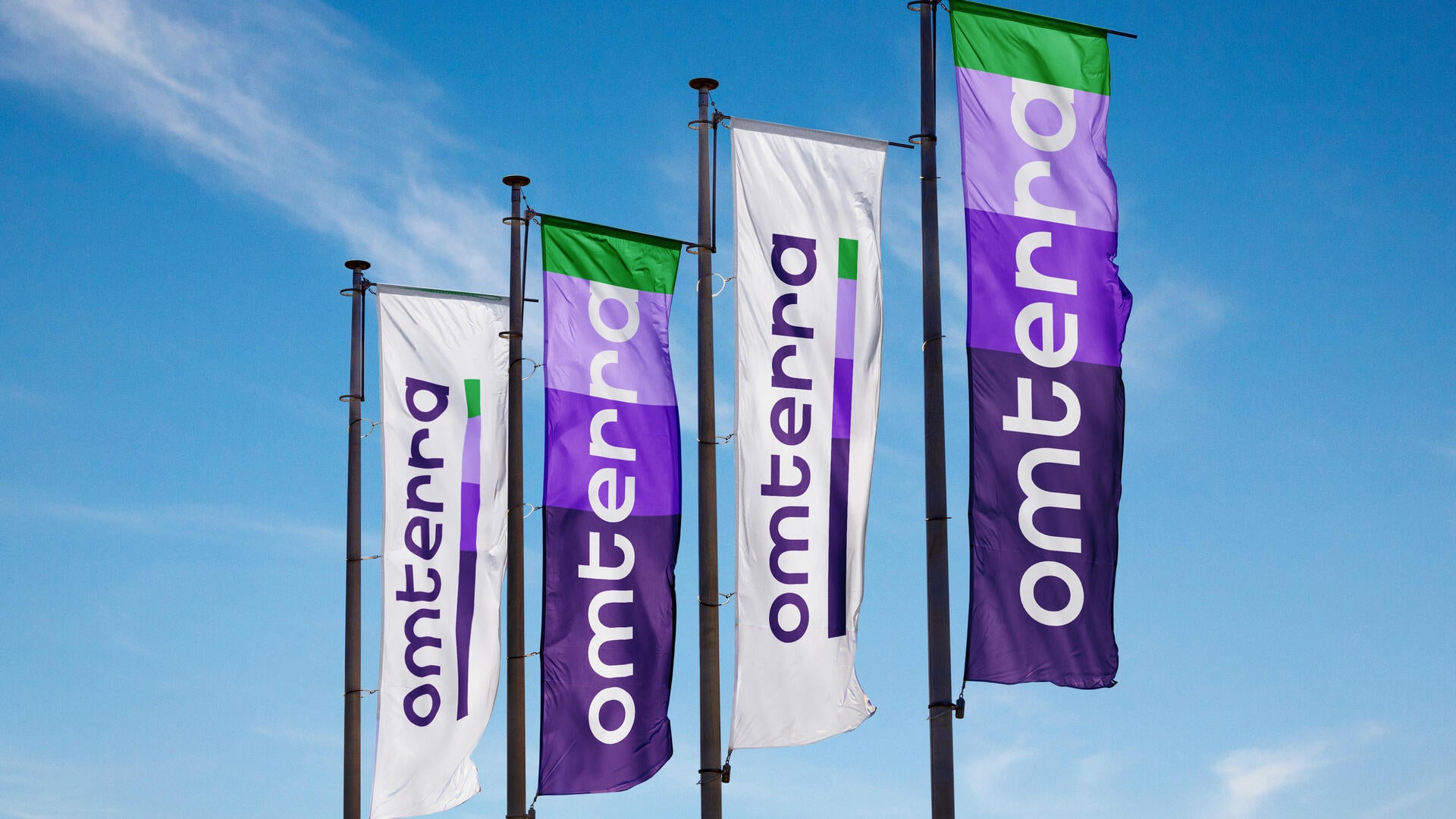
Siemens Energy Exits €300M License, Manufactures New Identity
The industrial giant's rebrand to Omterra signals a rare organizational reset—one that demands disciplined infrastructure across every physical touchpoint.
Siemens Energy has announced its departure from the Siemens corporate structure, retiring the license relationship that cost €300M annually and moving to a standalone entity operating under the name Omterra. The separation is complete. What follows is the physical manifestation of that decision across facilities, signage systems, executive objects, packaging, collateral, and every surface that carries corporate identity into the market.
This is not a logo adjustment. This is infrastructure replacement on global scale. For procurement leaders and chiefs of staff tracking enterprise transitions, the Omterra move represents a finite window—typically 18 to 36 months—during which all legacy-marked materials rotate out and new systems imprint themselves across operations in 40+ countries. The cost of that transition, beyond the license savings, is measured in the intentionality of what gets manufactured to replace it.
What the Separation Signals
Siemens Energy's exit from the parent structure means the company no longer carries the weight of parent-company visual governance. That autonomy is capital. It also means the company must now establish its own identity infrastructure from the ground up—not inherit it, not license it, but build it. Omterra begins as a blank operational canvas. The question is whether that canvas gets treated as a compliance exercise or as an organizational statement.
For heritage industrial operations, this type of separation typically signals one of two paths: the company either deprioritizes identity work and runs lean (manufacturing the minimum required to meet regulatory and operational needs), or it recognizes that the visual layer of a rebrand is where stakeholders—investors, partners, facility staff, executives—first encounter the new entity. Organizations that choose the second path outrank their peers in market perception within the first 18 months. Omterra's leadership will determine which path governs the next phase of procurement and production.
Where the Identity Layer Breaks
The most common failure point in large rebrands is inconsistency across the physical layer. A single Family Office tracking this transition should note: legacy Siemens signage, vehicles, uniforms, executive gifts, facility markers, and collateral are still in circulation. As they rotate, what replaces them must be coherent. If regional procurement teams source replacements independently without a central identity standard, the rebrand fragments. The company ends up looking unresolved for three years.
The operational window is now. Procurement leads and CMOs should be mapping every physical asset that carries the old mark—buildings, vehicles, executive merchandise, packaging materials, conference collateral, hospitality objects—and establishing a replacement schedule tied to natural refresh cycles. This is where branded identity infrastructure either gets manufactured with discipline or drifts into ad-hoc replacement. The companies that move first, with clear standards, keep their identity coherent through the transition. Everyone else looks like they are still figuring it out.
What Operators Do in the Window
For VP Premium Sales and event planners, the next 24 months present an opportunity window: Omterra's leadership is actively sourcing new partnerships, new vendors, new identity manufacturers. Existing suppliers who serviced Siemens Energy under the parent license are not automatically retained. The company is evaluating which partners understand industrial-scale identity work and which do not.
The operators who move ahead of this moment are those who reach out now—not with a sales pitch, but with a capability brief tied specifically to what a global industrial rebrand requires: consistency across 40+ markets, manufacturing timelines that accommodate operations, identity standards that scale without fragmenting, and the discipline to keep all touchpoints aligned. The companies that wait for a procurement request miss the conversation where strategy is still being formed. The ones that show up now, with specific counsel on identity infrastructure, get to be part of how Omterra manufactures its new presence.
This is how the work gets handled: with precision, with a clear operational calendar, and with vendors who understand that a rebrand is only as strong as its weakest imprinted object.
Editorial & Disclosure Notice: This article was written with artificial intelligence from public sources and is published without individual human review. Artificial intelligence and other digital tools are also used for research, analysis, editing, formatting, and production. Errors, omissions, outdated information, or inaccuracies may occur. References to companies, brands, products, services, organizations, or individuals are for informational and editorial purposes and do not imply endorsement, sponsorship, affiliation, partnership, or approval unless expressly stated. All trademarks and other intellectual property remain the property of their respective owners. Opinions, analysis, estimates, and commentary are informational only and should not be construed as financial, investment, legal, tax, medical, procurement, or other professional advice. Information may be corrected, clarified, or updated after publication. Corrections or removal requests: jenny@pops4.com.