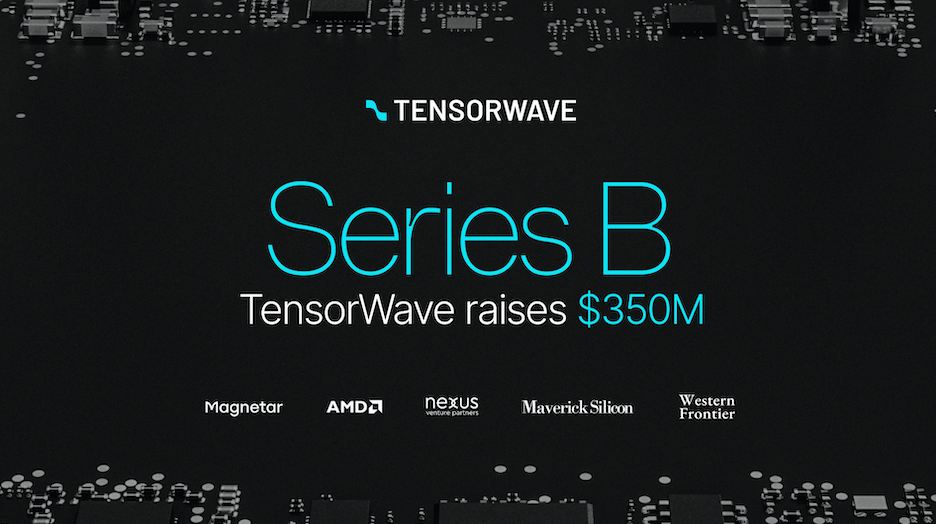
TensorWave's $350M Round: Identity Infrastructure Now
A $350M Series B in hardware infrastructure demands the physical and material language to match institutional capital—and the window to manufacture it is narrow.
TensorWave closed $350 million in Series B funding to scale data center infrastructure and displace Nvidia's position in AI chip manufacturing. The company moves from technical proof into market presence. That requires more than engineering credibility. It requires the material apparatus—the documents, the objects, the environments—that signal to institutional investors, corporate partners, and enterprise clients that this is a house built to outlast the cycle.
What the capital influx signals
A $350M round means TensorWave enters the partnership phase. Investors expect quarterly investor relations materials, due diligence packages, executive summaries. Fortune 500 procurement officers and chief technology officers will visit facilities and sit in boardrooms. Board materials. Client onboarding suites. Branded objects kept on the desk or in the lab. The verbal pitch—the story of outranking an entrenched competitor—must be imprinted into every surface the buyer touches. The funding round is the permission structure. The branded identity infrastructure is the execution.
This is not decoration. Physical materials carry institutional weight that pixels cannot. A bound quarterly report produced on 120gsm Neenah Classic Crest with debossed logowork signals different information than a PDF. A client onboarding kit—notebook, pen, technical documentation, material sample cards—kept by a procurement director's desk for six months imprints the company's precision differently than a Zoom call does. The venture scale phase demands this layer. Most companies know this too late.
Where operators build the advantage
The operations window is now, not after the next funding round. TensorWave's Series B closes; the board expects materials within the quarter. Experienced CMOs and chiefs of staff at heritage houses move in the gap between capital close and first institutional meetings.
This means commissioning branded identity infrastructure across three tiers: governance materials (board books, investor quarterly packages, regulatory filings imprinted with house language), client acquisition materials (technical white papers, onboarding suites, facility documentation), and executive environment (boardroom, reception, executive office—the spaces where deals are signed). Each tier requires separate thinking. A board book is governance. An onboarding kit is persuasion. An office environment is institutional permanence.
The companies that move fastest manufacture at scale. TensorWave will have 40+ client meetings in the next eight months. Each meeting requires identical, imprinted materials. Not digital samples. Manufactured objects. The procurement lead who sources this infrastructure now—who locks in production timeline and material specification—owns the visual language of the company's growth phase.
What principals and chiefs of staff keep in view
A $350M round creates budget authorization for infrastructure spending. Most principals delegate this to CMO or Chief of Staff. The decision made now shapes how the company is perceived across 18–24 months. This is not brand consulting. This is asset production: binding, paper stock, object design, production timeline, inventory management. The operator who manufactures this infrastructure now manufactures the company's institutional presence during the critical partnership phase.
The house that understands this window—that moves before the first client dinner, before the quarterly investor presentation—controls the material language of the entire scale phase. That is the way this gets handled.
Editorial & Disclosure Notice: This article was written with artificial intelligence from public sources and is published without individual human review. Artificial intelligence and other digital tools are also used for research, analysis, editing, formatting, and production. Errors, omissions, outdated information, or inaccuracies may occur. References to companies, brands, products, services, organizations, or individuals are for informational and editorial purposes and do not imply endorsement, sponsorship, affiliation, partnership, or approval unless expressly stated. All trademarks and other intellectual property remain the property of their respective owners. Opinions, analysis, estimates, and commentary are informational only and should not be construed as financial, investment, legal, tax, medical, procurement, or other professional advice. Information may be corrected, clarified, or updated after publication. Corrections or removal requests: jenny@pops4.com.