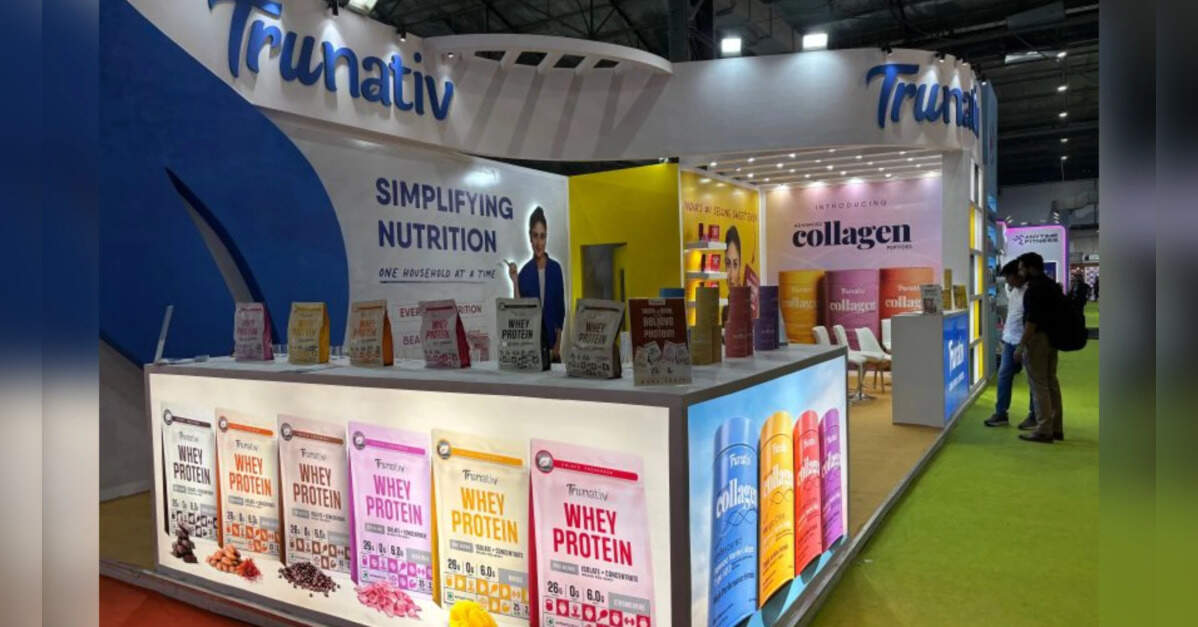
TruNativ's $30M Series B demands retail identity infrastructure
OrbiMed-backed nutrition startup enters distribution phase and requires packaging systems that hold margin and shelf presence across 500+ retail doors.
TruNativ closed a $30 million Series B round led by OrbiMed Advisors this week, signaling the nutrition startup's move from early-stage validation into retail distribution at scale. The capital funds expansion across major grocery, natural products, and supplement channels—a phase that requires more than product formulation. It requires a complete branded identity layer: packaging systems, point-of-sale materials, retail collateral, and distribution logistics that imprint the brand at every buyer touchpoint.
This is not a marketing moment. This is an infrastructure moment. The difference matters.
What the capital structure signals
OrbiMed typically backs biotech and healthcare companies with 7-10 year horizons and institutional distribution paths. Their Series B lead suggests TruNativ has cleared efficacy and compliance gates and is ready for retail velocity. That means the product works. Now the brand must work in a 4-inch shelf slot, under fluorescent light, competing against 47 similar containers.
Retail nutrition is a margin business. A single SKU can anchor a brand's entire identity or erode it. Packaging density, label hierarchy, closure selection, and even carton construction become competitive assets. Retailers note shelf impact within 90 days. Brands that don't imprint their identity clearly into the physical product don't survive the reorder cycle.
Where the identity layer breaks down
Most nutrition startups outsource packaging design to their contract manufacturer or a commodity supplier. This approach produces commodity results. The bottle looks like 200 others. The label reads like compliance copy. Shelf velocity suffers.
TruNativ's next move—and the window is 90 days—requires a branded identity partner who understands retail merchandising, packaging systems engineering, and point-of-purchase manufacturing. Not a design agency. Not a printing vendor. A house that manufactures imprinted objects at scale, keeps quality discipline on every unit, and tracks performance by channel. The difference between a $2M round and a $30M round is the ability to move 5,000 SKUs a week through retail systems without identity drift or production failure.
Packaging becomes the sales force. Every bottle is a closed loop: it carries the brand story, holds the product safely, sits on shelf, and moves through checkout. If any of those systems breaks, margin breaks with it.
What operators do in this window
Experienced CMOs and VP Premium Sales know that Series B means 120 days to retail launch. That window compresses every decision. Packaging samples must be approved, manufacturing scaled, and distribution logistics locked. Every day of delay costs shelf space that competitors fill.
The operators who succeed at this stage do three things: they lock packaging design before tooling (no revisions mid-run), they select manufacturing partners who guarantee consistency at volume (not just capability at small scale), and they imprint brand identity so clearly that retail buyers and end consumers both recognize the product instantly.
Distribution partnerships—with DSD networks, natural products wholesalers, and major grocery chains—all depend on packaging performance. A SKU that doesn't move off shelf in 60 days gets delisted. The branded objects have to work before the sales team does.
TruNativ's capital window is open now. Six months from today, if the brand identity infrastructure is sound, retail velocity becomes the only variable. If it's built on weakness—supplier dependency, design drift, production inconsistency—no amount of sales effort recovers it.
This is the way this gets handled: identify the partner before launch, lock the specifications, and keep discipline through first 10,000 units. Retail distribution is not forgiving.
Editorial & Disclosure Notice: This article was written with artificial intelligence from public sources and is published without individual human review. Artificial intelligence and other digital tools are also used for research, analysis, editing, formatting, and production. Errors, omissions, outdated information, or inaccuracies may occur. References to companies, brands, products, services, organizations, or individuals are for informational and editorial purposes and do not imply endorsement, sponsorship, affiliation, partnership, or approval unless expressly stated. All trademarks and other intellectual property remain the property of their respective owners. Opinions, analysis, estimates, and commentary are informational only and should not be construed as financial, investment, legal, tax, medical, procurement, or other professional advice. Information may be corrected, clarified, or updated after publication. Corrections or removal requests: jenny@pops4.com.