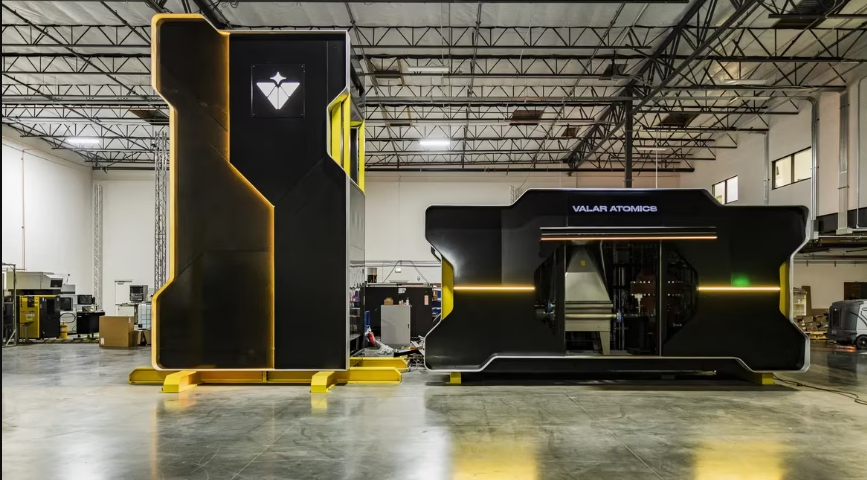
Valar Atomics: $1B funds nuclear pivot to AI power infrastructure
The company's move into mass production signals a maturation phase requiring enterprise-grade branded identity systems for investor relations and client engagement.
Valar Atomics closed a $1 billion funding round to begin manufacturing small modular reactors (SMRs) for the artificial intelligence infrastructure market. This capital deploy marks a shift from research into production—a threshold where physical identity systems become operational assets, not afterthoughts.
The nuclear sector has moved from theoretical to industrial. Data centers running large AI models consume power at scales that traditional grids cannot serve. SMRs offer distributed, reliable generation. Valar's timing intersects with real customer demand: cloud operators, semiconductor manufacturers, and AI platform companies are already evaluating on-site nuclear capacity. This is not speculative infrastructure. Contracts will close.
What the funding scale signals about brand presence
A billion-dollar round does not move quietly. Valar will enter investor roadshows, secure offtake agreements with Fortune 500 operators, and manage stakeholder relationships across regulatory bodies, utility commissions, and C-suite procurement teams. Each interaction manufactures impression. The company's physical presence—from investor materials to site documentation to client-facing equipment marking—must convey precision, regulatory compliance, and long-term operational credibility.
Nuclear energy carries symbolic weight. Public perception, regulatory confidence, and investor comfort all hinge on how Valar's brand identity imprints across materials, spaces, and objects. A glossy deck will not suffice. Every artifact—from reactor enclosure branding to investor conference collateral to facility signage—must carry the discipline the sector requires. Inconsistency reads as risk.
Where the identity layer breaks for most nuclear entrants
Most hardware manufacturers treat branded identity infrastructure as a cost center, outsourced to agencies operating on flat fees. Nuclear operators cannot afford this. The identity system must survive regulatory scrutiny, client audits, and twenty-year facility lifecycles. Materials must meet operational specifications: substrate durability in high-radiation zones, legibility under industrial lighting, compliance with Department of Energy marking standards.
Valar will need a branded identity partner who understands the nuclear sector's operating constraints—not just design sensibility. This includes specification of metal-imprinted plaques that hold legibility after decades of thermal cycling, packaging systems for reactor components that communicate safety protocols to installation teams, and investor materials that convey confidence without overselling.
What operators do in this window
The months between funding close and first commercial delivery define the identity infrastructure window. Valar's Chief of Staff and VP Business Development should commission a comprehensive branded identity audit covering: investor relations collateral, facility signage systems, client-facing technical documentation, component marking standards, and event presence architecture. This is not rebranding. This is building the systems that keep regulatory relationships and client confidence intact across a decade of scaling.
VP Premium Sales leaders at heritage industrial firms should note this signal: nuclear infrastructure plays require identity partners with sector expertise, not generalist design houses. Event planners at the $250K+ tier will find opportunities in investor summits, offtake negotiations, and regulatory stakeholder convening—spaces where branded environment design influences perception of operational maturity.
The way this gets handled determines whether Valar reads as a disciplined operator or a well-funded startup. The difference lives in the details: how a reactor enclosure is marked, how an investor packet feels in hand, how facility signage communicates to both regulators and operational teams.
Editorial & Disclosure Notice: This article was written with artificial intelligence from public sources and is published without individual human review. Artificial intelligence and other digital tools are also used for research, analysis, editing, formatting, and production. Errors, omissions, outdated information, or inaccuracies may occur. References to companies, brands, products, services, organizations, or individuals are for informational and editorial purposes and do not imply endorsement, sponsorship, affiliation, partnership, or approval unless expressly stated. All trademarks and other intellectual property remain the property of their respective owners. Opinions, analysis, estimates, and commentary are informational only and should not be construed as financial, investment, legal, tax, medical, procurement, or other professional advice. Information may be corrected, clarified, or updated after publication. Corrections or removal requests: jenny@pops4.com.