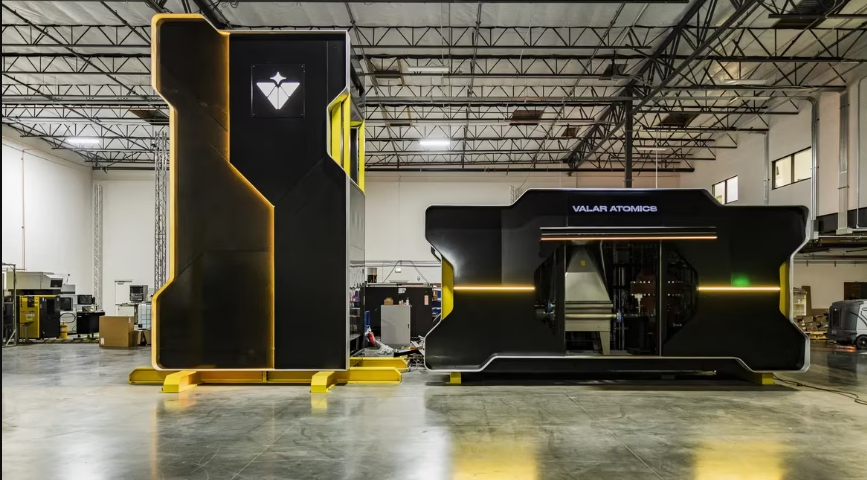
Valar Atomics Funds Mass Production: Identity Infrastructure Now
A $1B funding round for small nuclear reactor manufacturing demands immediate, deliberate branded collateral strategy for investor relations and market entry.
Valar Atomics has secured $1 billion to move small modular reactors from prototype to production scale. The capital targets manufacturing expansion to serve the AI compute sector—a market segment that requires continuous, reliable power at scale. The funding round itself is material. What follows is more so: the company now enters a 12-to-24-month window where every touchpoint—investor meetings, facility tours, packaging, documentation, environmental compliance briefings, supply-chain introductions—manufactures the brand's credibility in a sector where trust is not assumed but imprinted through discipline.
What the capital signal requires
Mass production runs demand more than operational infrastructure. They demand identity consistency across every physical surface: investor decks with imprinted materials that hold weight in a boardroom, manufacturing facility collateral that speaks to process rigor, technical packaging that reflects precision and safety culture, and third-party communications where the brand's restraint becomes its authority. Valar enters a category where regulatory bodies, energy utilities, and institutional investors read not just words but the care embedded in how information is kept and produced. A single poorly manufactured collateral piece—a deck with loose binding, an investor packet with inconsistent typography, a facility tour notebook that feels provisional—signals internal inconsistency to an audience trained to read physical objects as evidence of operational discipline.
Where branded identity infrastructure becomes operational advantage
The AI power sector moves capital fast, but decision-makers are risk-averse. They examine collateral the way underwriters read contracts. Valar's investor relations function now requires a coherent, house-imprinted system: binders manufactured to specific standards, printed materials that anchor the company's technical story with visual precision, packaging that makes the reactor itself feel like an artifact of intentional engineering rather than industrial commodity. The company that produces materials reflecting the same rigor as its manufacturing processes displaces competitors who treat collateral as afterthought. Heritage-sector operators understand this. A single boardroom presentation where every detail—paper weight, binding method, typography hierarchy, spatial breathing room—has been considered signals that the company thinks operationally. That signal converts.
The window and what experienced operators do
Valar has 18 months before first units deploy to customer sites. In that window, every asset the company produces—from investor materials to facility documentation to customer onboarding collateral—sets the standard for how the brand will be read in market. Operators move now. They establish the identity specifications, manufacture reference systems, and produce the collateral library before scale makes changes costly. They note which third parties (facilities, partners, customers) will handle branded materials and build quality controls into supply chains. They keep manufacturing partners aligned to standards. Companies that delay this work until materials are needed tend to compress timelines, sacrifice quality, and produce scattered identity systems that undermine the very credibility the funding was meant to establish. The brands that move now—that treat branded identity infrastructure as operational requirement rather than communications nicety—arrive in market as coherent entities rather than assembled ones.
How this gets handled determines whether Valar's $1B funding round reads as confidence or improvisation. The difference is in the details that get manufactured.
Editorial & Disclosure Notice: This article was written with artificial intelligence from public sources and is published without individual human review. Artificial intelligence and other digital tools are also used for research, analysis, editing, formatting, and production. Errors, omissions, outdated information, or inaccuracies may occur. References to companies, brands, products, services, organizations, or individuals are for informational and editorial purposes and do not imply endorsement, sponsorship, affiliation, partnership, or approval unless expressly stated. All trademarks and other intellectual property remain the property of their respective owners. Opinions, analysis, estimates, and commentary are informational only and should not be construed as financial, investment, legal, tax, medical, procurement, or other professional advice. Information may be corrected, clarified, or updated after publication. Corrections or removal requests: jenny@pops4.com.