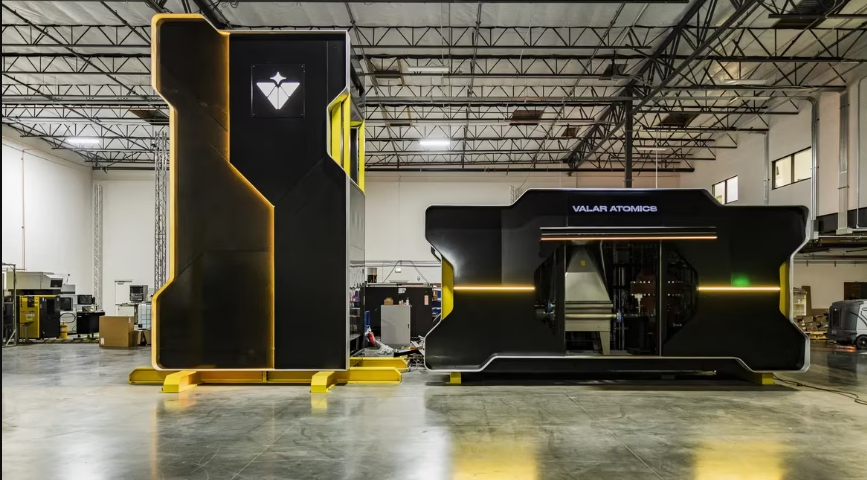
Valar Atomics Moves Mass Production Online
A $1B funding round positions small nuclear reactors for AI infrastructure—and signals what executive identity collateral demands now.
Valar Atomics closed a $1 billion funding round to begin manufacturing small modular reactors at scale. The company manufactures reactors designed for on-site power generation at data centers and industrial facilities, displacing traditional grid infrastructure for AI operations. This is not venture theater. The capital sits behind hard physics, regulatory approval, and supply-chain commitments. What matters to the branded-identity house: a company moving from prototype to production enters a visibility window that requires infrastructure most founders defer until too late.
What the Capital Imprint Signals
A billion-dollar raise at this stage means Valar moves from laboratory credibility to operational presence. Customers are now utilities, data-center operators, and industrial facilities—not venture conferences. These buyers do not attend product launches in the media sense. They conduct due diligence. They visit manufacturing sites. They brief boards. They keep executive briefing materials, commissioned white papers, and site documentation for years. The collateral manufacturing window opens now, before scaling production. After scaling, the identity infrastructure often calcifies around whatever was imprinted first.
The signal extends further: Valar will acquire talent from energy, manufacturing, and regulatory affairs sectors. These hires come from institutions—utilities, engineering firms, national labs—where corporate identity is imprinted through objects, documentation, and environment, not digital channels. The executive gifting strategy must reflect that. A reactor manufacturer's identity lives in the objects kept on desks, the binders carried to regulatory meetings, the materials handed to board members.
Where the Identity Layer Breaks
Most technology companies in the capital-raising phase treat branded objects as post-launch afterthought. Valar's position displaces this logic. The company manufactures physical infrastructure. Its buyers inspect things. Regulatory bodies require documentation. Power companies do not conduct their governance through digital channels alone. The first opportunity—and the most commonly missed one—sits in the foundation documents. Technical specifications. Site assessments. Regulatory white papers. These imprinted, house-branded, and maintained through production cycles become the institution's first language.
The second opportunity lives in executive presence. When Valar's leadership enters boardrooms at utilities or data-center operators, the objects they carry—leather cases, bound reports, commissioned briefs on energy infrastructure—imprint the organization's discipline and seriousness. Most technical founders outsource this to vendors who treat it as expense rather than identity infrastructure. The houses that understand the distinction manufacture it themselves.
What Operators Do in This Window
The experienced operator moves now, before the company scales production and the identity architecture calcifies. This means: commissioned research into how Valar's customer set—utilities, data-center operators, industrial facilities—consumes branded identity at the executive level. It means auditing what materials are kept (reports, briefs, technical documentation) versus discarded. It means manufacturing house-imprinted objects that circulate through due-diligence processes and board presentations, not events.
For event planners at this tier, the opportunity is the site visit. Not the product launch. The facility tour where Valar demonstrates manufacturing capability, regulatory compliance, and operational readiness. These require executive briefing materials, environment-imprinted collateral, and presented objects that signal institutional discipline. The way this gets handled determines whether Valar imprints as a founded company or an institution.
Editorial & Disclosure Notice: This article was written with artificial intelligence from public sources and is published without individual human review. Artificial intelligence and other digital tools are also used for research, analysis, editing, formatting, and production. Errors, omissions, outdated information, or inaccuracies may occur. References to companies, brands, products, services, organizations, or individuals are for informational and editorial purposes and do not imply endorsement, sponsorship, affiliation, partnership, or approval unless expressly stated. All trademarks and other intellectual property remain the property of their respective owners. Opinions, analysis, estimates, and commentary are informational only and should not be construed as financial, investment, legal, tax, medical, procurement, or other professional advice. Information may be corrected, clarified, or updated after publication. Corrections or removal requests: jenny@pops4.com.