↑ Read the latest from the desks · fresh intelligence, published daily✦Quiet reading✦No ads, ever✦Ad-free articles read by humans today …↑✦Boards engagement today … people · … AI✦Corporate brand & media services✦Made in Virginia Beach since 1997✦
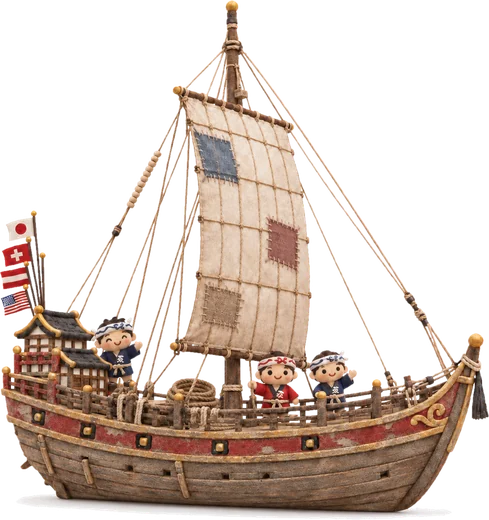
Cb Financial Services$CBFV · filed: saw revenue fall 8.2% in FY2021 to $44MWeathered boatNext year $30.6M–$55.0M sealedCheck ▾Close ▴
What Cb Financial Services filed
Saw revenue fall 8.2% in FY2021 to $44 million, equity 9.3% of assets, and dividend per share up 1 year running. Every figure links to the filing it came from on Cb Financial Services’s card. Weathered boat: two warning signs.
What the house said in advance
Revenue for the fiscal year after 2021-12-31 between $30.6M and $55.0M, an 80% range sealed on 20 Sept 2026 · receipt #3f463e · graded in public by the revenue in Cb Financial Services’s next annual report.
Figures as filed with the SEC. Ranges, scores and boats are statistical descriptions of past filings, not ratings or recommendations. Reporting, not advice.
In plain words
First 8-K disclosure tied solely to employee AI use signals boards lack frameworks for unsanctioned enterprise AI risk.
$2.1 billion
in assets across
2024
survey by the National Association of Corporate Directors found…
68%
of public company boards had received no formal briefing…
81%
lacked policies governing employee use of external AI tools
CB Financial Services filed a Form 8-K cybersecurity disclosure this month after an employee's unauthorized use of an artificial intelligence tool created what the company deemed a material security incident. The filing marks the first known instance of employee AI usage alone triggering SEC-mandated disclosure under the cybersecurity rules that took effect in December 2023.
The Pennsylvania-based regional bank, holding $2.1 billion in assets across 19 branches, disclosed the event under Item 1.05 of Form 8-K, which requires disclosure of material cybersecurity incidents within four business days of materiality determination. The bank did not specify which AI tool the employee used, whether customer data was exposed, or the business function involved. CB Financial noted it was "evaluating the incident" and implementing "additional controls" but provided no timeline for remediation completion. The employee's status remains undisclosed.
The disclosure matters because it exposes a governance vacuum. Most boards built cybersecurity oversight around perimeter defense, insider threat from malicious actors, and third-party vendor risk. Employee use of consumer-grade AI tools introduces a different vector: well-intentioned staff deploying powerful external systems without understanding data residency, model training implications, or compliance boundaries. CB Financial's filing implies the incident met the SEC's materiality threshold, meaning it was reasonably likely to materially impact the company's financial condition or operations. For a $2.1 billion bank, that threshold suggests either sensitive customer data exposure, regulatory action risk, or operational disruption significant enough to warrant immediate public disclosure.
The broader issue is preparation. A 2024 survey by the National Association of Corporate Directors found that 68% of public company boards had received no formal briefing on generative AI risks, and 81% lacked policies governing employee use of external AI tools. Financial institutions face heightened scrutiny under existing data protection regimes, but most acceptable use policies were written before ChatGPT's November 2022 launch and do not contemplate employees feeding proprietary information into large language models. The gap between policy and practice is now producing SEC filings.
Operators and allocators should watch three developments over the next 90 days. First, whether CB Financial's 10-Q filing for the quarter ending June 30 quantifies financial impact or reveals enforcement action by the Office of the Comptroller of the Currency, which regulates the bank. Second, whether peer regional banks update acceptable use policies or file their own disclosures as they audit employee AI usage in response to this event. Third, whether the SEC issues guidance clarifying what constitutes materiality for AI-related incidents, particularly distinguishing between inadvertent data exposure and systemic control failures.
The filing arrives as financial regulators finalize Basel III endgame rules and operational resilience standards that will require banks to map critical operations and third-party dependencies. Employee-initiated AI usage does not fit neatly into third-party risk frameworks, creating a classification problem that most compliance functions have not solved. CB Financial's disclosure is the visible edge of a wider exposure.
Branded by POPS4 · proof in 60 seconds
For the principal
Audit whether your technology committee has received a briefing on employee AI tool usage and data exposure pathways in the last six months.
For the operator
Review portfolio holdings for regional banks with limited technology governance infrastructure and assess whether AI risk is priced into cybersecurity insurance premiums.
For the house
We are avoiding regional financials with sub-$5 billion assets until policy frameworks clarify AI incident liability; no change to STEEL tier positioning.
The branded-identity layer Chiefs of Staff and heritage CMOs route through — your name imprinted on real authorized stock, your pick of 200+ brands and 70,000 products, shipped from one accountable house. Nine editorial desks publish the intelligence those operators read before they sign.
200+authorized brands
70,000products · virtual proof on each
9 deskspublishing daily
1997one house, since
70,000 SKUs · virtual proof in 60 seconds · no platform fee · blind-shipped · ASI #217876
Your next customer won't visit your website. Their AI will.
AI assistants have quietly taken over the first step of buying — they answer from catalogs they can read and shortlist whoever can actually ship. Two questions now decide whether you exist to that buyer: can a machine read your catalog, and can you fulfill the order. Most brands fail one or both and never find out why the orders went elsewhere. The winners of this shift aren't the loudest. They're the most readable. Build for the machine that's about to do the shopping.
Built by the craft floor — apparel, media, packaging, and secure print.
This trade runs on hands, not desks. Imprint manufacturing & Komori heritage press through approved vendors · Canon high-speed secure-media operations is a craft floor — genuine Six Sigma discipline applied to ink, thread, foil, and registration, where a hundredth of an inch is the difference between a brand that reads serious and one that reads cheap. POPS4 is built by exactly those operators: independent, boots-on-the-ground engineers who carry their own book, read a client in microseconds, and put their name on every run. Beyond our own Virginia Beach floor, we work with a vetted network of craft manufacturers across the US — each meeting the highest excellence in QC standards in the industry, each a specialist in its own discipline — so apparel, hard-goods imprinting, media manufacturing, packaging, and secure printing all go to the bench built for them, coordinated from one accountable hub. Short-run from twenty-five units, volume to five hundred thousand. Two hundred authorized national brands, seventy thousand SKUs with virtual proofing on every one. Art archived for instant reorders. Net-thirty corporate terms, NDA-standard white-label — your name on the work, or none at all.
Strategy, positioning, identity, creative, and messaging — wired into an AI system that publishes and distributes on its own. Nine editorial desks generate the authority, the production house ships the physical proof, and the attribution layer tells you which post sold which SKU. What you get is an operating layer — content, catalog, and order path under one roof — that keeps working whether or not you are in the room. Built for principals who would rather own the machine than rent the agency.
Named-account programs — one desk, quiet delivery, NDA-standard.
One point of contact who already knows the file, so nothing restarts from zero between engagements. The work ships blind, under NDA, with your name on it or none at all. Built for single-family offices, heritage-house CMOs, sports-ownership groups, and the agencies that white-label our production. The relationship is the product; the merch is the proof of it.
SFO · Chief of Staff desk. Principal household, properties, aircraft, yacht, calendar, philanthropy — one file.
Shop seventy thousand products. Virtual proof on every one. 24/7.
Drop your logo on any product and see the virtual proof before asking. Quote routes direct to the desk. MCP catalog for AI agents. Celeste for the fast conversation. Full self-service checkout in development.