↑ Read the latest from the desks · fresh intelligence, published daily✦Quiet reading✦No ads, ever✦Ad-free articles read by humans today …↑✦Boards engagement today … people · … AI✦Corporate brand & media services✦Made in Virginia Beach since 1997✦
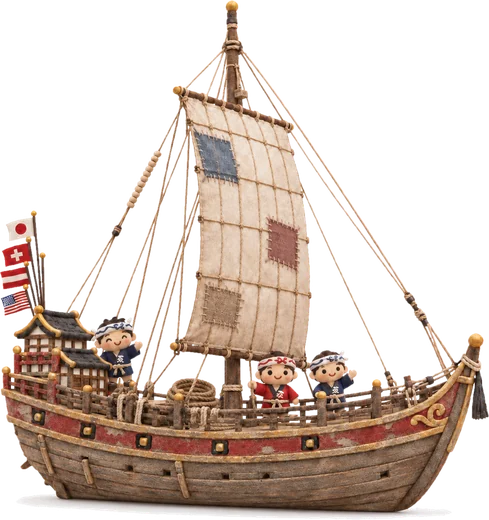
Cb Financial Services$CBFV · filed: saw revenue fall 8.2% in FY2021 to $44MWeathered boatNext year $30.6M–$55.0M sealedCheck ▾Close ▴
What Cb Financial Services filed
Saw revenue fall 8.2% in FY2021 to $44 million, equity 9.3% of assets, and dividend per share up 1 year running. Every figure links to the filing it came from on Cb Financial Services’s card. Weathered boat: two warning signs.
What the house said in advance
Revenue for the fiscal year after 2021-12-31 between $30.6M and $55.0M, an 80% range sealed on 20 Sept 2026 · receipt #3f463e · graded in public by the revenue in Cb Financial Services’s next annual report.
Figures as filed with the SEC. Ranges, scores and boats are statistical descriptions of past filings, not ratings or recommendations. Reporting, not advice.
In plain words
First 8-K filing triggered by employee AI use—boards without AI-audit protocols are now priced at a governance discount.
$530 million
in market capitalization
CB Financial Services, a Pennsylvania community bank holding company with $530 million in market capitalization, filed an SEC Form 8-K on cybersecurity grounds after an employee used an unauthorized AI tool that exposed customer data. The filing marks the first known instance where employee AI experimentation—not a third-party breach or ransomware event—forced material disclosure under Item 1.05 of Regulation S-K.
The employee, whose role has not been disclosed, used a generative AI platform to streamline internal workflow tasks. The tool accessed proprietary customer information, including account details and transaction histories, during the process. CB Financial's internal audit team discovered the exposure during a routine systems review. The bank has not disclosed whether the AI vendor retained the data, whether the data was used for model training, or whether customers have been notified. The company reported the incident to federal regulators and engaged external counsel. No ransom demand was received. No evidence of third-party data exfiltration has been confirmed.
This matters because governance frameworks built for perimeter defense and vendor risk management do not account for employee-initiated AI exposures. Traditional cybersecurity disclosure has centered on external attacks—credential stuffing, phishing campaigns, supply-chain compromises. The CB Financial event introduces a liability vector most boards have not stress-tested: the employee who believes they are improving productivity by feeding sensitive data into a consumer-grade AI interface. These tools often include default data-retention clauses, third-party training permissions, and ambiguous jurisdiction over uploaded content. Financial institutions operate under heightened data-protection standards. The moment an employee pastes regulated information into an unapproved AI tool, the institution loses control of that data's lifecycle. The SEC's updated cybersecurity disclosure rules, effective since December 2023, require material incidents to be reported within four business days. CB Financial's filing suggests their internal assessment concluded the exposure met the materiality threshold—a judgment call that will now be scrutinized by peers, auditors, and plaintiffs' counsel.
Allocators and operators should watch for three developments in the next 90 to 120 days. First, proxy filings from regional banks and asset managers will reveal whether boards have amended their cybersecurity risk frameworks to include employee AI-use audits. Second, D&O insurers will begin adding AI-use questionnaires to renewal applications, pricing in the governance gap. Third, the SEC will likely issue interpretive guidance clarifying whether AI-enabled data exposures require disclosure even when no exfiltration is confirmed. Firms that wait for guidance rather than acting preemptively will face higher compliance costs and weaker negotiating positions with underwriters.
CB Financial's 8-K did not disclose the name of the AI platform. That silence is the tell.
Branded by POPS4 · proof in 60 seconds
For the principal
Audit whether your family office's external managers have implemented AI-use controls and employee-training protocols within the last six months.
For the operator
Review portfolio companies for board-level AI governance—absence of documented employee AI-use policies is now a material due-diligence gap.
For the house
Huang Goodman adds regional bank cybersecurity posture to diligence screens; AI-use audit presence becomes a named-account underwriting variable starting June.
The branded-identity layer Chiefs of Staff and heritage CMOs route through — your name imprinted on real authorized stock, your pick of 200+ brands and 70,000 products, shipped from one accountable house. Nine editorial desks publish the intelligence those operators read before they sign.
200+authorized brands
70,000products · virtual proof on each
9 deskspublishing daily
1997one house, since
70,000 SKUs · virtual proof in 60 seconds · no platform fee · blind-shipped · ASI #217876
Your next customer won't visit your website. Their AI will.
AI assistants have quietly taken over the first step of buying — they answer from catalogs they can read and shortlist whoever can actually ship. Two questions now decide whether you exist to that buyer: can a machine read your catalog, and can you fulfill the order. Most brands fail one or both and never find out why the orders went elsewhere. The winners of this shift aren't the loudest. They're the most readable. Build for the machine that's about to do the shopping.
Built by the craft floor — apparel, media, packaging, and secure print.
This trade runs on hands, not desks. Imprint manufacturing & Komori heritage press through approved vendors · Canon high-speed secure-media operations is a craft floor — genuine Six Sigma discipline applied to ink, thread, foil, and registration, where a hundredth of an inch is the difference between a brand that reads serious and one that reads cheap. POPS4 is built by exactly those operators: independent, boots-on-the-ground engineers who carry their own book, read a client in microseconds, and put their name on every run. Beyond our own Virginia Beach floor, we work with a vetted network of craft manufacturers across the US — each meeting the highest excellence in QC standards in the industry, each a specialist in its own discipline — so apparel, hard-goods imprinting, media manufacturing, packaging, and secure printing all go to the bench built for them, coordinated from one accountable hub. Short-run from twenty-five units, volume to five hundred thousand. Two hundred authorized national brands, seventy thousand SKUs with virtual proofing on every one. Art archived for instant reorders. Net-thirty corporate terms, NDA-standard white-label — your name on the work, or none at all.
Strategy, positioning, identity, creative, and messaging — wired into an AI system that publishes and distributes on its own. Nine editorial desks generate the authority, the production house ships the physical proof, and the attribution layer tells you which post sold which SKU. What you get is an operating layer — content, catalog, and order path under one roof — that keeps working whether or not you are in the room. Built for principals who would rather own the machine than rent the agency.
Named-account programs — one desk, quiet delivery, NDA-standard.
One point of contact who already knows the file, so nothing restarts from zero between engagements. The work ships blind, under NDA, with your name on it or none at all. Built for single-family offices, heritage-house CMOs, sports-ownership groups, and the agencies that white-label our production. The relationship is the product; the merch is the proof of it.
SFO · Chief of Staff desk. Principal household, properties, aircraft, yacht, calendar, philanthropy — one file.
Shop seventy thousand products. Virtual proof on every one. 24/7.
Drop your logo on any product and see the virtual proof before asking. Quote routes direct to the desk. MCP catalog for AI agents. Celeste for the fast conversation. Full self-service checkout in development.