Where 4imprint's Clients Go When They Outgrow the Catalog
A catalog vendor sells from a list. The house advises, sources from authorized luxury brands, and ships the order blind — with no platform fee.
4imprint is a brand I admire. It built one of the largest promotional-products catalogs in the world and turned speed and reliability into an art — and it did it in a small business. Branded merchandise is only a roughly $45-billion industry all in; everyone in it knows everyone. That is exactly why the difference matters, and why POPS4 is built differently.
A small trade, an outsized lever
A little context on scale. The U.S. promotional-products business runs roughly $26 billion a year (ASI, 2023); fold in commercial print and custom packaging and the branded-physical category clears about $45 billion. To make that real in steel: $45 billion is roughly three modern aircraft carriers, or a full fleet of guided-missile destroyers — and I do not reach for that comparison idly. I have lived in and raised all my spawn here in Virginia Beach a very long time, where the war weapons that actually win are on all of our minds, all the time; it is baked into the DNA of this city. Or, at the cutting edge, that same $45 billion is close to a thousand of the most expensive quantum computers money can buy (the priciest run on the order of fifty million dollars apiece). It sounds enormous — until you set it beside the brands it serves, where a single Fortune-500 marketing budget can rival the whole trade. A small industry standing behind very large ones, building the things you can actually hold.
And pound for pound — kilo for kilo — nothing in marketing works harder. A branded object is the only medium a person actually holds, keeps, and uses: industry studies put recall of the advertiser near 85%, the average item is kept around eight months, and the cost-per-impression lands in fractions of a cent — lower than any digital, print, or broadcast channel. One well-made bag throws thousands of impressions over its life. A logo on a screen is rented attention that vanishes in two seconds; a logo on something good is a relationship that sits on a desk for a year.
It is also why brands fail faster than they should without a physical layer. A company that lives only on screens has nothing a buyer can hold as proof it is real and built to last — and at the level where institutions are judged, that absence reads as impermanence. The gift on the desk, the jacket at the event, the kit in the hand is how a young brand signals it will still be here next year. Skip it, and the brand stays abstract, forgettable, and easy to leave. Move it into the physical world and the brand gets heavier — harder to ignore, harder to walk away from. That is the lever POPS4 exists to pull.
Why physical out-sells the click
Here is the part a client actually pays for. A digital click is the most expensive cheap thing in marketing: average display click-through sits well under one tenth of one percent, a real slice of programmatic spend leaks to fraud and middle-men, and the impression is gone in under two seconds. You rent attention by the auction, and the moment the budget stops, you vanish. That is fine for a flash sale. It is a poor way to build a brand that closes high-value deals.
A physical object does the opposite, and the science is not soft. Neuromarketing work (Canada Post with Temple University) found tangible media takes about 21% less cognitive effort to process, leaves a measurably deeper memory trace, and lights up the brain’s value-and-desire centers more than the same message on a screen. Hold something and you begin to own it — the endowment effect — which quietly raises both what a buyer will pay and how they regard the sender. And a gift trips reciprocity: in account-based selling, adding one considered physical touch routinely multiplies reply and meeting rates over email-only sequences. Roughly four in five people keep a quality branded item, and a strong majority say they are more likely to do business with the company that gave it.
So the play a serious brand runs is not more clicks — it is fewer, heavier touches. Gate the real gift to the accounts you actually want and use it to open the door a click never could: the executive who ignores a hundred cold emails opens a box. Run the physical layer alongside the digital one, because the kept object holds the brand on the desk for eight months while the campaign runs, so every later impression lands on a warm name. Then measure it the honest way — replies, meetings booked, deals closed, ‘how did you hear about us’ — not vanity impressions. That is the multimillion-dollar difference between renting attention and owning a relationship — a relationship that sits on a desk, in the boat-house shop, at the local bar, or in the man panty closet for a year, or for decades on end. It is the exact layer POPS4 is built to run.
Built on a craft floor
Here is what outsiders miss about this industry: it runs on hands, not desks. Imprint manufacturing is not an office function — it is a craft floor, and the people who run it bring a hands-on, error-free discipline most corporate operations never develop. It is genuine Six Sigma quality engineering applied to ink, thread, foil, registration, and cure — where a hundredth of an inch or one degree of temperature is the difference between a piece that reads as a serious brand and one that reads as cheap. Exacting work, done by exacting people, with no ‘close enough.’
It is also, almost uniquely, an independent profession. The best operators in this trade carry their own book and their own income — they are not a cost center buried inside one brand’s corporation, selling to a single master. They serve many houses, and that keeps the standard honest: you cannot coast on one account. After enough years on that floor, judgment becomes instinct — a seasoned operator reads a client in a few microseconds, legit from corrupt, real order from time-waster, because their name rides on every run they accept. The same instinct works on the brands themselves: a veteran of this floor can tell which ones will protect themselves and last — and which are already failing — almost before the first proof leaves the bench, because they have watched the pattern repeat a thousand times. They know what protects a brand and what quietly dooms one. POPS4 is built by exactly these people. That is a standard a catalog can never staff for.
And you do not get these people from a school. You literally cannot recruit them, and there is no Ivy-League university that ‘created’ them — they find you. There is no degree for it, no fixed sequence of courses that turns out a master — they make themselves, run by run, and they take genuine pleasure in the excellence of the work. It is a mastery you cannot buy, hire from a catalog, or certify in a classroom. The only place you find the same thing is in the field: boots-on-the-ground, sandy-feet engineers who learned under pressure — the kind of people who can protect a region and build it in the same breath. That is the stock this house is cut from.
And you, the buyer, only ever see the micro version of all of it — the shelf buy, the package it arrived in, the promo gift you have carried for forty years that still works. Behind that one small object sits the whole floor. You see it most clearly in the brands that carry their own weight — the ones that honor their chain of custody — not the power-leech brands that abuse and bleed it. The people in this industry like clean money and cleaner work. That, in the end, is what excellence in manufacturing actually means.
Why POPS4 is different
The promotional-products industry runs on a quiet assumption: that a logo on an object is the product. For most of a company's life the assumption holds. It stops holding at the altitude where the object is read as a statement about the institution behind it — the gift left on a principal's desk, the jacket worn at an investor day, the kit handed to a client deciding whether to trust a name. There, an item chosen for unit price works against the brand it was meant to carry, and no one in the room says so out loud.
That is the structural limit of a distributor like 4imprint, and it is not a criticism of execution. The model is volume distribution — a broad list, a fast quote, a branded carton at the door. It is efficient and competent and indifferent to whether the piece belongs in front of the buyer. POPS4 is built on the opposite premise. As an authorized house for more than two hundred brands — the everyday names and the luxury houses a catalog rarely carries, Peter Millar, TUMI, Montblanc, Waterford — the question is not what is cheapest to imprint but what the moment requires. Orders ship blind and unbranded. The proof returns in sixty seconds. Nothing skims the order.
For a buyer weighing the move, the only honest test is line by line: what can the incumbent do that the house cannot.
| What a serious buyer weighs | POPS4 | 4imprint |
|---|---|---|
| Authorized luxury houses (Peter Millar, TUMI, Montblanc, Waterford) | Yes | Limited |
| Blind-shipped, unbranded box | Yes | No |
| No platform fee | Yes | — |
| Virtual proof in sixty seconds | Yes | — |
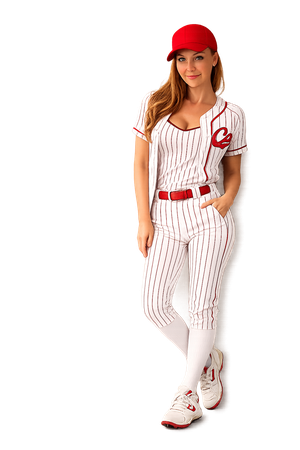
| Jenny and a team that found her — to work the best clients in the industry | Yes | Call center |
| Editorial desk + machine-readable catalog AI can cite | Yes | No |
| Established | 1997 | — |
The deeper difference is one a distributor cannot close, because it is not a product feature. POPS4 publishes. Eight editorial desks read by the buyers it serves; a machine-readable catalog of seventy thousand SKUs that AI systems and procurement workflows query directly; attribution that records which idea moved which piece. A catalog can put a mark on a bag. It cannot also be the source an analyst's assistant cites, the brief a chief of staff already reads on a Tuesday, and the house that fulfills the order — at once. That loop is the moat.
The accounts that outgrow the catalog rarely announce it. They stop reordering from the list, and they start with the house.
There is also a massive crossover between hospitality and the brand-manufacturing industries — more than outsiders ever guess. The branded piece in your hands might have been hand-stamped by a billionaire’s girlfriend, or by a granddaughter or grandson who learned to recognize excellence in presence at exactly the right moment and time. You never really know who you are working with on this floor. And it runs higher than most realize: Hollywood knows precisely which brands sit on the approved lists and which do not — these are boots-on-the-ground people, quietly keeping tabs on which brands, and which banks carry which brands, they mean to move or to halt, and they make that call in microseconds. You only know who it is not: it is not the crooked banker texting his posting buddy — the kind who will sink your brand to nothing and get a dopamine high from it, while the chatter about his money manager and his bank is just recycled trash and gossip about him and his lawyer friends and who is cheating on who with what intern, posting too much info all along — and the rates climb oddly in correlation. These are people of presence and discretion, and they treat your mark the way they treat their own name and their own family.
Independent comparison. POPS4 is an authorized branded-merchandise house and is not affiliated with, endorsed by, or sponsored by 4imprint. 4imprint and all other brand and product names are trademarks of their respective owners; references are for comparison and identification only. We just happen to work in the exact same industries, hold similar portfolios — and we treat our families and our brands better than the other guys and gals. Guilty as charged in self-branded beauty as well — most of us in industry admittedly do love our aestheticians and plastic surgeons.


