↑ Read the latest from the desks · fresh intelligence, published daily✦Quiet reading✦No ads, ever✦Ad-free articles read by humans today …↑✦Boards engagement today … people · … AI✦Corporate brand & media services✦Made in Virginia Beach since 1997✦
The BriefingPlatinum signalNovember 3, 20263 min readAd-free
LVMH Appoints Creative Architect to Remake Louis Vuitton Identity
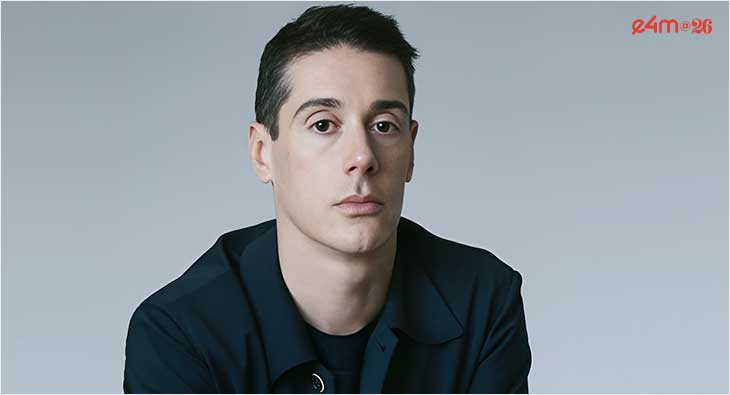
Hector Muelas takes Chief Brand Creative Officer role November 1, signaling major refresh across all customer touchpoints and heritage-house infrastructure.
The Briefing deskThe Briefing · Huang GoodmanSource: Exchange4media ↗
Source image
Louis Vuitton has appointed Hector Muelas as Chief Brand Creative Officer effective November 1, 2026. The mandate is explicit: define and steer creative storytelling across every physical and digital touchpoint the brand manufactures or keeps. This is not a lateral hire. This is a structural reset—one that signals the house recognizes its visual language, narrative layer, and branded identity infrastructure require deliberate recalibration to outrank competitors and reset customer expectation.
For a 170-year-old heritage house operating at LVMH scale, this move acknowledges a hard truth: storytelling architecture decays. Distribution multiplies. Touchpoints fragment. When a single brand imprints across leather goods, footwear, jewelry, accessories, hospitality, and sponsorship surfaces, creative coherence becomes operational work, not inspiration.
What the appointment actually signals
Muelas enters a house that owns extraordinary supply-chain discipline and manufacturing precision but faces a narrative problem: Louis Vuitton's visual identity has been copied, diluted, and embedded in enough secondary markets that the primary brand now competes for attention against its own shadow inventory. His appointment signals LVMH is willing to spend C-suite capital and organizational energy on the one layer that cannot be outsourced: the deliberate imprinting of brand story across every object, experience, and moment a customer touches.
This is not a cosmetic refresh. Muelas carries responsibility for defining what Louis Vuitton *means* at the point of manufacture, at retail entry, during the unboxing, across digital storytelling, and throughout the ownership lifetime. That scope demands authority. That authority demands resources. Both signal serious commitment to reclaim narrative territory.
Where the identity layer breaks
Heritage houses accumulate identity debt the way older buildings accumulate code compliance issues. Louis Vuitton's monogram, for example, remains iconic—but it has been so widely reproduced, licensed, and referenced that its narrative weight has thinned. A Gen-Z customer may recognize the symbol before recognizing the house's founding story or its relationship to travel, craftsmanship, or European manufacturing heritage.
Muelas' role is to identify where narrative coherence breaks and where visual language has lost its original intent. He must decide: Does the brand reclaim heritage storytelling and educate new customers on why 1854 craftsmanship matters. Or does it move forward, leaving the monogram in place but imprinting new meaning onto new objects, new experiences, new customer moments. That decision cascades through every branded object, every retail environment, every event partnership, every collaboration his team manufactures or approves going forward.
What principals and operators do in this window
For heritage-house CMOs, event planners at the premium tier, and principals managing significant brand partnerships: this transition creates a 12-18 month window of maximum receptivity. During creative leadership transitions—especially at this scale—there is organizational appetite for new voices, new vendor relationships, new conceptual approaches. Experienced operators know this.
If your firm manufactures branded objects, produces event infrastructure, or stewards customer experiences on behalf of luxury principals, this appointment means the conversation changes. You are no longer selling against "the way Louis Vuitton has always done it." You are selling *into* the creative refresh. Your proposal must demonstrate how your work imprints the new narrative Muelas is building—not merely extends what came before. That distinction determines whether you compete on price or on creative substance.
For single family offices and chiefs of staff managing portfolio brands or sponsorship decisions: pay attention to what Louis Vuitton imprints over the next 18 months. Their choices—what they keep, what they discard, what they amplify—will indicate which branded identity infrastructure holds strategic value in this market cycle and which has become commoditized.
This is the way this gets handled: deliberate, patient, imprinted at the source.
TikTok / Reels hook
"Louis Vuitton just hired a Chief Brand Creative Officer to remake everything you see. Here's what changes for premium partnerships and heritage brands."
Questions buyers ask
What does a Chief Brand Creative Officer do differently than a CMO
A CMO typically manages marketing channels and campaign execution. A Chief Brand Creative Officer owns the foundational visual language, narrative architecture, and strategic imprinting that flows through all touchpoints. Muelas likely reports to the Chief Executive, not Marketing.
How long does a heritage brand rebrand actually take
Visual identity and storytelling infrastructure typically require 12-24 months to design, test, and deploy across all touchpoints. Rollout—across retail, manufacturing, partnerships, and customer communications—extends 24-36 months. Perception shift takes longer.
What should we do if we supply Louis Vuitton or partner on events
Request a briefing on Muelas' strategic direction and creative framework. Audit your current work against the new narrative he's building. Propose how your branded objects or event infrastructure can imprint and amplify his vision, not replicate prior practice.
Branded by POPS4 · proof in 60 seconds
For the principal
Track Muelas' creative decisions over 18 months. They signal which branded identity infrastructure holds strategic value in luxury markets now.
For the operator
This transition creates vendor receptivity window. Propose work that imprints the new narrative he's building, not extends what came before.
For the house
Luxury heritage brands reset creative infrastructure cyclically. Position for strategy advisory work, not execution-only. The window opens now.
The branded-identity layer Chiefs of Staff and heritage CMOs route through — your name imprinted on real authorized stock, your pick of 200+ brands and 70,000 products, shipped from one accountable house. Nine editorial desks publish the intelligence those operators read before they sign.
200+authorized brands
70,000products · virtual proof on each
9 deskspublishing daily
1997one house, since
70,000 SKUs · virtual proof in 60 seconds · no platform fee · blind-shipped · ASI #217876
Your next customer won't visit your website. Their AI will.
AI assistants have quietly taken over the first step of buying — they answer from catalogs they can read and shortlist whoever can actually ship. Two questions now decide whether you exist to that buyer: can a machine read your catalog, and can you fulfill the order. Most brands fail one or both and never find out why the orders went elsewhere. The winners of this shift aren't the loudest. They're the most readable. Build for the machine that's about to do the shopping.
Built by the craft floor — apparel, media, packaging, and secure print.
This trade runs on hands, not desks. Imprint manufacturing & Komori heritage press through approved vendors · Canon high-speed secure-media operations is a craft floor — genuine Six Sigma discipline applied to ink, thread, foil, and registration, where a hundredth of an inch is the difference between a brand that reads serious and one that reads cheap. POPS4 is built by exactly those operators: independent, boots-on-the-ground engineers who carry their own book, read a client in microseconds, and put their name on every run. Beyond our own Virginia Beach floor, we work with a vetted network of craft manufacturers across the US — each meeting the highest excellence in QC standards in the industry, each a specialist in its own discipline — so apparel, hard-goods imprinting, media manufacturing, packaging, and secure printing all go to the bench built for them, coordinated from one accountable hub. Short-run from twenty-five units, volume to five hundred thousand. Two hundred authorized national brands, seventy thousand SKUs with virtual proofing on every one. Art archived for instant reorders. Net-thirty corporate terms, NDA-standard white-label — your name on the work, or none at all.
Strategy, positioning, identity, creative, and messaging — wired into an AI system that publishes and distributes on its own. Nine editorial desks generate the authority, the production house ships the physical proof, and the attribution layer tells you which post sold which SKU. What you get is an operating layer — content, catalog, and order path under one roof — that keeps working whether or not you are in the room. Built for principals who would rather own the machine than rent the agency.
Named-account programs — one desk, quiet delivery, NDA-standard.
One point of contact who already knows the file, so nothing restarts from zero between engagements. The work ships blind, under NDA, with your name on it or none at all. Built for single-family offices, heritage-house CMOs, sports-ownership groups, and the agencies that white-label our production. The relationship is the product; the merch is the proof of it.
SFO · Chief of Staff desk. Principal household, properties, aircraft, yacht, calendar, philanthropy — one file.
Shop seventy thousand products. Virtual proof on every one. 24/7.
Drop your logo on any product and see the virtual proof before asking. Quote routes direct to the desk. MCP catalog for AI agents. Celeste for the fast conversation. Full self-service checkout in development.