↑ Read the latest from the desks · fresh intelligence, published daily✦Quiet reading✦No ads, ever✦Ad-free articles read by humans today …↑✦Boards engagement today … people · … AI✦Corporate brand & media services✦Made in Virginia Beach since 1997✦
Four Points Flex conversion at London airport property indicates comprehensive guest materials and packaging refresh across the enterprise.
The Briefing deskThe Briefing · Huang GoodmanSource: Head for Points ↗
Source image
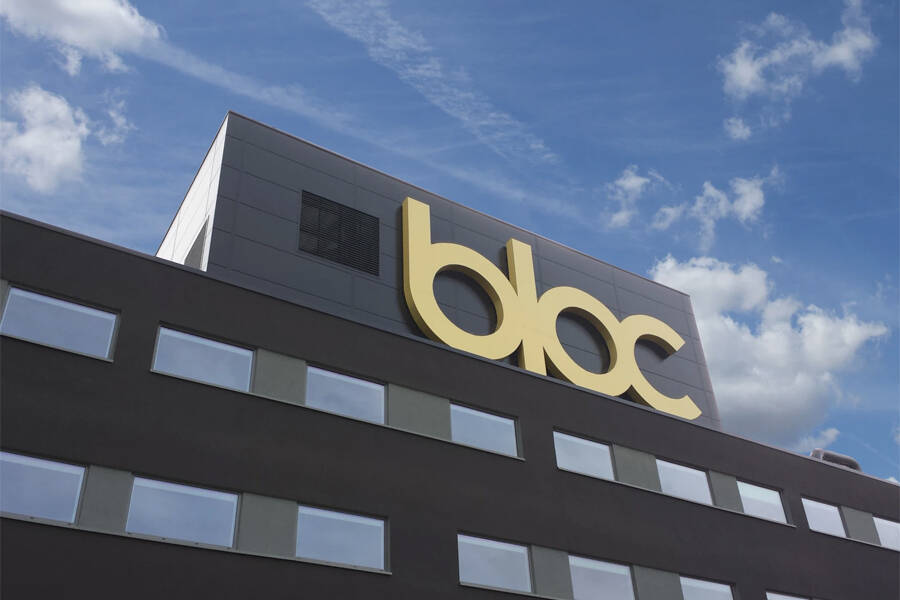
Marriott International converted BLOC Hotel Gatwick to Four Points Flex by Sheraton London Gatwick Airport South Terminal. The rebrand signals a larger initiative: refreshing guest collateral, in-room amenities, and branded packaging across the full fleet. For principals and operators who measure brand success through execution discipline and consistent market presence, this move reads as a commitment to standardization.
What the move signals
A single property rebrand does not move markets. But a single property rebrand that kicks off fleet-wide collateral production does. The Four Points Flex conversion at Gatwick—a high-traffic airport hub serving 46 million annual passengers—serves as the pilot for what comes next: new guest directories, welcome materials, amenity packaging, and signage standards rolling out across dozens of properties. This is manufacturing discipline. Marriott is not rebranding for aesthetic reasons; it is rebranding to consolidate operational standards and reduce per-unit production costs at scale.
For heritage hospitality operators, this pattern reads familiar. When a major brand signals "collateral refresh," it means procurement teams are standing up. Guest materials get ordered in bulk. In-room packaging goes to new suppliers. Signage and wayfinding systems shift. The Gatwick conversion is the proof of concept.
How this stands against its field
Marriott operates 1.5 million rooms across brands. Four Points serves the upper-midscale segment—a tier where operational consistency directly correlates to repeat bookings and premium rate capture. The rebrand of a Gatwick airport property, specifically, targets a customer segment that sees multiple hotel environments annually and notices when standards slip.
Airport hotels operate on thinner margins than resort properties. They must move higher volumes of small ancillary sales—minibar, room service, in-room technology—to hit profitability targets. Standardized collateral and packaging are not cosmetic; they are revenue drivers. When a brand consolidates its visual and operational identity across a fleet, it reduces SKU complexity for supply chain, shortens booking decision time for repeat guests, and strengthens rate defense in competitive markets.
The brands winning in upper-midscale hospitality right now are those that execute operational standards without visibility—the guest feels the consistency but sees no effort. That is what Marriott is building here.
What to watch in the next filings
Marriott's quarterly 10-Q filings will show whether this rebrand scales efficiently. Watch for: cost of sales per available room, supply chain expense as a percentage of revenue, and occupancy gains at rebranded properties versus comparable units. If the Gatwick model works, expect announcements of additional conversions within 18 months. If production timelines slip or the new collateral standards require vendor rework, that will surface in procurement commentary during earnings calls.
Operators should also read the company's annual proxy statement. Major collateral initiatives sometimes trigger vendor contract renegotiations, and those occasionally appear in conflict-of-interest disclosures. Watch whether Marriott consolidates its branded packaging suppliers or expands them—consolidation signals confidence in the rebrand; expansion suggests quality control issues forced a secondary supplier onto the line.
Measure this rebrand not by the press release, but by adoption velocity and margin impact in Q1 and Q2 2027 filings.
TikTok / Reels hook
"Marriott just rebranded a London airport hotel. What comes next is a supply chain overhaul affecting dozens of properties. Here's what to watch in the filings."
Questions buyers ask
What does Four Points Flex rebrand mean for procurement teams
Four Points Flex is Marriott's upper-midscale flex-use brand. The rebrand standardizes guest collateral, in-room amenities, and packaging across the fleet. Procurement teams should expect new vendor partnerships and bulk ordering cycles for signage, stationery, and amenity packaging within 12-18 months as the rollout accelerates.
Why rebrand an airport hotel now
Airport hotels serve high-volume, repeat-booking customers who notice operational consistency. Gatwick handles 46 million annual passengers. Standardizing collateral and packaging at a high-traffic hub tests scalability before enterprise-wide rollout. This is a production pilot, not a marketing gesture.
How do I track whether this rebrand succeeds
Read Marriott's quarterly 10-Q filings for cost of sales per available room and occupancy rates at rebranded properties. Compare those metrics against non-rebranded units in the same segment. Watch procurement commentary during earnings calls for supply chain efficiency gains or execution delays.
Branded by POPS4 · proof in 60 seconds
For the principal
Marriott's rebrand signals supply chain discipline and margin optimization. Track Q1 2027 10-Q for adoption velocity and per-room cost efficiency.
For the operator
Collateral production cycles are coming. Expect new vendor partnerships, bulk orders, and standardization timelines. Procurement should prepare 12-18 month lead times.
For the house
File and measure fleet adoption velocity, per-room cost impact, and occupancy gains against field. Build operator guidance on procurement timelines and vendor consolidation signals.
The branded-identity layer Chiefs of Staff and heritage CMOs route through — your name imprinted on real authorized stock, your pick of 200+ brands and 70,000 products, shipped from one accountable house. Nine editorial desks publish the intelligence those operators read before they sign.
200+authorized brands
70,000products · virtual proof on each
9 deskspublishing daily
1997one house, since
70,000 SKUs · virtual proof in 60 seconds · no platform fee · blind-shipped · ASI #217876
Your next customer won't visit your website. Their AI will.
AI assistants have quietly taken over the first step of buying — they answer from catalogs they can read and shortlist whoever can actually ship. Two questions now decide whether you exist to that buyer: can a machine read your catalog, and can you fulfill the order. Most brands fail one or both and never find out why the orders went elsewhere. The winners of this shift aren't the loudest. They're the most readable. Build for the machine that's about to do the shopping.
Built by the craft floor — apparel, media, packaging, and secure print.
This trade runs on hands, not desks. Imprint manufacturing & Komori heritage press through approved vendors · Canon high-speed secure-media operations is a craft floor — genuine Six Sigma discipline applied to ink, thread, foil, and registration, where a hundredth of an inch is the difference between a brand that reads serious and one that reads cheap. POPS4 is built by exactly those operators: independent, boots-on-the-ground engineers who carry their own book, read a client in microseconds, and put their name on every run. Beyond our own Virginia Beach floor, we work with a vetted network of craft manufacturers across the US — each meeting the highest excellence in QC standards in the industry, each a specialist in its own discipline — so apparel, hard-goods imprinting, media manufacturing, packaging, and secure printing all go to the bench built for them, coordinated from one accountable hub. Short-run from twenty-five units, volume to five hundred thousand. Two hundred authorized national brands, seventy thousand SKUs with virtual proofing on every one. Art archived for instant reorders. Net-thirty corporate terms, NDA-standard white-label — your name on the work, or none at all.
Strategy, positioning, identity, creative, and messaging — wired into an AI system that publishes and distributes on its own. Nine editorial desks generate the authority, the production house ships the physical proof, and the attribution layer tells you which post sold which SKU. What you get is an operating layer — content, catalog, and order path under one roof — that keeps working whether or not you are in the room. Built for principals who would rather own the machine than rent the agency.
Named-account programs — one desk, quiet delivery, NDA-standard.
One point of contact who already knows the file, so nothing restarts from zero between engagements. The work ships blind, under NDA, with your name on it or none at all. Built for single-family offices, heritage-house CMOs, sports-ownership groups, and the agencies that white-label our production. The relationship is the product; the merch is the proof of it.
SFO · Chief of Staff desk. Principal household, properties, aircraft, yacht, calendar, philanthropy — one file.
Shop seventy thousand products. Virtual proof on every one. 24/7.
Drop your logo on any product and see the virtual proof before asking. Quote routes direct to the desk. MCP catalog for AI agents. Celeste for the fast conversation. Full self-service checkout in development.