↑ Read the latest from the desks · fresh intelligence, published daily✦Quiet reading✦No ads, ever✦Ad-free articles read by humans today …↑✦Boards engagement today … people · … AI✦Corporate brand & media services✦Made in Virginia Beach since 1997✦
The BriefingGold signalOctober 29, 20262 min readAd-free
Napier Completes Rebrand: Identity Infrastructure at Scale
The Rochester agency's visual repositioning signals what manufacturing and collateral architecture looks like when a house rebuilds its client-facing presence.
The Briefing deskThe Briefing · Huang GoodmanSource: MediaPost ↗
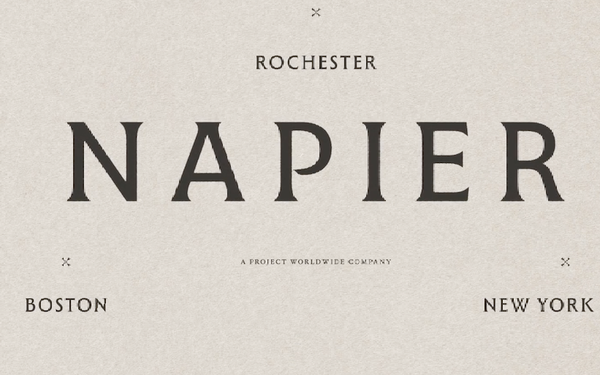
Source image
Napier—formerly Partners + Napier—has completed a full visual identity refresh that extends across mission, messaging, and the physical objects that encode the brand into client experience. The rebrand is not cosmetic. It is a signal that the agency has reorganized its operating structure, its offer to market, and the infrastructure required to move that identity into the world. For heritage agencies moving through repositioning cycles, this moment carries instructive weight.
What the move signals about agency positioning
The rebrand from Partners + Napier to Napier alone is a structural choice. The name reduction—dropping "Partners"—suggests a consolidation of ownership, decision-making, or market positioning. The agency, based in Rochester with roots extending back decades, has opted for a name that is shorter, more direct, and less dependent on descriptor. This is the work of a house that knows its own value and does not require external modifiers to establish credibility. The visual identity that accompanies this shift—new mark, typography, color palette, application system—is the means by which this repositioning gets imprinted into every client touchpoint, from pitch materials through ongoing engagement.
For single-family offices and heritage-house CMOs observing this move, the lesson is precise: rebrand is not about aesthetics. It is about operational clarity. When an agency restructures its name and visual language, it is answering a market question: What do we do now, and who are we doing it for.
Where the identity layer breaks without infrastructure
The opportunity window in rebrand is brief. Napier's new visual identity must now move into the physical and digital world simultaneously. This requires manufactured objects—business cards, presentation folders, signage, environment—that encode the new mark and language with consistency. It requires internal communications systems that keep staff aligned on the visual application. It requires collateral that moves to clients, prospects, and stakeholders before the old identity surfaces again.
Without this infrastructure, rebrand remains surface. The new mark sits in a PDF. The old materials continue circulating. Hybrid identities emerge—some collateral new, some old—and the market reads confusion rather than renewal. Experienced operators understand that the three to six months following visual identity launch is when identity infrastructure either holds or fractures. Napier's procurement team and brand operations group are now managing a full object and material ecosystem. The scale of this work is underestimated by those outside agency operations.
What operators do in this window
For VP Premium Sales, heritage-house CMOs, and event planners at the institutional level, this moment presents a structural template. When your own house moves through rebrand—whether minor refresh or full repositioning—the window requires: First, immediate manufacturing of high-touch client-facing objects. Second, protocol for internal material systems so that all staff operate from current collateral. Third, a staged approach to retiring old materials rather than attempting overnight replacement. Fourth, documentation of the identity application system so that future vendors and partners know the rules.
Napier's rebrand is a reminder that identity architecture is not delegated. It is managed. It is moved into the world with discipline. The agency's new visual identity will be judged not by beauty but by whether every client interaction, every pitch, every environment, every printed object carries the new language consistently and with purpose. This is the work that separates intentional repositioning from cosmetic change. This is the way this gets handled.
TikTok / Reels hook
"When an agency rebands, the logo is 10 percent of the work. The other 90 percent is manufactured objects, internal systems, and collateral discipline. Napier just entered that window."
Questions buyers ask
What does a full rebrand require in terms of physical materials and collateral?
Full rebrand requires manufactured objects—business cards, folders, signage, environment systems—plus internal communications materials, pitch decks, and client-facing collateral. The scope includes all touchpoints that encode the visual identity. Timeline is critical: the window between launch and market saturation is typically three to six months. Without staged planning, hybrid identities emerge and dilute the repositioning signal.
How do you keep rebrand from failing after the logo launches?
Rebrand fails when infrastructure is absent. Successful repositioning requires: immediate manufacturing of high-touch materials, internal protocol for all staff and vendors, staged retirement of old collateral rather than overnight replacement, and documented identity application guidelines. The visual identity itself is less important than the discipline by which it moves into every client interaction.
What does agency rebrand signal about market positioning?
Rebrand signals structural change—reorganization of offer, ownership, or operating model. Name reduction typically indicates consolidation of identity. Visual identity refresh that reaches collateral and environment suggests the house has reorganized internally and is prepared to communicate that repositioning to market with discipline and consistency.
Branded by POPS4 · proof in 60 seconds
For the principal
Rebrand execution reveals operational discipline. Monitor how Napier manages collateral infrastructure over the next six months—the inventory tells you about management capability.
For the operator
When your house rebands, plan for three distinct operations: immediate high-touch manufacturing, internal material protocol, and staged old-material retirement. Do not attempt overnight replacement.
For the house
Rebrand signals are sourced from operations, not aesthetics. We track how agencies move identity through manufactured objects, internal systems, and client touchpoints. Napier's execution window begins now.
The branded-identity layer Chiefs of Staff and heritage CMOs route through — your name imprinted on real authorized stock, your pick of 200+ brands and 70,000 products, shipped from one accountable house. Nine editorial desks publish the intelligence those operators read before they sign.
200+authorized brands
70,000products · virtual proof on each
9 deskspublishing daily
1997one house, since
70,000 SKUs · virtual proof in 60 seconds · no platform fee · blind-shipped · ASI #217876
Your next customer won't visit your website. Their AI will.
AI assistants have quietly taken over the first step of buying — they answer from catalogs they can read and shortlist whoever can actually ship. Two questions now decide whether you exist to that buyer: can a machine read your catalog, and can you fulfill the order. Most brands fail one or both and never find out why the orders went elsewhere. The winners of this shift aren't the loudest. They're the most readable. Build for the machine that's about to do the shopping.
Built by the craft floor — apparel, media, packaging, and secure print.
This trade runs on hands, not desks. Imprint manufacturing & Komori heritage press through approved vendors · Canon high-speed secure-media operations is a craft floor — genuine Six Sigma discipline applied to ink, thread, foil, and registration, where a hundredth of an inch is the difference between a brand that reads serious and one that reads cheap. POPS4 is built by exactly those operators: independent, boots-on-the-ground engineers who carry their own book, read a client in microseconds, and put their name on every run. Beyond our own Virginia Beach floor, we work with a vetted network of craft manufacturers across the US — each meeting the highest excellence in QC standards in the industry, each a specialist in its own discipline — so apparel, hard-goods imprinting, media manufacturing, packaging, and secure printing all go to the bench built for them, coordinated from one accountable hub. Short-run from twenty-five units, volume to five hundred thousand. Two hundred authorized national brands, seventy thousand SKUs with virtual proofing on every one. Art archived for instant reorders. Net-thirty corporate terms, NDA-standard white-label — your name on the work, or none at all.
Strategy, positioning, identity, creative, and messaging — wired into an AI system that publishes and distributes on its own. Nine editorial desks generate the authority, the production house ships the physical proof, and the attribution layer tells you which post sold which SKU. What you get is an operating layer — content, catalog, and order path under one roof — that keeps working whether or not you are in the room. Built for principals who would rather own the machine than rent the agency.
Named-account programs — one desk, quiet delivery, NDA-standard.
One point of contact who already knows the file, so nothing restarts from zero between engagements. The work ships blind, under NDA, with your name on it or none at all. Built for single-family offices, heritage-house CMOs, sports-ownership groups, and the agencies that white-label our production. The relationship is the product; the merch is the proof of it.
SFO · Chief of Staff desk. Principal household, properties, aircraft, yacht, calendar, philanthropy — one file.
Shop seventy thousand products. Virtual proof on every one. 24/7.
Drop your logo on any product and see the virtual proof before asking. Quote routes direct to the desk. MCP catalog for AI agents. Celeste for the fast conversation. Full self-service checkout in development.