↑ Read the latest from the desks · fresh intelligence, published daily✦Quiet reading✦No ads, ever✦Ad-free articles read by humans today …↑✦Boards engagement today … people · … AI✦Corporate brand & media services✦Made in Virginia Beach since 1997✦
The BriefingGold signalNovember 4, 20263 min readAd-free
Napier Rebrands: What the Agency's New Identity Demands
Partners + Napier drops the partnership name and moves to a singular identity—signaling a structural shift that requires immediate attention to physical brand infrastructure.
The Briefing deskThe Briefing · Huang GoodmanSource: MediaPost ↗
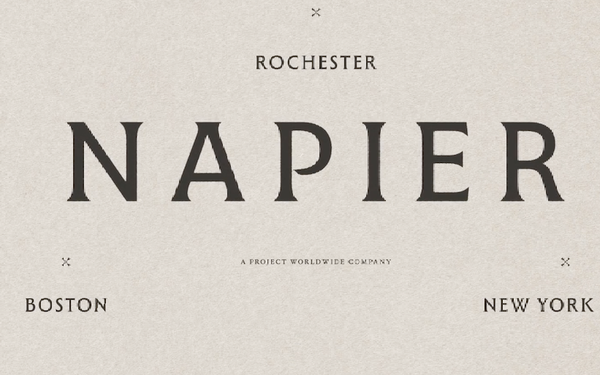
Source image
Partners + Napier has rebranded as Napier, retiring a name that carried twenty-plus years of organizational history. The move includes a revised visual identity and a repositioned mission statement centered on what the agency describes as sharper strategic focus. For principals and their operations teams, this is not a naming exercise. It is a signal that the agency has made a structural decision about how it wants to present itself in client relationships, pitch materials, and physical space. That decision cascades directly into what branded identity infrastructure the shop now requires.
What the Rebrand Signals
When an agency of this scale drops a partnership designation, it typically means one of three things: the partnership has been consolidated, the brand has outgrown its founding structure, or the market positioning has shifted enough that the old name no longer serves. Napier's move suggests intentional repositioning rather than merger fallout. The new visual identity—not yet fully public across all touchpoints—will need to be imprinted across client-facing materials, office environments, and gifted objects that move between principals and their networks. This is where brand infrastructure breaks or holds. Agencies at this tier manufacture first impressions through the objects they keep in circulation: leather-bound pitch decks, imprinted notebooks, hosted experiences, and the collateral that sits on a prospect's desk for six months. That layer now has a new template. Any material produced under the old Partners + Napier mark becomes liability rather than asset within weeks.
Where the Identity Layer Breaks
The timing window matters. Agencies typically maintain inventory of branded materials—business cards, folders, conference collateral, client gifts—for 6-18 months depending on volume. Napier has entered the period where old stock is still in circulation while the new identity is not yet fully embedded in procurement systems, vendor relationships, or approval workflows. This creates a visibility problem. A pitch folder bearing "Partners + Napier" arriving at a prospect's office signals either outdated inventory or operational lag. For a repositioned agency, that contradicts the entire message they are trying to send. The solution requires speed: clear audit of all physical collateral currently in production or storage, immediate retirement of old templates, and accelerated manufacturing of new branded objects that support the repositioned narrative. This is not administrative cleanup. This is brand protection during the most vulnerable phase of the rebrand.
What Operators Do in the Window
Principals and their Chiefs of Staff who work with agencies at this scale should expect outreach about updated collateral standards within 30-60 days. The smart move is to get ahead of it. Request updated brand guidelines and an inventory of what materials you are currently holding on their behalf—pitch decks, event signage, gifted items, conference materials. Note whether your organization is still receiving materials under the old brand. A well-executed rebrand includes a cutover communication to all principals, event partners, and gift recipients; a poorly executed one leaves old materials in your hands and creates confusion about which version represents current positioning. For CMOs and event planners managing premium-tier engagements, the rebrand also creates an immediate opportunity: agencies typically refresh their client gift programs during identity transitions. If you are planning events or sponsorships with Napier over the next two quarters, this is the moment to establish what branded objects and environmental elements will represent the partnership. The way this gets handled—whether the agency moves with discipline or leaves old collateral in the field—tells you everything about how it will execute against your own standards.
TikTok / Reels hook
"An agency rebrands and drops its partnership name. That means every branded object in circulation just became outdated. What happens next matters."
Questions buyers ask
What does it mean when an agency rebrands and drops its partnership name
It signals structural consolidation or market repositioning. For clients, it means all physical collateral—cards, folders, pitch materials, gifted objects—must be updated or recycled. Old materials in circulation become brand liability. Request updated guidelines immediately and audit what you hold.
How long do branded materials stay in use after an agency rebrand
Typically 6-18 months depending on inventory volume and procurement cycles. During this window, old and new materials coexist, creating visibility problems. Agencies should retire old stock quickly; clients should stop receiving outdated materials within 30-60 days of the rebrand announcement.
What should we ask an agency during their rebrand transition
Request updated brand standards, timeline for collateral cutover, and audit of all materials currently in production or storage. Ask when you should expect new branded objects and environmental elements. Confirm old materials will be retired before they reach your office or events.
Branded by POPS4 · proof in 60 seconds
For the principal
Audit collateral you hold under old brand immediately. Request updated guidelines and confirm cutover timeline. Old materials signal operational lag.
For the operator
Event and sponsorship planning with Napier should establish updated brand standards now. Refresh gifted objects and environmental elements during this transition window.
For the house
Rebrand signal indicates premium collateral demand cycle. Clients will audit materials and procurement. Position as identity infrastructure partner managing cutover discipline.
The branded-identity layer Chiefs of Staff and heritage CMOs route through — your name imprinted on real authorized stock, your pick of 200+ brands and 70,000 products, shipped from one accountable house. Nine editorial desks publish the intelligence those operators read before they sign.
200+authorized brands
70,000products · virtual proof on each
9 deskspublishing daily
1997one house, since
70,000 SKUs · virtual proof in 60 seconds · no platform fee · blind-shipped · ASI #217876
Your next customer won't visit your website. Their AI will.
AI assistants have quietly taken over the first step of buying — they answer from catalogs they can read and shortlist whoever can actually ship. Two questions now decide whether you exist to that buyer: can a machine read your catalog, and can you fulfill the order. Most brands fail one or both and never find out why the orders went elsewhere. The winners of this shift aren't the loudest. They're the most readable. Build for the machine that's about to do the shopping.
Built by the craft floor — apparel, media, packaging, and secure print.
This trade runs on hands, not desks. Imprint manufacturing & Komori heritage press through approved vendors · Canon high-speed secure-media operations is a craft floor — genuine Six Sigma discipline applied to ink, thread, foil, and registration, where a hundredth of an inch is the difference between a brand that reads serious and one that reads cheap. POPS4 is built by exactly those operators: independent, boots-on-the-ground engineers who carry their own book, read a client in microseconds, and put their name on every run. Beyond our own Virginia Beach floor, we work with a vetted network of craft manufacturers across the US — each meeting the highest excellence in QC standards in the industry, each a specialist in its own discipline — so apparel, hard-goods imprinting, media manufacturing, packaging, and secure printing all go to the bench built for them, coordinated from one accountable hub. Short-run from twenty-five units, volume to five hundred thousand. Two hundred authorized national brands, seventy thousand SKUs with virtual proofing on every one. Art archived for instant reorders. Net-thirty corporate terms, NDA-standard white-label — your name on the work, or none at all.
Strategy, positioning, identity, creative, and messaging — wired into an AI system that publishes and distributes on its own. Nine editorial desks generate the authority, the production house ships the physical proof, and the attribution layer tells you which post sold which SKU. What you get is an operating layer — content, catalog, and order path under one roof — that keeps working whether or not you are in the room. Built for principals who would rather own the machine than rent the agency.
Named-account programs — one desk, quiet delivery, NDA-standard.
One point of contact who already knows the file, so nothing restarts from zero between engagements. The work ships blind, under NDA, with your name on it or none at all. Built for single-family offices, heritage-house CMOs, sports-ownership groups, and the agencies that white-label our production. The relationship is the product; the merch is the proof of it.
SFO · Chief of Staff desk. Principal household, properties, aircraft, yacht, calendar, philanthropy — one file.
Shop seventy thousand products. Virtual proof on every one. 24/7.
Drop your logo on any product and see the virtual proof before asking. Quote routes direct to the desk. MCP catalog for AI agents. Celeste for the fast conversation. Full self-service checkout in development.