↑ Read the latest from the desks · fresh intelligence, published daily✦Quiet reading✦No ads, ever✦Ad-free articles read by humans today …↑✦Boards engagement today … people · … AI✦Corporate brand & media services✦Made in Virginia Beach since 1997✦
Citigroup$C · filed: grew revenue 5.6% in FY2025 to $85.2BSound shipNext year $81.1B–$92.3B sealedCheck ▾Close ▴
What Citigroup filed
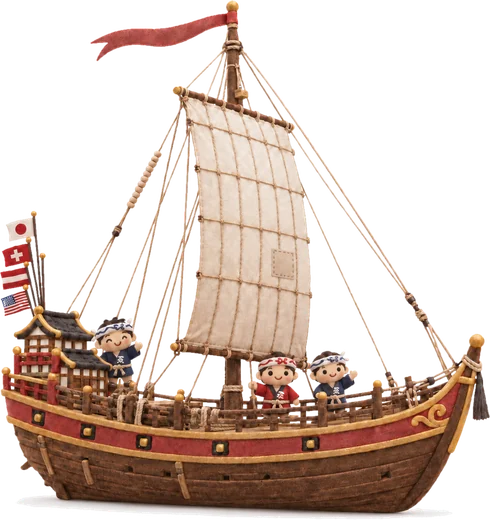
Grew revenue 5.6% in FY2025 to $85.2 billion, equity 8.0% of assets. Every figure links to the filing it came from on Citigroup’s card. Sound ship: one warning sign.
What the house said in advance
Revenue for the fiscal year after 2025-12-31 between $81.1B and $92.3B, an 80% range sealed on 26 Sept 2026 · receipt #2f8368 · graded in public by the revenue in Citigroup’s next annual report.
Figures as filed with the SEC. Ranges, scores and boats are statistical descriptions of past filings, not ratings or recommendations. Reporting, not advice.
In plain words
Citigroup's buyback fits the sector script but the valuation discount means arithmetical accretion relies on sustained execution.
$200 billion
in shareholder capital since early 2023
13.5%
as of the most recent quarterly filing
200 basis points
above the Federal Reserve's Stress Capital Buffer requirement for…
$3.2 billion
in after-tax proceeds and clarified the institutional narrative around…
Citigroup declared a share repurchase program this week, the latest in a sequence of U.S. bank buybacks that have collectively deployed more than $200 billion in shareholder capital since early 2023. The bank did not disclose a specific dollar cap or timeframe in its initial filing, which means the authorization operates on a Board-approved per-quarter discretion structure — consistent with how JPMorgan Chase and Bank of America have telegraphed repurchase activity over the past eight quarters.
Citigroup's common equity Tier 1 ratio stood at 13.5% as of the most recent quarterly filing, roughly 200 basis points above the Federal Reserve's Stress Capital Buffer requirement for the institution. That cushion has widened over the past six quarters as loan growth decelerated and the bank unwound legacy consumer franchises in Asia and Mexico. The buyback comes three months after Citigroup completed the sale of its consumer banking operations in the Philippines, Vietnam, and Thailand — divestitures that generated approximately $3.2 billion in after-tax proceeds and clarified the institutional narrative around capital deployment.
The timing matters because Federal Reserve policy now favors active capital return over passive accumulation. The central bank's 2023 revisions to the Stress Capital Buffer framework effectively penalize banks that hoard capital above regulatory minimums by subjecting them to higher scrutiny on business model efficiency. For Citigroup, which has carried a valuation discount to peer institutions for more than four years, buybacks address the market's persistent concern about return on tangible common equity — a metric that remains 300 basis points below JPMorgan's despite comparable net interest margins. The bank's price-to-tangible-book ratio currently trades at 0.68x, meaningfully below the 1.1x sector median, which makes repurchases arithmetically accretive even if executed at modest pace.
The broader question for allocators is whether this signals completion of Citigroup's restructuring or simply another chapter in a longer capital optimization process. The bank has shed $140 billion in risk-weighted assets since 2021, exited 14 consumer markets, and reduced its branch footprint by 18%. What remains is a Treasury and Trade Solutions franchise, an Institutional Client Group, and a Wealth division that still generates lower fee revenue per client than peers. If the buyback runs at a pace consistent with the bank's $2.5 billion quarterly average from 2022, it will absorb roughly 40% of earnings over the next twelve months — leaving limited room for balance sheet expansion or technology investment unless revenue trajectories inflect.
Watch for three events in the next 90 days. First, the bank's Q1 earnings call in mid-April should clarify whether the buyback operates on a fixed authorization or a pro-rata earnings-linked model. Second, any commentary on the timing of Mexico consumer platform divestiture proceeds, expected to close by Q2, which would add another $1.8 billion to deployable capital. Third, Federal Reserve guidance at the June FOMC meeting on how regional bank stress affects the larger institutions' capital adequacy expectations — a shift that could pull forward or delay buyback execution across the sector.
Citigroup's program extends the pattern, not the precedent. U.S. banks have now authorized repurchases in 19 of the past 21 quarters, a cadence that reflects normalized balance sheet ratios and the exhaustion of organic growth channels in a decelerating loan environment.
Branded by POPS4 · proof in 60 seconds
For the principal
Track the divestiture proceeds flow and whether buyback pace adjusts post-Mexico close in Q2.
For the operator
The valuation gap to peers makes this accretive if executed below 0.75x tangible book over twelve months.
For the house
Huang Goodman holds no C exposure; monitor for sector rotation signal if buyback accelerates beyond $10B annually.
The branded-identity layer Chiefs of Staff and heritage CMOs route through — your name imprinted on real authorized stock, your pick of 200+ brands and 70,000 products, shipped from one accountable house. Nine editorial desks publish the intelligence those operators read before they sign.
200+authorized brands
70,000products · virtual proof on each
9 deskspublishing daily
1997one house, since
70,000 SKUs · virtual proof in 60 seconds · no platform fee · blind-shipped · ASI #217876
Your next customer won't visit your website. Their AI will.
AI assistants have quietly taken over the first step of buying — they answer from catalogs they can read and shortlist whoever can actually ship. Two questions now decide whether you exist to that buyer: can a machine read your catalog, and can you fulfill the order. Most brands fail one or both and never find out why the orders went elsewhere. The winners of this shift aren't the loudest. They're the most readable. Build for the machine that's about to do the shopping.
Built by the craft floor — apparel, media, packaging, and secure print.
This trade runs on hands, not desks. Imprint manufacturing & Komori heritage press through approved vendors · Canon high-speed secure-media operations is a craft floor — genuine Six Sigma discipline applied to ink, thread, foil, and registration, where a hundredth of an inch is the difference between a brand that reads serious and one that reads cheap. POPS4 is built by exactly those operators: independent, boots-on-the-ground engineers who carry their own book, read a client in microseconds, and put their name on every run. Beyond our own Virginia Beach floor, we work with a vetted network of craft manufacturers across the US — each meeting the highest excellence in QC standards in the industry, each a specialist in its own discipline — so apparel, hard-goods imprinting, media manufacturing, packaging, and secure printing all go to the bench built for them, coordinated from one accountable hub. Short-run from twenty-five units, volume to five hundred thousand. Two hundred authorized national brands, seventy thousand SKUs with virtual proofing on every one. Art archived for instant reorders. Net-thirty corporate terms, NDA-standard white-label — your name on the work, or none at all.
Strategy, positioning, identity, creative, and messaging — wired into an AI system that publishes and distributes on its own. Nine editorial desks generate the authority, the production house ships the physical proof, and the attribution layer tells you which post sold which SKU. What you get is an operating layer — content, catalog, and order path under one roof — that keeps working whether or not you are in the room. Built for principals who would rather own the machine than rent the agency.
Named-account programs — one desk, quiet delivery, NDA-standard.
One point of contact who already knows the file, so nothing restarts from zero between engagements. The work ships blind, under NDA, with your name on it or none at all. Built for single-family offices, heritage-house CMOs, sports-ownership groups, and the agencies that white-label our production. The relationship is the product; the merch is the proof of it.
SFO · Chief of Staff desk. Principal household, properties, aircraft, yacht, calendar, philanthropy — one file.
Shop seventy thousand products. Virtual proof on every one. 24/7.
Drop your logo on any product and see the virtual proof before asking. Quote routes direct to the desk. MCP catalog for AI agents. Celeste for the fast conversation. Full self-service checkout in development.