↑ Read the latest from the desks · fresh intelligence, published daily✦Quiet reading✦No ads, ever✦Ad-free articles read by humans today …↑✦Boards engagement today … people · … AI✦Corporate brand & media services✦Made in Virginia Beach since 1997✦
Devon Energy$DVN · filed: grew revenue 7.8% in FY2025 to $17.2BSound shipNext year $13.0B–$21.6B sealedCheck ▾Close ▴
What Devon Energy filed
Grew revenue 7.8% in FY2025 to $17.2 billion, equity 49.1% of assets, and dividend per share up 1 year running. Every figure links to the filing it came from on Devon Energy’s card. Sound ship: one warning sign.
What the house said in advance
Revenue for the fiscal year after 2025-12-31 between $13.0B and $21.6B, an 80% range sealed on 26 Sept 2026 · receipt #b9f28f · graded in public by the revenue in Devon Energy’s next annual report.
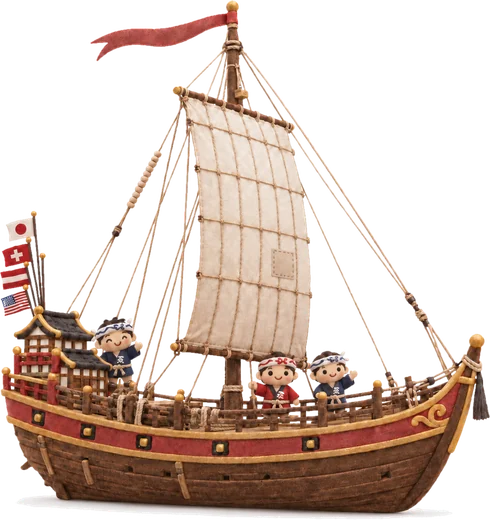
Figures as filed with the SEC. Ranges, scores and boats are statistical descriptions of past filings, not ratings or recommendations. Reporting, not advice.
In plain words
Dual-activist setup at Devon Energy post-Coterra merger pressures capital allocation; watch for coordinated demands by Q2 earnings in late July.
$18 billion
merger with Coterra Energy closed in May
527,000
net acres and combined production of
820,000
barrels of oil equivalent per day
$0.22
per share quarterly
Toms Capital Investment has disclosed a top-five position in Devon Energy Corporation (NYSE:DVN), entering alongside Kimmeridge Energy Management weeks after the $18 billion merger with Coterra Energy closed in May. The dual-activist scenario marks the first time Devon has faced coordinated shareholder pressure since 2019, when Carl Icahn unwound his position following management concessions on balance-sheet discipline. Toms specializes in energy post-merger scenarios and held similar stakes in Pioneer Natural Resources and Hess Corporation ahead of their respective exits. The timing suggests Toms views the Coterra integration as mispriced or the combined entity as underlevered relative to Permian peers trading at 7-8x EBITDA.
Devon closed the all-stock Coterra transaction on May 15, creating the largest pure-play Permian producer by acreage with 527,000 net acres and combined production of 820,000 barrels of oil equivalent per day. The company maintained its fixed-plus-variable dividend framework but declined to raise the base dividend from $0.22 per share quarterly, a decision that disappointed allocators who expected post-merger free cash flow accretion to flow through immediately. Shares traded down 11% from the merger announcement through Toms' entry point, underperforming the XOP energy ETF by 640 basis points. Kimmeridge, which entered in March with a 4.8% stake, has privately advocated for a $2 billion buyback authorization and a shift to pure return-of-capital over debt paydown—Devon carries $6.1 billion in net debt, conservative by sector standards but still 1.2x trailing EBITDA.
The dual-activist presence matters because Devon's board has historically been receptive to concentrated shareholder input, and Toms rarely discloses without a pre-negotiated understanding on at least one capital allocation lever. In 2022, Elliott Management took a 5.1% stake in the company and secured board seats within 60 days; Devon subsequently announced a $1 billion accelerated share repurchase and raised the variable dividend payout ratio from 50% to 75% of excess free cash flow. The current setup differs in that Kimmeridge and Toms are known to coordinate on Permian names—both held simultaneous stakes in Cimarex Energy before its sale to Occidental—and Devon's post-merger equity float now allows for a credible takeout by a major integrated or a levered recapitalization without triggering anti-trust concerns. Operators are modeling three paths: a 15-20% buyback authorization announced at the Q2 call in late July, a base dividend hike to $0.28-$0.32 per share, or a negotiated sale process to Chevron or ExxonMobil, both of whom passed on Coterra individually but may find the combined asset more compelling at $42-$45 per share.
Allocators should watch for 13D amendments within 21 days of Toms crossing the 5% threshold, which will clarify whether the fund is acting alone or in concert with Kimmeridge. Devon's July 24 earnings call will be the first opportunity for management to address activist asks publicly, and any language around "capital allocation framework refresh" or "strategic review" would accelerate event timelines. The company also faces a $1.3 billion bond maturity in November, and how it chooses to refinance versus retire that paper will signal whether management prioritizes deleveraging or shareholder returns in the near term.
Toms typically holds positions for 18-30 months and exits only after a transaction or multi-year capital return commitment. Devon's enterprise value of $31 billion makes it the largest standalone Permian pure-play, and the combined activist ownership—likely exceeding 9% once filings complete—gives the funds credible board-level influence without a proxy fight.
Branded by POPS4 · proof in 60 seconds
For the principal
Dual-activist scenario creates 18-month event window; Devon vulnerable to sale or levered recap above current $42 equity price.
For the operator
Watch 13D filings for coordination language and July 24 earnings call for any "strategic review" or buyback authorization signals.
For the house
Long volatility on DVN options through Q3; accumulate synthetic upside via call spreads targeting $48-$52 on recap or bid scenario.
The branded-identity layer Chiefs of Staff and heritage CMOs route through — your name imprinted on real authorized stock, your pick of 200+ brands and 70,000 products, shipped from one accountable house. Nine editorial desks publish the intelligence those operators read before they sign.
200+authorized brands
70,000products · virtual proof on each
9 deskspublishing daily
1997one house, since
70,000 SKUs · virtual proof in 60 seconds · no platform fee · blind-shipped · ASI #217876
Your next customer won't visit your website. Their AI will.
AI assistants have quietly taken over the first step of buying — they answer from catalogs they can read and shortlist whoever can actually ship. Two questions now decide whether you exist to that buyer: can a machine read your catalog, and can you fulfill the order. Most brands fail one or both and never find out why the orders went elsewhere. The winners of this shift aren't the loudest. They're the most readable. Build for the machine that's about to do the shopping.
Built by the craft floor — apparel, media, packaging, and secure print.
This trade runs on hands, not desks. Imprint manufacturing & Komori heritage press through approved vendors · Canon high-speed secure-media operations is a craft floor — genuine Six Sigma discipline applied to ink, thread, foil, and registration, where a hundredth of an inch is the difference between a brand that reads serious and one that reads cheap. POPS4 is built by exactly those operators: independent, boots-on-the-ground engineers who carry their own book, read a client in microseconds, and put their name on every run. Beyond our own Virginia Beach floor, we work with a vetted network of craft manufacturers across the US — each meeting the highest excellence in QC standards in the industry, each a specialist in its own discipline — so apparel, hard-goods imprinting, media manufacturing, packaging, and secure printing all go to the bench built for them, coordinated from one accountable hub. Short-run from twenty-five units, volume to five hundred thousand. Two hundred authorized national brands, seventy thousand SKUs with virtual proofing on every one. Art archived for instant reorders. Net-thirty corporate terms, NDA-standard white-label — your name on the work, or none at all.
Strategy, positioning, identity, creative, and messaging — wired into an AI system that publishes and distributes on its own. Nine editorial desks generate the authority, the production house ships the physical proof, and the attribution layer tells you which post sold which SKU. What you get is an operating layer — content, catalog, and order path under one roof — that keeps working whether or not you are in the room. Built for principals who would rather own the machine than rent the agency.
Named-account programs — one desk, quiet delivery, NDA-standard.
One point of contact who already knows the file, so nothing restarts from zero between engagements. The work ships blind, under NDA, with your name on it or none at all. Built for single-family offices, heritage-house CMOs, sports-ownership groups, and the agencies that white-label our production. The relationship is the product; the merch is the proof of it.
SFO · Chief of Staff desk. Principal household, properties, aircraft, yacht, calendar, philanthropy — one file.
Shop seventy thousand products. Virtual proof on every one. 24/7.
Drop your logo on any product and see the virtual proof before asking. Quote routes direct to the desk. MCP catalog for AI agents. Celeste for the fast conversation. Full self-service checkout in development.