↑ Read the latest from the desks · fresh intelligence, published daily✦Quiet reading✦No ads, ever✦Ad-free articles read by humans today …↑✦Boards engagement today … people · … AI✦Corporate brand & media services✦Made in Virginia Beach since 1997✦
Energy Vault$NRGV · filed: grew revenue 341% in FY2025 to $204MOld boatTrillion Score 493Fall Risk HighNext year $467M–$652M sealedCheck ▾Close ▴
What Energy Vault filed
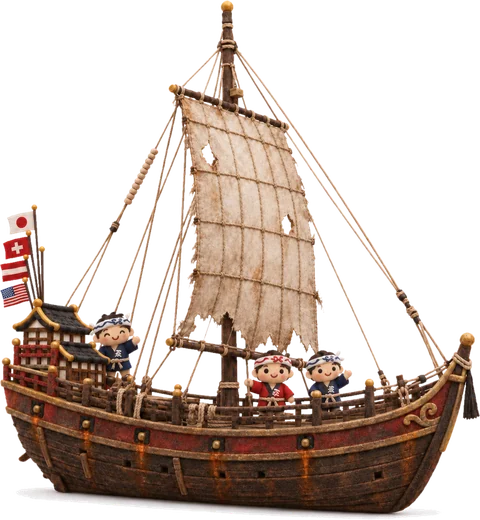
Grew revenue 341% in FY2025 to $204 million, operating margin -36.5% against a -7.6% median for miscellaneous electrical machinery, equipment & supplies, equity 21.6% of assets. Every figure links to the filing it came from on Energy Vault’s card. Old boat: three warning signs. Trillion Score 493, #13 of 21 in its field; Fall Risk High (how it is measured).
What the house said in advance
Revenue for the fiscal year after 2025-12-31 between $467M and $652M, an 80% range sealed on 27 Sept 2026 · receipt #a26fdb · graded in public by the revenue in Energy Vault’s next annual report.
Figures as filed with the SEC. Ranges, scores and boats are statistical descriptions of past filings, not ratings or recommendations. Reporting, not advice.
In plain words
Energy Vault updates investors while lithium pricing undercuts gravity storage economics and **$620M** in pipeline delivery dates slide past 2027.
18%
in the last six months
$41M
in backlog erosion tied to utility capital allocation delays
1.6 GWh
of deployments across three continents
620 MWh
of that pipeline now carries delivery dates pushed past…
Energy Vault Holdings furnished a formal investor presentation on May 7, addressing stakeholders as the company navigates a storage market where project economics shifted 18% in the last six months. The filing arrives three weeks after Deutsche Bank downgraded the sector on extended project timelines and two quarters after Energy Vault reported $41M in backlog erosion tied to utility capital allocation delays.
The presentation updates guidance on the company's gravity-based energy storage systems—mechanical batteries that lift and lower concrete blocks to store and release energy—alongside its software platform for grid optimization. Energy Vault holds commitments for 1.6 GWh of deployments across three continents, but 620 MWh of that pipeline now carries delivery dates pushed past Q2 2027. The company burned $28M in cash last quarter and holds $87M on the balance sheet, a runway that assumes no further slippage in signed contracts.
The filing matters because Energy Vault competes directly with lithium-ion installations that dropped to $89/kWh this quarter, a 22% decline year-over-year that pressures alternative storage economics. Gravity storage offers longer duration—8-16 hours versus lithium's 4-hour standard—but requires $140M-$180M in upfront capital per 100 MWh facility. Utilities in Texas and Australia deferred $320M in storage procurement decisions in Q1 as wholesale power prices compressed and renewable curtailment rates fell below the thresholds that justified new capacity. Energy Vault's investor materials need to prove unit economics at current lithium pricing or quantify the grid services premium that justifies the capital delta.
The company faces execution risk on its flagship 100 MWh facility in Rudong, China, which completed commissioning in August but has not yet published performance data that would validate the 85% round-trip efficiency Energy Vault models. A second facility in Switzerland remains in engineering review with no construction start date. The investor deck likely addresses these timelines and the $12M in revenue recognition tied to demonstrating commercial viability before year-end.
Allocators should watch for updates on the China facility's dispatch data, expected in a June operational report, and any revisions to the 2.4 GWh pipeline that Energy Vault claimed in February. Utilities in ERCOT and CAISO will finalize storage procurement for 2027-2028 delivery between August and October this year, a window that determines whether Energy Vault competes for $600M+ in long-duration contracts or cedes market share to cheaper lithium systems scaled by BYD and CATL.
The company's next earnings call is scheduled for May 21. That filing will disclose whether any of the deferred projects converted to binding orders or if the backlog contracted further.
Branded by POPS4 · proof in 60 seconds
For the principal
Monitor whether gravity storage secures long-duration contracts before cheaper lithium systems capture the 2027-2028 utility procurement cycle.
For the operator
Track Rudong facility dispatch data in June and watch for ERCOT/CAISO procurement decisions between August-October for pipeline validation.
For the house
Huang Goodman holds no position; watching for confirmed orders above $100M and operational proof before considering exposure to alternative storage.
The branded-identity layer Chiefs of Staff and heritage CMOs route through — your name imprinted on real authorized stock, your pick of 200+ brands and 70,000 products, shipped from one accountable house. Nine editorial desks publish the intelligence those operators read before they sign.
200+authorized brands
70,000products · virtual proof on each
9 deskspublishing daily
1997one house, since
70,000 SKUs · virtual proof in 60 seconds · no platform fee · blind-shipped · ASI #217876
Your next customer won't visit your website. Their AI will.
AI assistants have quietly taken over the first step of buying — they answer from catalogs they can read and shortlist whoever can actually ship. Two questions now decide whether you exist to that buyer: can a machine read your catalog, and can you fulfill the order. Most brands fail one or both and never find out why the orders went elsewhere. The winners of this shift aren't the loudest. They're the most readable. Build for the machine that's about to do the shopping.
Built by the craft floor — apparel, media, packaging, and secure print.
This trade runs on hands, not desks. Imprint manufacturing & Komori heritage press through approved vendors · Canon high-speed secure-media operations is a craft floor — genuine Six Sigma discipline applied to ink, thread, foil, and registration, where a hundredth of an inch is the difference between a brand that reads serious and one that reads cheap. POPS4 is built by exactly those operators: independent, boots-on-the-ground engineers who carry their own book, read a client in microseconds, and put their name on every run. Beyond our own Virginia Beach floor, we work with a vetted network of craft manufacturers across the US — each meeting the highest excellence in QC standards in the industry, each a specialist in its own discipline — so apparel, hard-goods imprinting, media manufacturing, packaging, and secure printing all go to the bench built for them, coordinated from one accountable hub. Short-run from twenty-five units, volume to five hundred thousand. Two hundred authorized national brands, seventy thousand SKUs with virtual proofing on every one. Art archived for instant reorders. Net-thirty corporate terms, NDA-standard white-label — your name on the work, or none at all.
Strategy, positioning, identity, creative, and messaging — wired into an AI system that publishes and distributes on its own. Nine editorial desks generate the authority, the production house ships the physical proof, and the attribution layer tells you which post sold which SKU. What you get is an operating layer — content, catalog, and order path under one roof — that keeps working whether or not you are in the room. Built for principals who would rather own the machine than rent the agency.
Named-account programs — one desk, quiet delivery, NDA-standard.
One point of contact who already knows the file, so nothing restarts from zero between engagements. The work ships blind, under NDA, with your name on it or none at all. Built for single-family offices, heritage-house CMOs, sports-ownership groups, and the agencies that white-label our production. The relationship is the product; the merch is the proof of it.
SFO · Chief of Staff desk. Principal household, properties, aircraft, yacht, calendar, philanthropy — one file.
Shop seventy thousand products. Virtual proof on every one. 24/7.
Drop your logo on any product and see the virtual proof before asking. Quote routes direct to the desk. MCP catalog for AI agents. Celeste for the fast conversation. Full self-service checkout in development.