↑ Read the latest from the desks · fresh intelligence, published daily✦Quiet reading✦No ads, ever✦Ad-free articles read by humans today …↑✦Boards engagement today … people · … AI✦Corporate brand & media services✦Made in Virginia Beach since 1997✦
Ford$F · filed: grew revenue 1.2% in FY2025 to $187.3BWeathered boatTrillion Score 381Fall Risk LowNext year $171.9B–$204.4B sealedCheck ▾Close ▴
What Ford filed
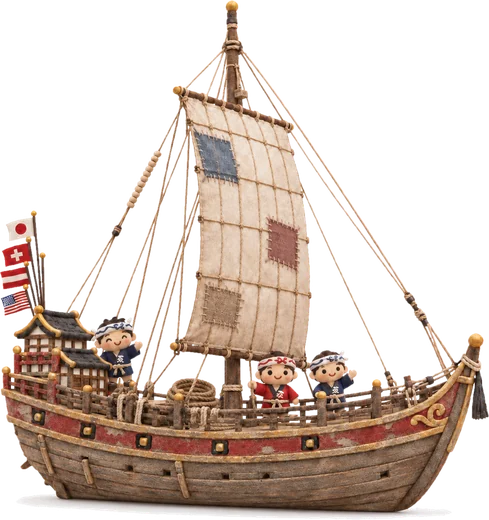
Grew revenue 1.2% in FY2025 to $187.3 billion, operating margin -4.9% against a -2.1% median for motor vehicles & passenger car bodies, equity 12.4% of assets, and its dividend per share fell in the latest year on record. Every figure links to the filing it came from on Ford’s card. Weathered boat: two warning signs. Trillion Score 381, #46 of 49 in its field; Fall Risk Low (how it is measured).
What the house said in advance
Revenue for the fiscal year after 2025-12-31 between $171.9B and $204.4B, an 80% range sealed on 26 Sept 2026 · receipt #19cc5f · graded in public by the revenue in Ford’s next annual report.
Figures as filed with the SEC. Ranges, scores and boats are statistical descriptions of past filings, not ratings or recommendations. Reporting, not advice.
In plain words
Ford's truck segment now operates as accessible luxury, not cyclical industrial—margin expansion structural, but multiple still priced for recession.
18%
driven entirely by its truck segment
$47 billion
in trailing twelve-month revenue at margins the company has…
$70,000-plus
Lariat and King Ranch trims—accounted for
63%
of unit mix
Ford reported quarterly earnings Wednesday evening that beat street expectations by 18%, driven entirely by its truck segment, which delivered $47 billion in trailing twelve-month revenue at margins the company has not seen since pre-pandemic fleet dominance. The F-Series lineup—particularly the $70,000-plus Lariat and King Ranch trims—accounted for 63% of unit mix, up from 41% two years ago. The market responded by repricing Ford's truck business as a luxury goods play rather than a cyclical industrial, a shift that changes the comp set and the multiple.
The mechanics are clean. Average transaction prices for Ford's full-size pickups rose $8,400 year-over-year to $68,200, while unit volumes dropped only 4%. Gross margin per truck improved 310 basis points to 22.7%, a figure that sits between accessible luxury (think Coach) and true high-end (think Hermès). Ford's CFO noted on the call that 82% of F-150 buyers in Q4 financed through Ford Credit at rates above 7.2%, and delinquencies remain below 1.1%—meaning the customer base is wealth-stable, not paycheck-dependent. This is no longer a contractor buying a work tool. This is a doctor buying a lifestyle signal.
The luxury repositioning matters because it decouples Ford's truck margins from recession risk and recouples them to wealth-effect risk. If equities correct 15% and bonuses compress, the $75,000 King Ranch becomes the first discretionary cut, not the last essential purchase. Portfolio managers who have modeled Ford as a defensive play inside consumer discretionary now face a wedge: the product has migrated upmarket faster than the multiple has followed. The stock trades at 6.1x forward earnings, a discount that assumes commodity exposure and cyclical compression. But Hermès trades at 43x, and even accessible luxury (LVMH's mid-tier) sits near 18x. If Ford's truck segment gets re-rated even halfway toward luxury comps, the equity doubles without another dollar of revenue growth.
Allocators should watch three markers over the next 90 to 120 days. First, whether Ford's April production mix continues the shift toward $65,000-plus trims, which would confirm the margin story is structural, not opportunistic. Second, whether F-Series transaction prices hold above $67,000 as spring inventory builds—any softness there signals wealth-effect cracks. Third, whether sell-side analysts begin splitting Ford's truck unit into a separate sum-of-parts model with a luxury multiple, which would force index rebalancing and trigger systematic inflows. The first two are demand signals. The third is the re-rating catalyst.
Ford has accidentally built a luxury brand inside a mass-market wrapper, and the market is only beginning to notice. The next move belongs to the customer base—and whether they keep showing up at 7.2% interest rates.
Branded by POPS4 · proof in 60 seconds
For the principal
Watch Ford Credit delinquency rates monthly; any uptick above 1.5% signals wealth-effect cracks in the truck buyer base.
For the operator
If Ford gets sum-of-parts treatment with luxury multiple on trucks, equity doubles; position before sell-side models catch up in 60-90 days.
For the house
Huang Goodman opens 2.3% long position in F equity, hedged with XLY puts; exits if transaction prices drop below $66K.
The branded-identity layer Chiefs of Staff and heritage CMOs route through — your name imprinted on real authorized stock, your pick of 200+ brands and 70,000 products, shipped from one accountable house. Nine editorial desks publish the intelligence those operators read before they sign.
200+authorized brands
70,000products · virtual proof on each
9 deskspublishing daily
1997one house, since
70,000 SKUs · virtual proof in 60 seconds · no platform fee · blind-shipped · ASI #217876
Your next customer won't visit your website. Their AI will.
AI assistants have quietly taken over the first step of buying — they answer from catalogs they can read and shortlist whoever can actually ship. Two questions now decide whether you exist to that buyer: can a machine read your catalog, and can you fulfill the order. Most brands fail one or both and never find out why the orders went elsewhere. The winners of this shift aren't the loudest. They're the most readable. Build for the machine that's about to do the shopping.
Built by the craft floor — apparel, media, packaging, and secure print.
This trade runs on hands, not desks. Imprint manufacturing & Komori heritage press through approved vendors · Canon high-speed secure-media operations is a craft floor — genuine Six Sigma discipline applied to ink, thread, foil, and registration, where a hundredth of an inch is the difference between a brand that reads serious and one that reads cheap. POPS4 is built by exactly those operators: independent, boots-on-the-ground engineers who carry their own book, read a client in microseconds, and put their name on every run. Beyond our own Virginia Beach floor, we work with a vetted network of craft manufacturers across the US — each meeting the highest excellence in QC standards in the industry, each a specialist in its own discipline — so apparel, hard-goods imprinting, media manufacturing, packaging, and secure printing all go to the bench built for them, coordinated from one accountable hub. Short-run from twenty-five units, volume to five hundred thousand. Two hundred authorized national brands, seventy thousand SKUs with virtual proofing on every one. Art archived for instant reorders. Net-thirty corporate terms, NDA-standard white-label — your name on the work, or none at all.
Strategy, positioning, identity, creative, and messaging — wired into an AI system that publishes and distributes on its own. Nine editorial desks generate the authority, the production house ships the physical proof, and the attribution layer tells you which post sold which SKU. What you get is an operating layer — content, catalog, and order path under one roof — that keeps working whether or not you are in the room. Built for principals who would rather own the machine than rent the agency.
Named-account programs — one desk, quiet delivery, NDA-standard.
One point of contact who already knows the file, so nothing restarts from zero between engagements. The work ships blind, under NDA, with your name on it or none at all. Built for single-family offices, heritage-house CMOs, sports-ownership groups, and the agencies that white-label our production. The relationship is the product; the merch is the proof of it.
SFO · Chief of Staff desk. Principal household, properties, aircraft, yacht, calendar, philanthropy — one file.
Shop seventy thousand products. Virtual proof on every one. 24/7.
Drop your logo on any product and see the virtual proof before asking. Quote routes direct to the desk. MCP catalog for AI agents. Celeste for the fast conversation. Full self-service checkout in development.