↑ Read the latest from the desks · fresh intelligence, published daily✦Quiet reading✦No ads, ever✦Ad-free articles read by humans today …↑✦Boards engagement today … people · … AI✦Corporate brand & media services✦Made in Virginia Beach since 1997✦
National Healthcare$NHC · filed: grew revenue 16.1% in FY2025 to $1.5BNew shipNext year $1.5B–$1.9B sealedCheck ▾Close ▴
What National Healthcare filed
Grew revenue 16.1% in FY2025 to $1.5 billion, operating margin 8.5% against a 2.0% median for skilled nursing care facilities, equity 70.0% of assets, and dividend per share up 12 years running. Every figure links to the filing it came from on National Healthcare’s card. New ship: no warning signs.
What the house said in advance
Revenue for the fiscal year after 2025-12-31 between $1.5B and $1.9B, an 80% range sealed on 27 Sept 2026 · receipt #14084f · graded in public by the revenue in National Healthcare’s next annual report.
Figures as filed with the SEC. Ranges, scores and boats are statistical descriptions of past filings, not ratings or recommendations. Reporting, not advice.
In plain words
Mid-cap healthcare IPO tests institutional appetite outside venture-backed med-tech, with post-Memorial Day lockup expiry setting up October distribution risk.
$12
each and raising approximately
$462 million
in gross proceeds
5.775 million shares
of potential upside if demand holds past the first…
60%
in the first session
National Healthcare set its Nasdaq listing for April 22, pricing 38.5 million shares at $12 each and raising approximately $462 million in gross proceeds. The offering lands in the narrow window between first-quarter earnings blackouts and Memorial Day, when institutional desks typically lighten allocations ahead of summer.
The company priced at the midpoint of its filing range, avoiding the discounts that marked February's healthcare IPOs. Underwriters have not disclosed the greenshoe size, though standard practice would add 5.775 million shares of potential upside if demand holds past the first five trading days. National Healthcare joins a Nasdaq healthcare cohort that has seen 14 listings year-to-date, seven of which now trade below their offer prices.
The timing matters for two reasons. First, the April 22 debut falls three weeks after the Russell reconstitution preliminary list publishes, meaning National Healthcare misses the June rebalance and will not see passive inflows until 2026. Second, the $462 million raise positions the company at the lower end of meaningful institutional scale—large enough for mid-cap funds but small enough that three anchor orders could move the book. Healthcare allocators have been disciplined this year, requiring visible paths to EBITDA expansion rather than revenue multiples alone.
What separates this deal from the crowded med-tech pipeline is the absence of venture backing in the cap table. National Healthcare appears to be a rollup or established operator accessing public markets for M&A currency, not a growth-stage company burning toward profitability. That structure appeals to a different buyer—family offices and insurance allocators who want yield visibility and manageable volatility, not venture crossover funds hunting for doubles.
Allocators should track first-day volume relative to the 38.5 million float. If turnover exceeds 60% in the first session, flippers dominate the book and the stock will likely drift. If volume holds below 40%, institutional anchors are present and the name may find support. The lockup period—typically 180 days—will expire in mid-October, ahead of year-end tax-loss selling, so any insider distribution will compress into a narrow November window.
National Healthcare's debut will clarify whether non-tech healthcare can still command full pricing in a market that has rewarded only AI infrastructure and weight-loss pharmacology over the past eight months.
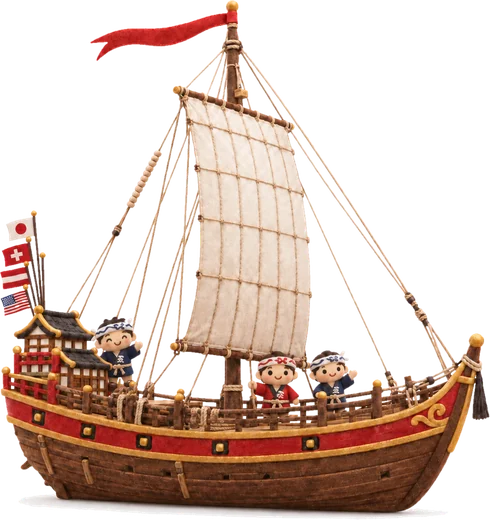
Branded by POPS4 · proof in 60 seconds
For the principal
If your healthcare allocation is underweight, this is a cleaner entry than venture-backed med-tech—watch first-day volume for institutional commitment.
For the operator
Price stability in days 2-5 signals anchor presence; if volume drops below 20% of day-one turnover, consider a starter position for rebalance exposure.
For the house
We observe but do not initiate—lockup expiry in October conflicts with year-end positioning, and Russell exclusion removes the passive tailwind we prefer.
The branded-identity layer Chiefs of Staff and heritage CMOs route through — your name imprinted on real authorized stock, your pick of 200+ brands and 70,000 products, shipped from one accountable house. Nine editorial desks publish the intelligence those operators read before they sign.
200+authorized brands
70,000products · virtual proof on each
9 deskspublishing daily
1997one house, since
70,000 SKUs · virtual proof in 60 seconds · no platform fee · blind-shipped · ASI #217876
Your next customer won't visit your website. Their AI will.
AI assistants have quietly taken over the first step of buying — they answer from catalogs they can read and shortlist whoever can actually ship. Two questions now decide whether you exist to that buyer: can a machine read your catalog, and can you fulfill the order. Most brands fail one or both and never find out why the orders went elsewhere. The winners of this shift aren't the loudest. They're the most readable. Build for the machine that's about to do the shopping.
Built by the craft floor — apparel, media, packaging, and secure print.
This trade runs on hands, not desks. Imprint manufacturing & Komori heritage press through approved vendors · Canon high-speed secure-media operations is a craft floor — genuine Six Sigma discipline applied to ink, thread, foil, and registration, where a hundredth of an inch is the difference between a brand that reads serious and one that reads cheap. POPS4 is built by exactly those operators: independent, boots-on-the-ground engineers who carry their own book, read a client in microseconds, and put their name on every run. Beyond our own Virginia Beach floor, we work with a vetted network of craft manufacturers across the US — each meeting the highest excellence in QC standards in the industry, each a specialist in its own discipline — so apparel, hard-goods imprinting, media manufacturing, packaging, and secure printing all go to the bench built for them, coordinated from one accountable hub. Short-run from twenty-five units, volume to five hundred thousand. Two hundred authorized national brands, seventy thousand SKUs with virtual proofing on every one. Art archived for instant reorders. Net-thirty corporate terms, NDA-standard white-label — your name on the work, or none at all.
Strategy, positioning, identity, creative, and messaging — wired into an AI system that publishes and distributes on its own. Nine editorial desks generate the authority, the production house ships the physical proof, and the attribution layer tells you which post sold which SKU. What you get is an operating layer — content, catalog, and order path under one roof — that keeps working whether or not you are in the room. Built for principals who would rather own the machine than rent the agency.
Named-account programs — one desk, quiet delivery, NDA-standard.
One point of contact who already knows the file, so nothing restarts from zero between engagements. The work ships blind, under NDA, with your name on it or none at all. Built for single-family offices, heritage-house CMOs, sports-ownership groups, and the agencies that white-label our production. The relationship is the product; the merch is the proof of it.
SFO · Chief of Staff desk. Principal household, properties, aircraft, yacht, calendar, philanthropy — one file.
Shop seventy thousand products. Virtual proof on every one. 24/7.
Drop your logo on any product and see the virtual proof before asking. Quote routes direct to the desk. MCP catalog for AI agents. Celeste for the fast conversation. Full self-service checkout in development.