↑ Read the latest from the desks · fresh intelligence, published daily✦Quiet reading✦No ads, ever✦Ad-free articles read by humans today …↑✦Boards engagement today … people · … AI✦Corporate brand & media services✦Made in Virginia Beach since 1997✦
Snowflake$SNOW · filed: grew revenue 29.2% in FY2026 to $4.7BSound shipTrillion Score 558Fall Risk LowNext year $4.6B–$7.7B sealedCheck ▾Close ▴
What Snowflake filed
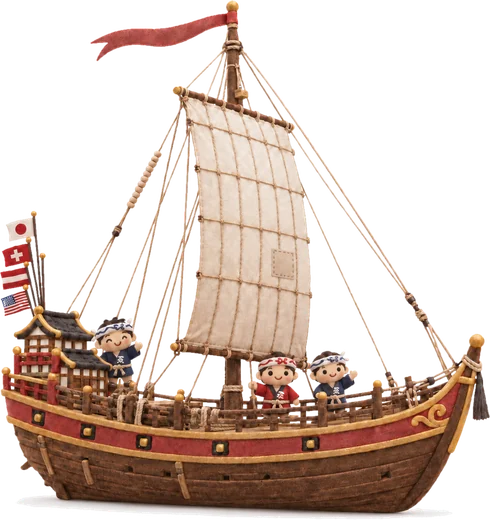
Grew revenue 29.2% in FY2026 to $4.7 billion, operating margin -30.6% against a 0.9% median for prepackaged software, equity 21.1% of assets. Every figure links to the filing it came from on Snowflake’s card. Sound ship: one warning sign. Trillion Score 558, #67 of 311 in its field; Fall Risk Low (how it is measured).
What the house said in advance
Revenue for the fiscal year after 2026-01-31 between $4.6B and $7.7B, an 80% range sealed on 29 Sept 2026 · receipt #af618d · graded in public by the revenue in Snowflake’s next annual report.
Figures as filed with the SEC. Ranges, scores and boats are statistical descriptions of past filings, not ratings or recommendations. Reporting, not advice.
In plain words
Snowflake's **$6 billion** AWS-Graviton commitment is a margin bet disguised as an infrastructure deal—ARM migration at scale, ARM exit risk included.
$6 billion
to Amazon Web Services Wednesday in a multi-year agreement…
$1.89 billion
in product cost of revenue during fiscal 2025
75 percent
of Snowflake's incremental cloud budget through January 2028
20 to 30 percent
lower compute cost—the discount AWS publicly advertises for Graviton…
Snowflake committed $6 billion to Amazon Web Services Wednesday in a multi-year agreement tied to AWS Graviton processors and AI-adjacent chip infrastructure. The deal represents the largest single-vendor cloud commitment disclosed by the data warehouse operator and locks Snowflake into ARM-based compute for the fiscal period ending January 2028.
The commitment is structured as a minimum spend obligation rather than prepayment, tying Snowflake's consumption trajectory to AWS Graviton instance families across compute and machine-learning workloads. Snowflake did not disclose prior AWS spending baselines, but the company burned $1.89 billion in product cost of revenue during fiscal 2025, the majority attributable to cloud compute from AWS, Azure, and Google Cloud. At current run rates, the $6 billion figure implies AWS capturing roughly 75 percent of Snowflake's incremental cloud budget through January 2028, a meaningful concentration shift.
The deal matters less for its headline figure than for what it reveals about Snowflake's architecture roadmap. Graviton processors use ARM instruction sets optimized for parallelized throughput rather than single-thread speed, a profile well-suited to Snowflake's multi-tenant query engine but historically expensive to re-engineer at the kernel level. The commitment suggests Snowflake has completed or is near completion of recompiling its core execution layer for ARM, a non-trivial migration that competitors including Databricks have discussed but not yet scaled. If Snowflake achieves comparable query performance on Graviton instances at 20 to 30 percent lower compute cost—the discount AWS publicly advertises for Graviton versus comparable x86 families—the company's gross margin trajectory improves without pricing pressure on end customers. That margin lever becomes critical as Snowflake enters fiscal 2026 guiding product revenue growth in the low-twenties percentage range, down from historical mid-thirties growth, with enterprise buyers extending proof-of-concept cycles for generative workloads.
The AWS relationship also closes the door on Snowflake running meaningful workloads on competing AI accelerators in the near term. Graviton instances do not natively support NVIDIA H100 or H200 configurations in the same availability zones where Snowflake operates its largest North American and European clusters. Snowflake's AI product surface remains inference-focused rather than training-focused, but the commitment limits optionality for customers seeking tightly coupled LLM fine-tuning alongside warehouse queries. Microsoft and Google Cloud both offer ARM-based alternatives—Cobalt and Axion, respectively—but neither has disclosed Snowflake partnerships at equivalent scale.
Operators should track Snowflake's fiscal Q1 2026 earnings call in late May for updated gross margin guidance and any commentary on Graviton rollout velocity across existing workloads. AWS re:Invent in December will likely feature joint Snowflake-AWS sessions detailing ARM-optimized query performance benchmarks, which will clarify whether the $6 billion commitment funds a cost-reduction play or capacity expansion into adjacent AI services. Watch for competitive responses from Databricks and Teradata, both of which run hybrid x86-ARM footprints but have not committed publicly to single-cloud partnerships at this threshold.
The deal locks in two fiscal years of runway before Snowflake renegotiates compute leverage. By then, ARM's share of cloud instance mix will clarify whether this was infrastructure arbitrage or a one-way architectural door.
Branded by POPS4 · proof in 60 seconds
For the principal
Your cloud-native SaaS allocations now carry single-vendor concentration risk; stress-test Snowflake exposure for AWS pricing or availability shocks through 2028.
For the operator
Model Snowflake's gross margin upside if ARM compute delivers the advertised 25% cost savings; haircut consensus estimates if Graviton rollout stalls.
For the house
We're underweight SNOW but watching the Q1 margin print—if ARM cuts COGS faster than revenue decelerates, we rebuild the position in size.
The branded-identity layer Chiefs of Staff and heritage CMOs route through — your name imprinted on real authorized stock, your pick of 200+ brands and 70,000 products, shipped from one accountable house. Nine editorial desks publish the intelligence those operators read before they sign.
200+authorized brands
70,000products · virtual proof on each
9 deskspublishing daily
1997one house, since
70,000 SKUs · virtual proof in 60 seconds · no platform fee · blind-shipped · ASI #217876
Your next customer won't visit your website. Their AI will.
AI assistants have quietly taken over the first step of buying — they answer from catalogs they can read and shortlist whoever can actually ship. Two questions now decide whether you exist to that buyer: can a machine read your catalog, and can you fulfill the order. Most brands fail one or both and never find out why the orders went elsewhere. The winners of this shift aren't the loudest. They're the most readable. Build for the machine that's about to do the shopping.
Built by the craft floor — apparel, media, packaging, and secure print.
This trade runs on hands, not desks. Imprint manufacturing & Komori heritage press through approved vendors · Canon high-speed secure-media operations is a craft floor — genuine Six Sigma discipline applied to ink, thread, foil, and registration, where a hundredth of an inch is the difference between a brand that reads serious and one that reads cheap. POPS4 is built by exactly those operators: independent, boots-on-the-ground engineers who carry their own book, read a client in microseconds, and put their name on every run. Beyond our own Virginia Beach floor, we work with a vetted network of craft manufacturers across the US — each meeting the highest excellence in QC standards in the industry, each a specialist in its own discipline — so apparel, hard-goods imprinting, media manufacturing, packaging, and secure printing all go to the bench built for them, coordinated from one accountable hub. Short-run from twenty-five units, volume to five hundred thousand. Two hundred authorized national brands, seventy thousand SKUs with virtual proofing on every one. Art archived for instant reorders. Net-thirty corporate terms, NDA-standard white-label — your name on the work, or none at all.
Strategy, positioning, identity, creative, and messaging — wired into an AI system that publishes and distributes on its own. Nine editorial desks generate the authority, the production house ships the physical proof, and the attribution layer tells you which post sold which SKU. What you get is an operating layer — content, catalog, and order path under one roof — that keeps working whether or not you are in the room. Built for principals who would rather own the machine than rent the agency.
Named-account programs — one desk, quiet delivery, NDA-standard.
One point of contact who already knows the file, so nothing restarts from zero between engagements. The work ships blind, under NDA, with your name on it or none at all. Built for single-family offices, heritage-house CMOs, sports-ownership groups, and the agencies that white-label our production. The relationship is the product; the merch is the proof of it.
SFO · Chief of Staff desk. Principal household, properties, aircraft, yacht, calendar, philanthropy — one file.
Shop seventy thousand products. Virtual proof on every one. 24/7.
Drop your logo on any product and see the virtual proof before asking. Quote routes direct to the desk. MCP catalog for AI agents. Celeste for the fast conversation. Full self-service checkout in development.