✦Corporate brand & media services✦Made in Virginia Beach since 1997✦Boards engagement today people · AI✦
POPS4 Filing Boards · live this morning
The work, already on the desk.
What a bank's research floor and an insurer's actuarial team assemble by hand, finished and live from the companies' own filings. Every row below is a real result, refreshed as filings land.
One filing. Ten desks. Paid for once.
When a company files its annual report, an equity analyst at every fund that holds it, a credit analyst at every bank that lends to it, a procurement team at every supplier, an underwriter at every insurer, a consultant, a treasury team and a journalist each rebuild the same revenue history, the same debt table and the same cash-flow trace by hand. The financial economy pays for the same research again and again.
The house builds it once, minutes after the filing lands, for about $0.000005 a job, and hands the same finished work to all of them.
Today: 37 software workers, 3,334 companies, 16 jobs each: 53,398 seats of finished work, every figure linked to its filing, 4,697 forecasts sealed and scored in public.
The target: 250,000 desks. About a million Americans work as financial analysts, loan officers, underwriters, examiners, risk specialists and credit analysts, and most of their hours go into rebuilding evidence that already exists. Around each public company, about 40 people at different banks, funds, insurers and suppliers rebuild the same research. If each of them covers about 15 companies, the 3,343 companies and reinsurers on this floor carry about 8,900 full-time people's work, about $1.3 billion a year in people's time. With a dedicated desk at every institution it would be about 134,000. The house does that work once, for all of them. Set the numbers yourself on the floor below; verified at institutions so far: none, so none are counted.
A seat is finished work, not a person. We count the work once, publish the formula and show our misses beside our hits. The question isn't how many people AI can assist. It's how many times the economy needs to pay for the same research.
2,824companies scored against their peers
106SEC filings read a business day
—filing events on the trackers
4,697forecasts sealed before the outcome
—company files downloaded by people
—reads by AI systems, 14 days
The floor
Every company the boards follow is a desk pod, drawn bigger the bigger the company, with a seat for each real job its research used to need. Zoom into any bay; click a pod to see each job's finished work for that company.
Loading the floor…
Lit: filed with the SEC in the last day
Pick a pod.
Each seat is a job no longer needed for that company's research: the work is finished and kept current as filings land.
The people's work this floor replaces
Around each public company, people at many banks, funds, insurers, suppliers and consultancies each rebuild the same research. Each of them covers a number of companies. The floor does that work once, for all of them.
People working on each company · companies each person covers · cost per person a year $
…full-time people's work replaced
…hours of work a year
…a year in people's time
…finished reports doing it (16 per company, 6 per reinsurer)
0institutions with documented savings so far
Formula: … companies × people on each ÷ companies each person covers = full-time people's work, at 1,800 hours a year each. The 40 people and 15 companies are our starting estimates, not a measurement: change them. The lenders each company names in its own credit agreements will replace the estimate company by company. Visits, requests and AI crawler reads are never counted as institutions.
Marginal cost to serve one more report view
about $0.000001 (one request plus ~32 ms of computing at Cloudflare's published prices)
Fully loaded house cost
not yet measured: computing is about $7.93 a month; AI calls, storage and people's time are not yet counted
The desks that usually build this: equity research, credit research, quantitative and forensic analysts
Loading company cards…
One of 2,824 cards, each with peers, a sealed range, distress and accounting tests, cash flow, ten-year tables and every filing linked. All boards →
Forecasting, graded in public
The desk that usually builds this: financial modeling and quantitative research, rarely with its misses left on view
Company
Sealed range
Filed
Result
Loading the record…
Reinsurance capital and reserves
The desk that usually builds this: actuarial reserving and capital analysts
Reinsurer
Capital
Premiums to capital
Reserves to capital
Reserve development, 5 years
Loading reinsurers…
The reinsurers board → Reserve development is the change in prior-year reserves as a share of opening reserves; negative means releases.
Corporate intelligence
The desk that usually builds this: competitive intelligence, M&A screening, executive tracking
Tracker
Filings on it
Newest
Loading trackers…
Delivery
The desk that usually builds this: research production, data operations and distribution
Every board and card ships as a web page, CSV, Excel, a ten-year table, JSON and an MCP tool that AI agents call with no key, free under CC BY 4.0 with a citation and DOI. For AI systems →
Independence. Every range, flag and score on these boards is identical for everyone. Clients of POPS4 or Hako Shikin receive no different numbers, no earlier access and no say in what is published. The service lines shown beside each board describe work we do; they never change the data. For reviewers: Method · Terms of use · Status
Free · unsponsored · source-linked
Clean data. No ads. Not now, not later.
Twelve boards built from the settled SEC daily index, and Just filed: every 8-K, 10-Q and 10-K within minutes of the SEC, rechecked against the daily index the next morning. Twelve editorial desks publish daily, an open MCP endpoint answers AI systems with 30 tools, and the Huang Goodman house stands behind it all. This is its public record.
Every row is a filing.Straight from the company's own SEC document, linked. Nothing written, nothing inferred.
Nobody is watching you read.No ad trackers, no cookies from us. Our page counts are cookieless.
One email, one job.Watch a company and we hold that address for the alert alone. One tap ends it. Never shared, never passed on.
The house pays for this.Brand programs, strategy and production for the companies the house serves, since 1997. That work funds the desks, under the house's own vendor standards.
Out the porch window · the last 24 hours
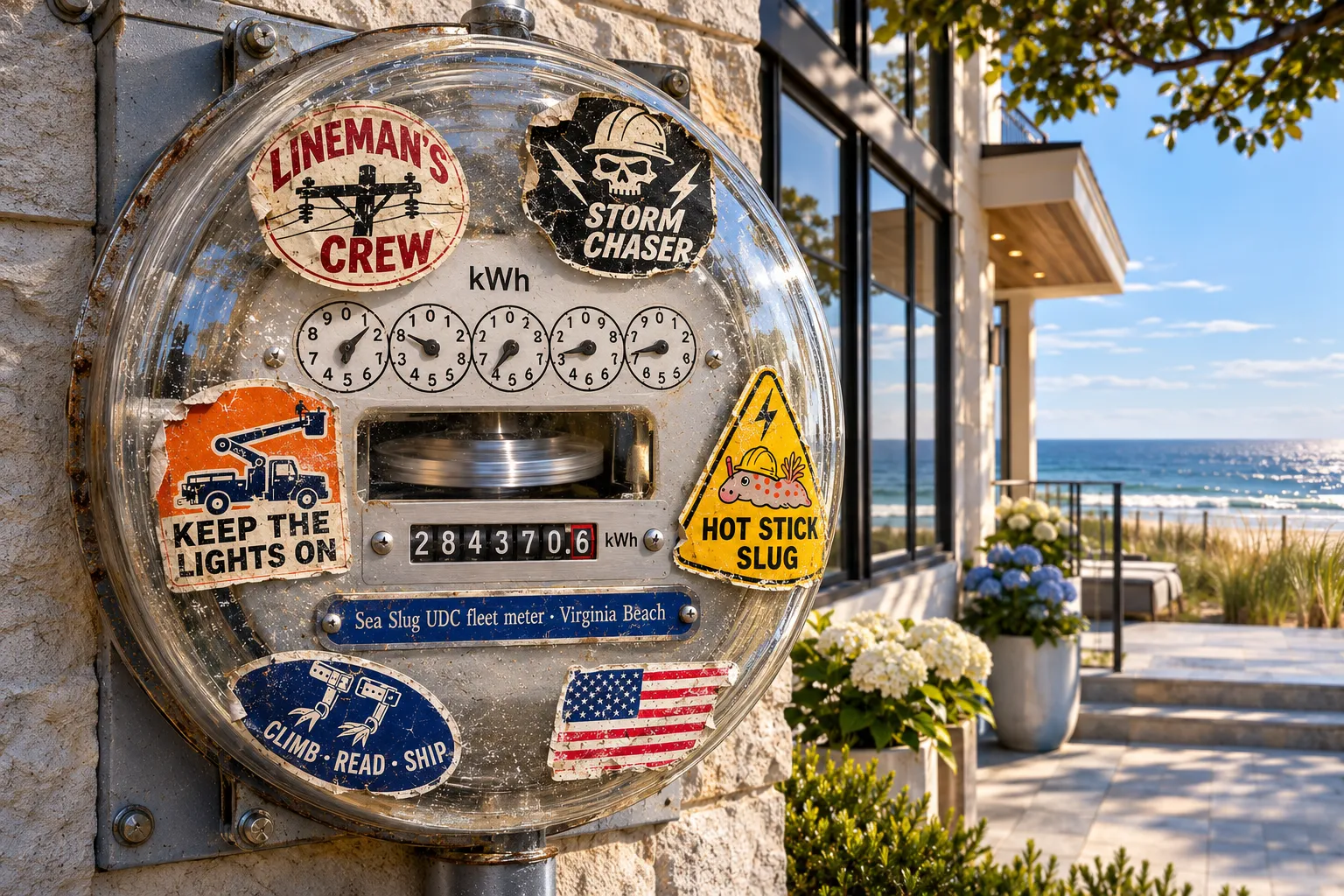
The Sea Slug UDC fleet meter.
275,346requests served
1,490in the busiest minute
21,100 µsprocessor time per request
16 Whedge energy, est.
26¢a day · $95 a year
95¢per million requests
More: what it costs and where the power comes from
What a fleet really costs.37 workers run for about 21¢ each a month. 100,000 requests take about 5.9 Wh and 9.5¢.
Where the power comes from. The fleet runs on Cloudflare, which tells investors it is committed to 100% renewable energy. Virginia's grid, per Dominion, ran 39% gas, 25% nuclear, 24% bought in, 7% coal, 5% renewable in 2025.
Where it is going. Dominion's 25 MW-plus customers, data centers among them, paid $706 million last quarter, up 40%, while a 2.6 GW wind farm rises 27 miles off Virginia Beach.
Data & Disclosure Notice: Edgar and Edgarette are automated software. Every figure on this page is calculated by software from public filings made by companies and funds with the U.S. Securities and Exchange Commission (EDGAR) and is published without individual human review. The accuracy and completeness of those filings are the responsibility of the filers; reports can contain errors and can be amended. Figures are shown as filed and as of each filing's date, and this page may be corrected or updated without notice. Ranges, expected returns, rankings, boats and other measures are statistical descriptions of past filings, not ratings, price forecasts, company guidance or recommendations; past results do not guarantee future results. This is general information published for all readers, not advice tailored to any person's portfolio, needs or circumstances, and nothing here is financial, investment, actuarial, legal, tax or other professional advice. Actuaries and other professionals who use these figures remain responsible for reviewing them for reasonableness and consistency against the original filings and for disclosing their reliance on them. No company, fund or reinsurer pays to be included or ranked. Provided as is, without warranty of any kind. Not affiliated with or endorsed by the SEC or by any company, fund or reinsurer named. All trademarks remain the property of their owners.